
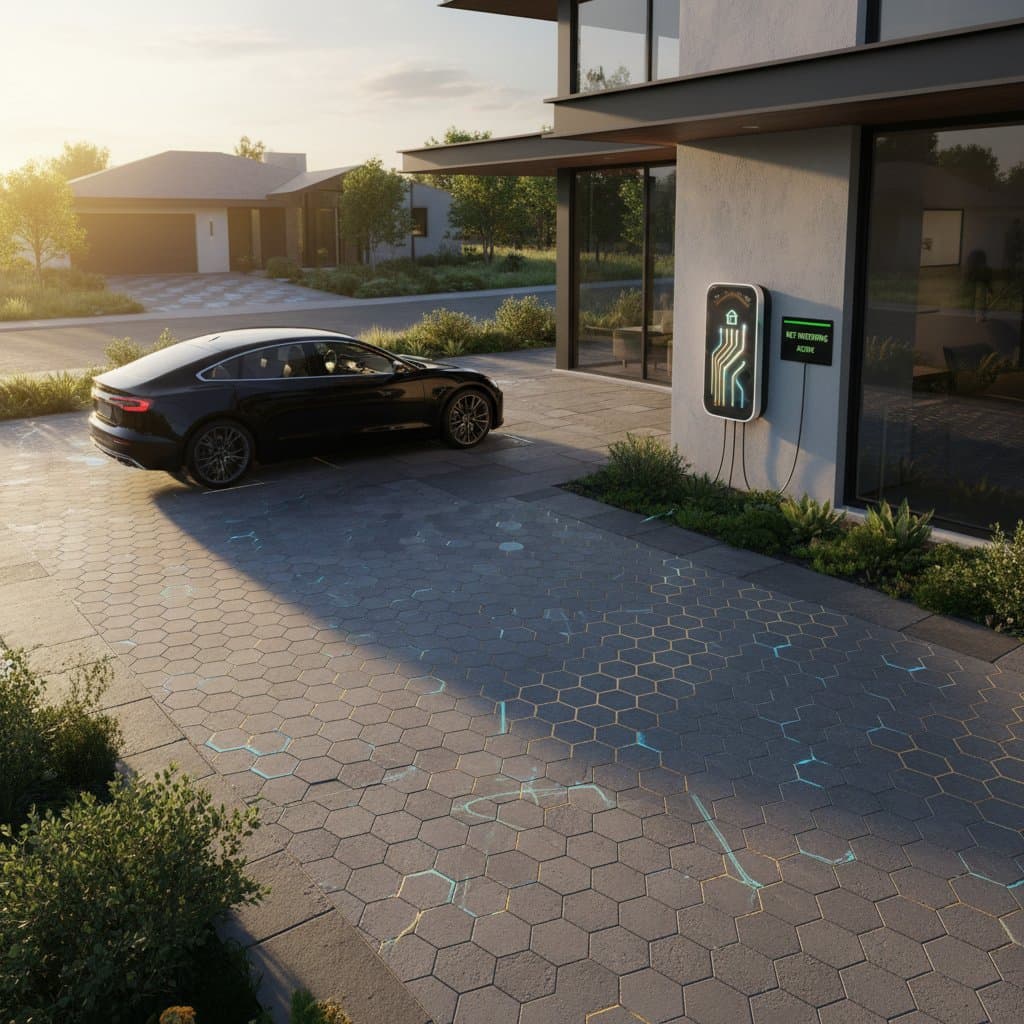
Smart Pavers: Solar-Collecting Masonry Powers Homes
Smart pavers resemble conventional paving stones, yet they capture sunlight and convert it into usable electricity. Each paver integrates small photovoltaic cells within a robust masonry base. These units link via wiring or wireless modules to direct power toward a battery storage system or the home electrical panel. They withstand foot and vehicle traffic comparable to standard pavers while generating renewable energy from the paved surface.
Pros and Cons
Pros
- Produce free solar energy from driveways, patios, and walkways
- Lessen the need for rooftop solar installations in areas with shading or intricate roof structures
- Enhance visual appeal through integrated lighting or subtle color illumination
- Integrate with conventional paving arrangements and designs
- Elevate property value by incorporating renewable energy features into landscape elements
Cons
- Incur higher initial expenses compared to concrete or brick alternatives
- Demand more intricate installation processes involving wiring and control components
- Experience reduced efficiency in shaded or soiled locations
- Limit replacement parts to manufacturer-specific lines
- Necessitate periodic electrical inspections and surface cleaning
Costs
Material expenses for smart pavers generally span $15 to $30 per square foot, varying by photovoltaic cell efficiency, surface finish, and producer. Total installed costs range from $25 to $45 per square foot, encompassing excavation, foundational layers, electrical conduits, and linkages to inverters or batteries.
Expenses increase in scenarios with restricted access, extended wiring distances, or mandates for conduit enhancements under local electrical regulations. Conversely, costs decrease for compact, straightforward designs positioned near pre-existing power sources.
Lifespan and Maintenance
Anticipate 20 to 25 years of electricity production with diligent upkeep. The masonry exterior endures beyond this period, although solar cells exhibit gradual degradation.
Perform surface cleaning every few months using mild detergent and a soft brush. Steer clear of abrasive chemicals or high-pressure washing that might damage the protective glass layer. Examine wiring connections for signs of corrosion or looseness, and monitor energy yield via the system's app or control panel. Promptly substitute any compromised units to preserve electrical integrity.
Key Specifications to Verify
Prior to purchase, evaluate these attributes:
- Compressive strength of at least 6,000 psi for zones supporting vehicles
- Slip resistance rating appropriate for damp conditions
- Ingress protection (IP) rating against moisture and particulates
- Temperature tolerance for regions prone to freeze-thaw cycles
- Electrical output per unit, typically 10 to 20 watts
- Compatibility with current inverters or battery setups
Planning and Preparation
Evaluate sunlight availability as a primary step. Smart pavers require a minimum of four to five hours of direct sunlight daily to deliver substantial energy yields. Select sites free from overhanging trees, rooflines, or substantial barriers.
Map out conduit pathways ahead of digging. Establish routes for cables leading to inverters or junction boxes, while assessing soil firmness and water runoff. Prepare a compacted foundation of crushed stone, at least six inches deep for pathways and deeper for driveways. Incorporate a gentle slope of one inch per ten feet to direct drainage away from buildings.
Installation Process
- Outline the paving zone, designate conduit paths, and verify the slope.
- Dig to the necessary depth accommodating the base, bedding material, and paver height.
- Position conduits and ensure junction boxes remain accessible.
- Layer and compact the base material in two-inch increments.
- Level the bedding sand or fine gravel to a consistent depth.
- Arrange pavers from a fixed straight edge or guideline.
- Attach wiring or wireless components per manufacturer guidelines.
- Secure perimeter restraints to stabilize the installation.
- Fill gaps with polymeric sand or fine aggregate.
- Validate electrical performance and apply joint sealants if specified.
Engage a certified electrician for every electrical integration and verification.
Design Patterns and Variations
Smart pavers appear in rectangular, square, and hexagonal forms. Popular configurations encompass running bond, herringbone, and basket weave patterns.
Opt for running bond in driveways to promote straightforward alignment, herringbone for zones bearing heavy loads, and basket weave for ornamental patios. Certain systems permit blending solar and non-solar pavers to optimize expenses and functionality. Position solar units in high-sunlight sectors and conventional pavers in shadowed spots.
DIY Installation Versus Professional Services
Individuals skilled in hardscaping and elementary wiring can manage DIY projects for modest walkways or patios. Essential tools include a plate compactor, spirit level, screed boards, and a multimeter for electrical testing.
Professionals prove essential for driveways, expansive arrays, or installations needing permits. Expert teams manage excavation, foundational compaction, and regulatory adherence with precision. Qualified electricians must handle all power connections.
Addressing Common Issues
Diminished Power Generation: Inspect for accumulated dirt or obstructions on the glass surface. Apply gentle cleaning and reassess performance.
Inactive Segments: Review connections for rust or damaged cables. Swap out faulty pavers or wiring elements.
Surface Unevenness: Elevate the impacted section, introduce additional base material, and recompress firmly.
Internal Moisture Accumulation: Discard and replace the affected paver, as the seal has failed. Avoid personal resealing efforts.
Considerations for Regional Climates
In areas subject to freeze-thaw action, confirm pavers possess verified frost durability. Adequate base thickness and drainage mitigate uplifting. Coastal or saline environments call for routine rinsing to curb connector deterioration. Hotter climates benefit from lighter-colored pavers to moderate walking surface heat.
Arid or dusty locales demand frequent cleaning to sustain solar performance. Plan cleanings every few weeks amid prolonged dry periods.
Viable Alternatives
For budgets sensitive to expense or setup demands, explore solar pathway illuminators, rooftop photovoltaic arrays, or solar-supported pergolas. Rooftop options yield higher efficiency per area, yet smart pavers suit landscapes where roof access proves challenging or obscured.
Permeable pavers featuring drainage capabilities can complement adjacent solar installations, fostering yards that handle stormwater while advancing clean energy production.
Integrating Smart Pavers Into Your Property
Smart pavers convert everyday outdoor spaces into functional energy producers. Homeowners undertaking patio, driveway, or pathway projects gain an opportunity to curb electricity reliance without modifying rooftops.
Initiate with a limited area to gauge effectiveness. A single section of solar paving suffices to energize outdoor fixtures or sustain a compact battery reserve.