
Quick Overview
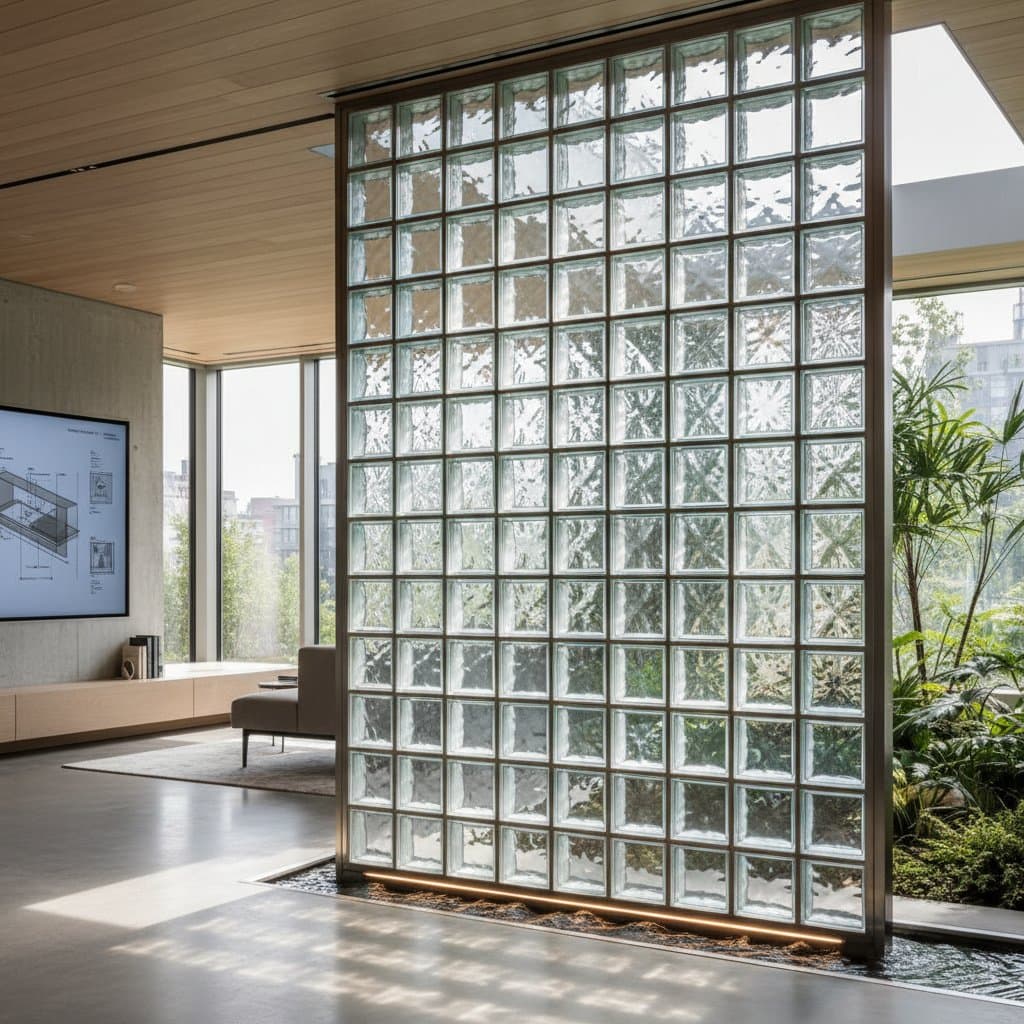
Recycled glass block walls transition from commercial spaces to residential settings. These installations alter light patterns, minimize waste, and introduce textured elements without substantial framing. Primary concerns involve moisture management, thermal bridging, and precise detailing to avoid condensation buildup. Expenses arise from custom fabrication, transportation due to weight, and labor for accurate placement.
Key Pre-Installation Checks
Evaluate the supporting structure before committing to recycled glass block walls. In typical setups, these walls do not bear loads, so existing backing, lintels, and waterproofing require verification. Basic assessments determine readiness.
- Stand back from exterior walls and examine alignments. Leaning walls or sagging rooflines indicate instability; resolve these before incorporating fragile materials.
- Roll a tennis ball along the floor adjacent to intended openings. Drifting or halting suggests subfloor irregularities; correct them prior to glass installation.
- Inspect for discoloration or flaking paint around window tops or edges. Such signs point to previous water infiltration routes.
- Access the attic and follow roof valleys over the proposed wall area. Focused water flow may penetrate masonry voids.
- Examine the basement for white mineral deposits or wet spots. Ongoing dampness beneath the wall can migrate upward, clouding translucent surfaces.
Address any detected shifts or persistent moisture immediately. Glass blocks amplify underlying issues instead of concealing them.
Warning Signs
- Shifted bricks above stone bases at ground level.
- Deteriorated or friable trim under dormers with inadequate runoff.
- Frequent gutter backups near planned openings.
- Persistent damp smells within current wall spaces.
- Fragile or rusted pipes adjacent to the installation zone.
- Interior surface moisture on masonry in mild conditions.
- Absent drainage channels or barriers in aged brick assemblies.
These indicators forecast additional expenses. Overlaying translucent elements on compromised or wet substrates often results in fractured seams or obscured panels.
Common Remedies and Estimated Expenses
Solutions vary by project size and conditions. An interior partition with recycled glass blocks typically costs 150 to 300 dollars per square foot, including installation. Extensive curtain walls featuring metal supports and maximum light penetration may exceed 400 dollars per square foot, factoring in engineering and sealing.
- Moisture mitigation: Apply exterior barriers or adjust drainage layers initially. Budget 5 to 10 dollars per square foot for flashing and sealants. Neglect here leads quickly to obscured views and mold development behind the blocks.
- Structural reinforcement: Exterior applications often need steel or aluminum frameworks to handle block mass. Such additions contribute 20 to 40 dollars per square foot.
- Thermal regulation: Opt for insulated blocks or layered glass brick setups to curb moisture formation. This increases material costs by approximately 15 percent, though it reduces future upkeep.
- Joint finishing and protection: Ensure even mortar or silicone connections. Detailing labor frequently equals or surpasses the cost of the blocks themselves.
Inexpensive patches, like interior coatings or adhered single-layer panels over drywall, merely conceal root problems affecting illumination or dampness. They degrade, cloud, or separate shortly after application.
Projects often expand in scope. As light filters through the new wall, adjacent areas may appear faded, prompting repainting, trim updates, or floor refinishing.
Repair or Replacement Decisions
Building components interact uniquely with added translucent surfaces. Choices between repair and replacement hinge on condition, safety, and longevity.
Windows: Retain existing frames where feasible. Enhance with new gaskets and exterior screens. Replace solely for severe decay, malfunction, or egress mandates. Translucent walls perform optimally alongside secure, airtight surrounding windows.
Roof: Prioritize seals, valleys, and water shedding. Positioning a glass wall under a faulty valley invites runs and joint breakdowns. Renew roofing only at the end of its service life or if integration proves impossible.
Foundation: Redirect bulk water via grading and surface drainage corrections first. Delay translucent additions until water diversion is assured. Comprehensive underpinning remains a final option.
Basement completions: Proceed carefully. Elevated humidity and limited airflow render basement translucent walls hazardous. Returns on investment prove modest relative to upper-level projects.
In uncertain cases, restore and secure the current building skin before introducing ornamental or light-permeable features.
Assembling the Right Team and Workflow
Recycled glass block walls demand meticulous attention to details. Outcomes rely on prompt collaboration.
- Building inspector: Select one familiar with historic properties. This expert uncovers initial flaws before planning advances.
- Architect: Involve early for defining scope, meeting energy regulations, and producing plans with joint specifications and water management routes.
- General contractor: Consult for cost estimates and timelines. Intricate glazing necessitates exact coordination.
- Specialized experts: Include structural, mechanical, or drainage professionals if relevant. Their contributions avert subsequent modifications.
Conduct simultaneous evaluations to accelerate progress. Engage various specialists concurrently instead of sequentially. Incompatible groups incur higher fees than delayed approvals. Professional oversight typically adds 10 to 20 percent to the budget, yet it curbs excesses in envelope modifications.
Prioritizing Project Elements
Initiate with impactful improvements. Envelope tightening via air barriers and attic insulation yields superior comfort and returns over aesthetic glass if absent. With a sealed and dry shell in place, translucent blocks offer valuable visual and efficiency gains.
Effective strategies:
- Enhance water shedding and site slopes ahead of wall alterations.
- Implement air barriers and upper-level insulation.
- Modernize wiring and pipes along new wall paths.
- Position translucent blocks in light-deficient zones like hallways, bathrooms, and staircases.
Inefficient approaches:
- Demolishing load-bearing walls solely for illumination.
- Shifting stairs to optimize views.
- Transforming moist basements into enclosed spaces absent comprehensive dampness measures.
Maintain architectural heritage where resilient. Recycled glass harmonizes with brick or stone through matched hues and seams, without supplanting authentic details.
Budgeting and Work Order
Order tasks by interdependencies and potential pitfalls.
- Halt water intrusion. Mend gutters, seals, and slopes at the outset.
- Secure the framework. Remedy framing and floor levelness.
- Upgrade protective features. Align electrical, plumbing, alarms, and airflow with codes.
- Boost performance. Air barriers and insulation establish consistent climate control.
- Add the translucent layer. Proceed once dryness and steadiness are confirmed.
- Complete exteriors. Apply paints and moldings post-wet operations.
This progression minimizes revisions. Early glass placement risks exposure to debris, shakes, and unintended damage from concurrent activities.
Implementing Successfully
Test recycled glass block walls in a limited zone to assess suitability. A modest divider or enclosure reveals upkeep demands and cleaning routines. Observe light shifts across seasons and hours to refine positioning and spacing in expansions.
Simplify ongoing care. Use soft fabrics and gentle cleaners. Steer clear of coatings that discolor in sun exposure. Inspect seams annually for gaps or shifts. Renew compromised barriers swiftly to exclude water from interiors.
Efficiency ties to execution. Thin walls conduct heat more readily than filled versions. For thermal concerns or utility savings, choose dual layers with enclosed spaces or insulating cores. These heavier options withstand fogging and energy escape.
Sustainability benefits include landfill diversion. Units often derive from repurposed bottles or sheets, reformed into blocks or slabs. Production energy falls below virgin glass, particularly with clean-powered melting. Sourcing proximity cuts expenses and emissions.
Visually, options span tints and diffusion levels. Impurities yield subtle greens or blues; others provide diffused clarity. Batch uniformity varies, so procure ample stock from a single production to match shades. Slight differences often enrich texture, suiting aged structures over flawless uniformity.
Risk management centers on essentials. Water exclusion proves essential. Accommodate expansion via resilient connections. Confirm foundational solidity. Adherence yields decades of service with minimal intervention.
An experienced mason noted, 'These walls blend stone solidity with light play. They endure when builders honor water's course.' This captures the core: excellence stems from principled construction.