
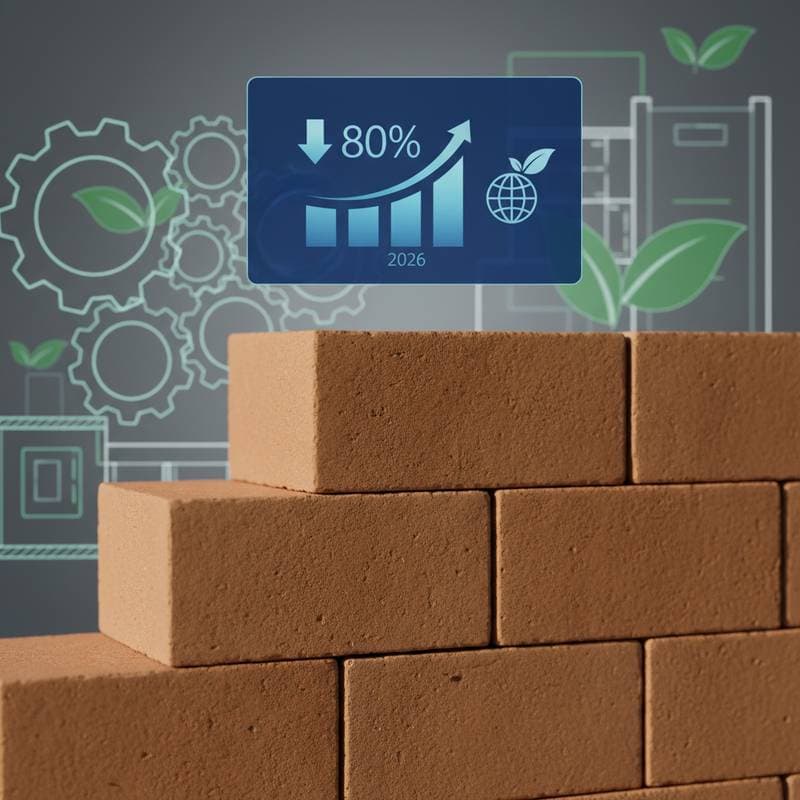
Zero-Cement Geopolymer Bricks Transform Construction by 2026
Geopolymer bricks, which eliminate the need for Portland cement, represent a significant advancement in masonry. These bricks incorporate industrial byproducts such as fly ash or slag, activated by alkaline solutions to create a robust binder. This approach matches or surpasses the strength of conventional concrete while substantially reducing environmental impact.
The production process yields bricks with reduced carbon emissions, elevated compressive strength, and enduring durability. Builders benefit from materials that align with sustainability goals without compromising performance.
Advantages and Challenges
Advantages
- Reduced carbon emissions. These bricks generate up to 80 percent less carbon compared to cement-based alternatives.
- Superior strength. Compressive strength equals or exceeds that of fired clay bricks or concrete blocks.
- Enhanced thermal performance. The materials withstand extreme temperatures and fluctuations, performing well in diverse climates.
- Accelerated curing. Full strength develops more quickly, which accelerates project timelines.
- Waste material utilization. Industrial byproducts find productive use, reducing landfill contributions.
Challenges
- Market limitations. Availability remains inconsistent as the technology gains traction.
- Handling requirements. Alkaline activators demand precise mixing and protective equipment.
- Price fluctuations. Costs vary based on proximity to fly ash, slag, and chemical suppliers.
- Regulatory hurdles. Certain building authorities have yet to fully approve geopolymer options in standard codes.
Cost Considerations
Geopolymer brick material costs range from 1.50 to 2.50 dollars per square foot. Installation expenses typically fall between 6 and 10 dollars per square foot, influenced by site conditions, layout complexity, and jointing methods. Projects with straightforward access and scale toward lower costs, while intricate designs or challenging terrains increase totals. As manufacturing expands, prices should decline with greater competition.
Durability and Upkeep
These bricks offer a service life exceeding 75 years with routine maintenance. They demonstrate strong resistance to efflorescence, chemical erosion, and freeze-thaw cycles relative to cement counterparts. Routine cleaning involves mild detergent and water. Steer clear of harsh acids or high-pressure washing to preserve surface integrity. In exposed environments like coastal or industrial sites, optional breathable coatings provide added protection, though sealing proves unnecessary in most cases.
Key Specifications to Verify
Prior to purchase, evaluate the following attributes:
- Compressive strength: At least 4,000 psi for standard wall applications.
- Water absorption: No more than 8 percent for outdoor use.
- Freeze-thaw resistance: Compliance with ASTM C67 or equivalent standards.
- Size consistency: Precise dimensions support uniform mortar joints.
- Color stability: Batch-to-batch uniformity, as variations arise from source materials.
Preparation Guidelines
Installation mirrors traditional masonry over a firm, compacted base or mortar layer. Prioritize effective drainage to avoid water accumulation. For foundational or retaining structures, assess soil load-bearing capacity and incorporate gravel for drainage. Vertical walls require adequate footing dimensions and reinforcement in line with local regulations. Protect stored bricks from moisture and debris by covering them until installation.
Step-by-Step Installation
- Outline the structure. Establish reference lines using stakes and string for walls or pathways.
- Establish the foundation. Compact the subgrade thoroughly and pour a concrete footing if required for stability.
- Prepare joint materials. Select polymer-based compounds compatible with geopolymer formulations.
- Position the base layer. Employ a level to ensure alignment and plumb.
- Construct subsequent courses. Offset joints for structural integrity and maintain even bed depths.
- Finish joints. Eliminate surplus material promptly and tool for a neat appearance.
- Facilitate curing. Follow manufacturer guidelines, such as misting or covering to retain moisture.
Design Patterns and Variations
Popular layouts encompass running bond, stack bond, and herringbone configurations. Running bond optimizes load transfer in load-bearing walls. Stack bond suits non-structural facades for aesthetic appeal. Herringbone patterns enhance visual dynamics in pathways or boundary features. Available finishes span smooth grays to textured earth tones and charcoals, determined by input materials.
DIY Feasibility Versus Professional Installation
Individuals equipped with essential masonry tools may manage modest projects like garden borders. Professional masons prove essential for substantial walls, load-bearing elements, or designs involving engineering specifications. Alkaline components require gloves, goggles, and adherence to safety data sheets. Engage experts for integrations with reinforcement, utilities, or intricate detailing.
Addressing Potential Issues
- Cracking on surfaces: Typically results from inadequate curing or moisture inconsistencies. Repair using matching geopolymer compounds.
- Efflorescence buildup: Salt residues emerge from internal migration. Dissolve with a vinegar mixture and flush thoroughly.
- Color inconsistencies: Arise from batch differences. Integrate materials evenly or apply mineral-based stains for cohesion.
- Joint instability: Address gaps by repointing with appropriate mortar. Verify expansion joint placement to accommodate movement.
Climate and Regional Adaptations
In frigid areas, these bricks excel against freeze-thaw degradation. Arid regions appreciate their low permeability, minimizing erosion and spalling. Select salt-tolerant variants for marine environments. Direct surfaces to promote runoff and limit water retention around installations.
Comparable Options
- Fly ash-enhanced concrete blocks. Incorporate partial cement for moderated emissions.
- Compressed earth blocks. Suitable for arid settings, though they demand protection in humid conditions.
- Recycled aggregate concrete. Lowers virgin material demands but retains cement dependency.
- Calcium silicate bricks. Offer refined surfaces and longevity, albeit with higher carbon profiles than geopolymers.
Advancing Eco-Friendly Construction Practices
Geopolymer bricks enable reduced environmental footprints in masonry without sacrificing reliability. With expanding production and regulatory alignment, accessibility will improve. Builders should collaborate with informed suppliers, verify material properties, and integrate these solutions strategically for optimal results.