
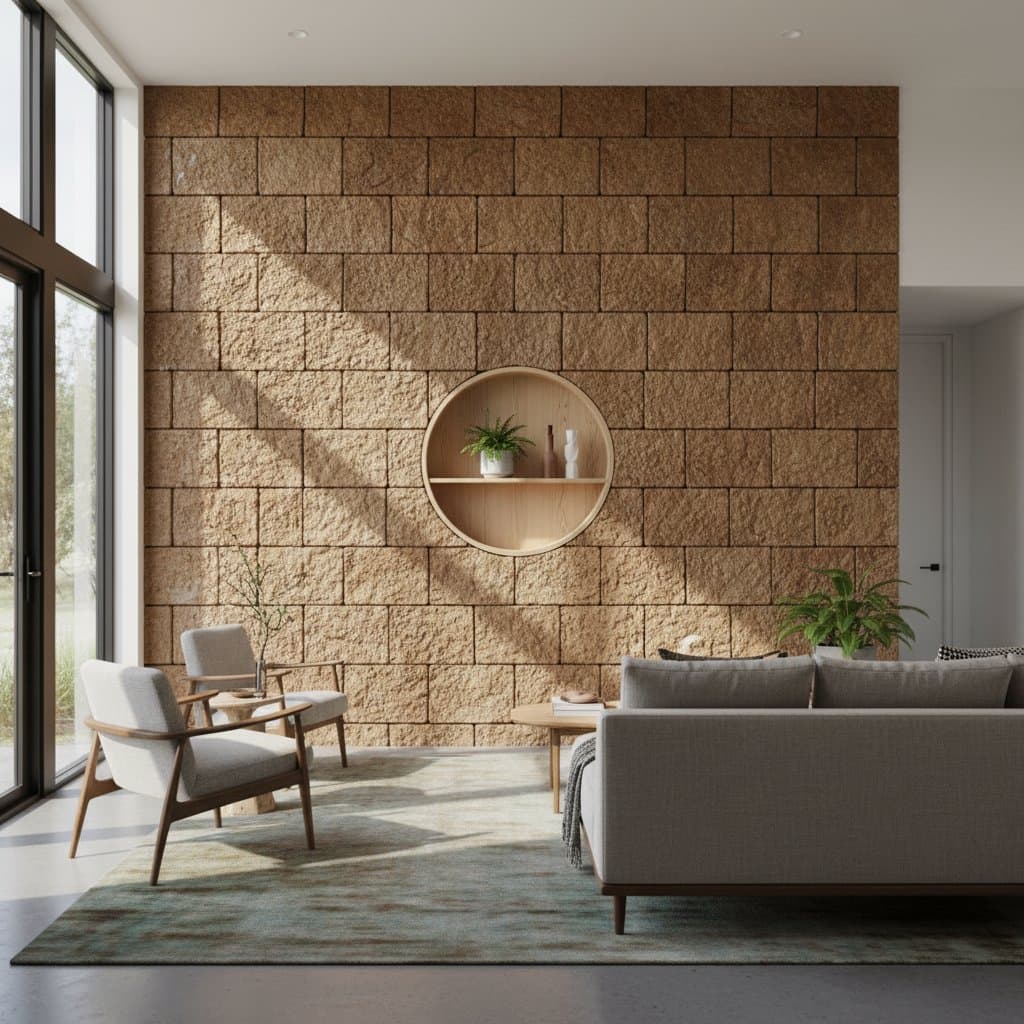
Mycelium Bricks: Living Masonry That Grows Stronger
Mycelium bricks consist of blocks formed from the root-like structure of fungi combined with agricultural waste. The fungal network binds the organic matter into a cohesive, lightweight solid through natural growth. After drying or heat treatment, this biological composite functions similarly to traditional bricks, yet it develops via living processes instead of high-energy manufacturing.
Advantages and Limitations
Advantages
- Fully renewable and compostable, utilizing organic byproducts
- Exceptionally lightweight, which lowers handling and transportation expenses
- Superior thermal and acoustic insulation properties
- Easily molded into custom shapes, generating minimal waste
- Significantly lower embodied energy than fired clay or concrete
Limitations
- Compressive strength falls below that of conventional fired masonry
- Susceptible to moisture damage without adequate sealing
- Restricted to non-structural applications unless reinforced
- Emerging technology with limited integration into building codes and standards
- Reduced outdoor longevity absent protective coatings
Cost Considerations
The material cost for mycelium bricks generally ranges from $3 to $6 per brick, translating to approximately $8 to $15 per square foot for wall coverage. Installation expenses vary from $20 to $40 per square foot, influenced by factors such as surface finishes, curing duration, and regional labor rates.
Expenses increase with custom mold fabrication or additional treatments like vapor barriers and lime coatings. Costs decrease through local production or sourcing of nearby agricultural waste, which minimizes transportation needs.
Durability and Upkeep
In indoor environments with controlled humidity and low impact, mycelium bricks endure for 20 to 30 years. For outdoor applications, sealing prevents water ingress. Conduct annual inspections for cracks, potential mold regrowth, or material softening.
Maintenance requires gentle vacuuming or wiping with a damp cloth. Refrain from soaking or using abrasive methods. For sealed surfaces, apply breathable finishes such as silicate or limewash every few years to block moisture while permitting vapor transmission.
Key Specifications to Evaluate
Prior to purchasing or testing mycelium bricks, verify the following:
- Compressive strength: Ranges from 0.3 to 1.2 MPa, suitable primarily for non-load-bearing walls
- Density: Approximately 200 to 400 kg per cubic meter, far lighter than concrete
- Thermal conductivity: About 0.04 to 0.06 W/m·K, providing effective insulation
- Fire resistance: Seek Class B or superior ratings per relevant building standards
- Moisture absorption: Opt for lower rates in humid environments
Design and Preparation Strategies
Effective use of mycelium bricks depends on site conditions and wall configurations. Deploy them in dry, well-ventilated areas or as interior panels. Prevent direct contact with soil. Incorporate vapor barriers and drainage systems for exterior walls.
Account for extended curing periods and delicate handling. Store bricks in dry, shaded locations. When preparing mixtures onsite, maintain a sterile workspace to avoid contamination from rival fungi or bacteria.
Installation Guidelines
- Mark the wall alignment and ensure level foundation.
- Prepare a stable base, such as a concrete footing or wooden sill.
- Position bricks using natural adhesives or lime-based mortar; steer clear of cement mortars that retain moisture.
- Offset joints in a staggered pattern to enhance stability, akin to traditional bricklaying.
- Add edge restraints or framing to control expansion and contraction.
- Apply sealants or coatings after the wall achieves full dryness.
Handle the material with care, given its relative softness compared to fired bricks. Employ hand saws or serrated knives rather than power tools to minimize dust and prevent fractures.
Layout Patterns and Variations
Standard masonry patterns apply, including running bond, stack bond, or Flemish bond. For paneling or insulation, produce interlocking units during the molding process.
Select square or rectangular forms for structural walls, or utilize curved molds for ornamental features. Advanced techniques involve growing bricks directly into final shapes, eliminating the need for cutting and further reducing waste.
DIY Projects Versus Professional Installation
DIY efforts work well for modest interior dividers, soundproofing panels, or non-critical garden features. Success demands patience, sterile conditions, and consistent temperature management throughout growth.
Engage professionals for:
- Load-bearing or structural walls
- Systems integration involving plumbing, electrical, or ventilation
- Outdoor coatings for weather resistance
- Compliance with permits and codes
Troubleshooting Common Issues
Softening or crumbling: Typically results from excessive moisture or insufficient drying. Remedy by re-drying with good airflow and reapplying sealant.
Mold recurrence: Stems from elevated humidity or water intrusion. Enhance airflow and use antifungal treatments.
Cracking on surfaces: Arises from irregular drying. Smooth with light sanding and repair using mycelium-based slurry or compatible fillers.
Discoloration: Often benign, due to inconsistent nutrient spread during cultivation; monitor for structural effects.
Climate and Regional Adaptations
In colder climates, unsealed mycelium risks damage from freeze-thaw cycles. Position within the building's thermal boundary or protect with permeable sealers.
Humid or coastal settings necessitate vapor barriers and elevated bases to combat saturation. Arid zones prove optimal, leveraging the material's insulation to stabilize indoor climates.
Urban environments with polluted air may accelerate surface fading, though this affects appearance rather than integrity.
Comparable Materials
- Compressed earth blocks: Offer greater strength for structural roles, yet prove heavier and more labor-demanding.
- Hempcrete: Matches insulation benefits with improved strength and moisture handling, although curing takes longer.
- Recycled paper bricks: Remain lightweight and economical, but lack long-term durability.
- Aerated concrete: Facilitates straightforward installation and insulation, at the cost of higher production energy.
Select mycelium bricks when emphasizing sustainability, reduced weight, and organic aesthetics. Combine with robust alternatives for demanding load or moisture scenarios.
Strategies for Optimal Implementation
Source or cultivate bricks locally to preserve viability and curb transport emissions. Acquire 10 percent more than required to accommodate cuts and mishaps. Maintain dry, airy storage prior to use.
Restrict finishes to breathable types; avoid moisture-trapping paints or sealants. For custom batches, label and record details to ensure uniformity across projects.
Advancing with Mycelium Applications
Mycelium bricks encourage innovative approaches in construction. They favor methodical experimentation over forceful methods. Begin with simple interior elements or foundational furniture pieces to gauge performance under varying humidity and stress.
As familiarity grows, observe how these biological materials influence broader building practices. Mycelium demonstrates the potential for structures that evolve organically, fostering a shift toward regenerative design.