
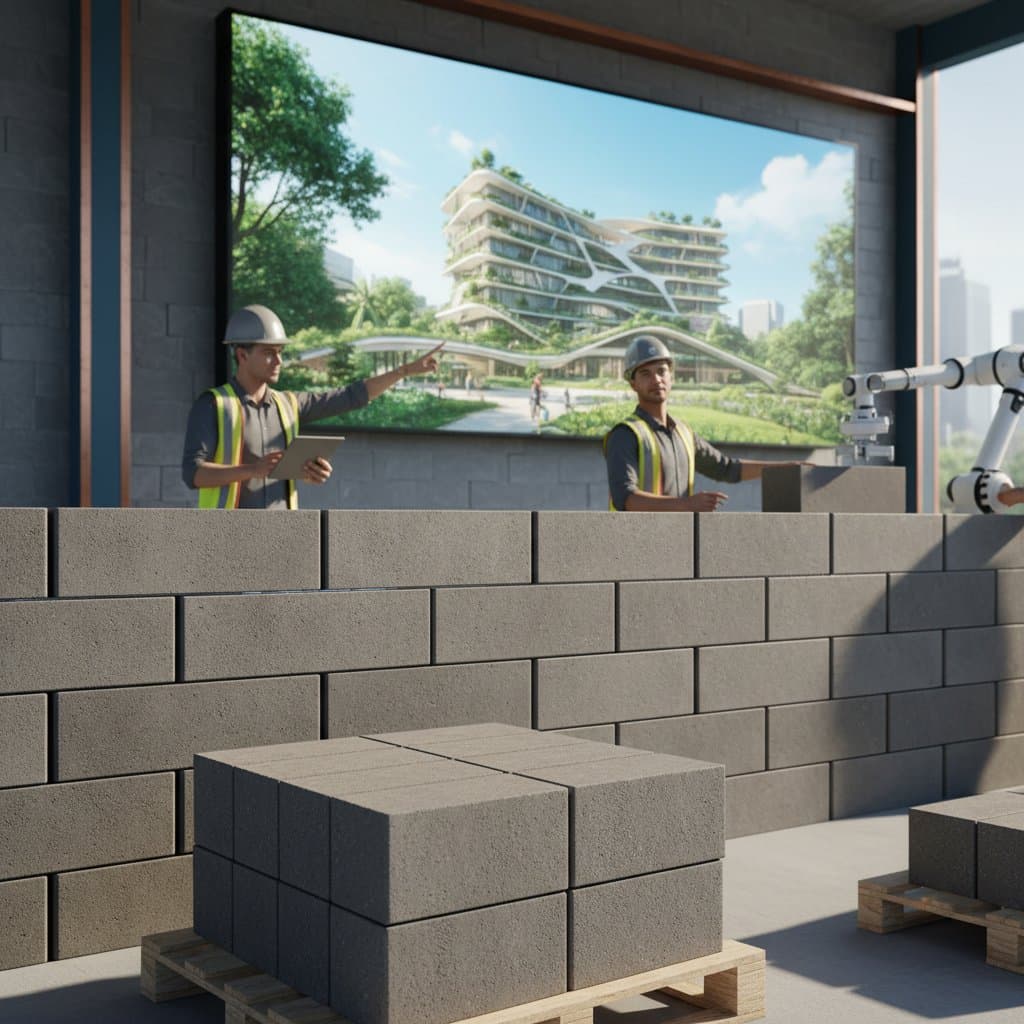
Geopolymer Bricks: Pioneering a Cement-Free Era in 2026
Geopolymer bricks represent an innovative masonry solution that eliminates the need for Portland cement. These bricks form through a chemical process involving industrial byproducts such as fly ash or slag combined with an alkaline activator, which produces a dense, stone-like binder. This approach yields a material that matches or surpasses the durability of conventional concrete blocks and fired clay bricks while significantly reducing environmental impact.
Builders, architects, and sustainability experts increasingly favor geopolymer bricks for their ability to lower greenhouse gas emissions during production. Traditional cement manufacturing accounts for a substantial portion of global carbon dioxide output, but geopolymer alternatives repurpose waste materials, conserving resources and minimizing energy use. For residential and commercial projects, these bricks address pressing concerns about long-term performance, aesthetic versatility, and integration with existing building practices.
The appeal extends to urban planners seeking to meet stricter environmental regulations. As cities prioritize green infrastructure, geopolymer bricks offer a pathway to compliant, high-performance structures. Homeowners benefit from reduced lifetime costs, while developers appreciate the material's adaptability in diverse applications, from load-bearing walls to decorative facades.
Understanding Production and Environmental Benefits
The production of geopolymer bricks begins with sourcing byproducts from industries like coal power plants or steel mills, materials that would otherwise require disposal. An alkaline solution triggers a polymerization reaction, binding the particles into a solid matrix at ambient temperatures, unlike the high-heat kilns needed for clay bricks. This low-energy process cuts carbon emissions by up to 80 percent compared to Portland cement-based products.
Beyond emissions, geopolymer bricks enhance resource efficiency. They require no virgin aggregates in many formulations, reducing quarrying demands and habitat disruption. Their composition also improves recyclability at the end of a building's life, aligning with circular economy principles. These attributes make geopolymer bricks a cornerstone for achieving net-zero construction goals by 2030 and later.
Cost Analysis and Value Proposition
Geopolymer brick prices generally span from 70 cents to 1.50 dollars per unit, influenced by factors such as dimensions, surface finishes, and the origin of source materials. When factoring in installation, expect costs between 9 and 14 dollars per square foot, encompassing mortar, labor, and preparatory work.
Custom features like specialized colors or textured patterns elevate expenses, particularly for limited production quantities. Economies of scale emerge with larger orders, proximity to manufacturing sites, and designs that leverage standard sizes to avoid excess cutting. Compared to standard concrete blocks, which might cost 50 cents per unit, the premium reflects advanced processing but offsets through diminished upkeep needs.
Over time, the investment proves economical. Geopolymer bricks resist weathering and degradation, potentially extending service life by 20 to 30 years beyond traditional options. In commercial developments, faster on-site curing reduces labor downtime, and localized sourcing lowers transportation emissions and fees, further tipping the balance toward affordability.
Essential Specifications for Selection
Selecting geopolymer bricks demands attention to performance metrics that ensure reliability in specific applications. Prioritize compressive strength ratings of at least 5,000 psi for elements supporting structural loads, such as foundation walls or multi-story exteriors.
Water absorption levels below 10 percent prove crucial for outdoor installations, preventing moisture ingress that could lead to spalling. Evaluate freeze-thaw resistance through certifications tailored to regional weather patterns, confirming the material withstands cycles of expansion and contraction without fracturing.
Dimensional accuracy maintains uniformity, with tolerances ensuring joints align precisely for aesthetic and structural integrity. Consistent coloration supports design consistency in exposed surfaces, while fire ratings should align with or exceed those of conventional masonry, often achieving Class A classifications. Always request documentation of compliance with regional codes or independent testing from accredited labs to validate claims.
Step-by-Step Installation Guide
Successful installation of geopolymer bricks follows established masonry techniques with minor adjustments for the material's properties.
-
Plan the layout. Establish reference lines and levels for the base course to guarantee even alignment across the entire wall.
-
Mix the mortar. Adhere strictly to the manufacturer's guidelines, preparing small batches to maintain optimal workability within the setting window.
-
Lay the foundation course. Position bricks with a spirit level and taut string line, verifying plumb and level at intervals of three to five units.
-
Build subsequent courses. Offset vertical joints by half a brick length to distribute loads evenly and enhance stability. Gently tap each brick into the mortar bed for secure seating.
-
Finish the joints. Once the mortar achieves initial set, tool the joints to create a concave, flush, or raked profile that suits the project's style.
-
Protect during curing. Cover the work to shield it from precipitation and intense sunlight, allowing 24 to 48 hours for initial hardening.
-
Clean the surface. After complete curing, apply a low-pressure water rinse to eliminate any efflorescence or surface haze.
Geopolymer bricks respond well to standard masonry saws for precise cuts, but operators must employ safety gear including goggles and respirators to manage dust.
Deciding Between DIY and Professional Installation
For modest endeavors such as garden borders, raised planters, or low non-structural partitions, skilled homeowners can manage installation independently. The process mirrors traditional bricklaying, requiring basic tools like trowels, levels, and jointers.
Professional masons become essential for demanding scenarios, including weight-bearing partitions, expansive veneers, or engineered retaining walls. Experts select appropriate mortar formulations, maintain precise joint thicknesses, and oversee environmental controls during curing to prevent defects. Engage specialists particularly when projects involve proximity to electrical lines, sophisticated drainage integration, or modifications to legacy buildings, where errors could compromise safety.
Adapting to Regional Climates and Soils
In temperate zones prone to winter freezes, opt for geopolymer bricks with proven freeze-thaw endurance, often tested to endure over 300 cycles. Their inherent low porosity minimizes water retention, reducing risks of surface damage, though effective site drainage and stable backfilling remain non-negotiable.
Tropical or marine environments benefit from the material's superior resistance to saline corrosion and ultraviolet exposure, outperforming cement alternatives in longevity. Selecting lighter hues aids in heat deflection, moderating indoor temperatures and easing cooling loads in sun-drenched locales.
Areas with reactive soils, such as those rich in montmorillonite clays, necessitate robust foundation designs to accommodate differential settlement. Geopolymer brickwork accommodates thermal expansions gracefully, but foundational integrity underpins overall success.
Integrating Geopolymer Bricks into Your Build
Prospective users should first identify nearby distributors to assess stock levels and delivery options. Request physical samples to evaluate texture, weight, and compatibility with selected mortars through small-scale trials.
Consult municipal building authorities to confirm approvals for structural or cladding applications, ensuring seamless permitting. Incorporate standard modular dimensions into blueprints to optimize material use and streamline labor.
Allocate a 5 to 10 percent buffer in quantities to account for on-site breakage, cuts, and provisions for maintenance. Home installers gain confidence by constructing a practice panel to refine techniques prior to full commitment. For ambitious undertakings, seek contractors experienced in geopolymer systems to leverage their expertise.
Adopting geopolymer bricks advances sustainable architecture, preserving structural robustness and visual appeal. Through meticulous preparation and execution, these materials secure enduring results and contribute to diminished environmental burdens for generations.