
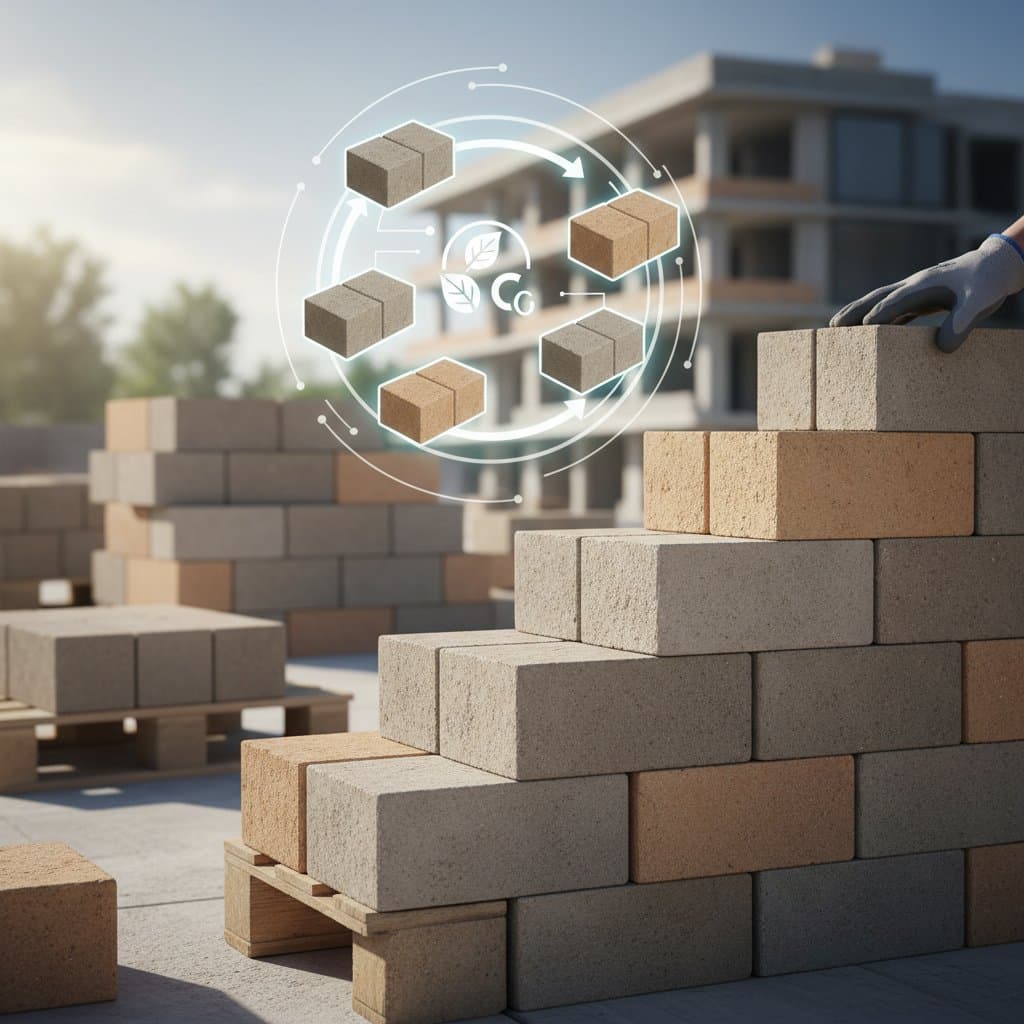
Geopolymer Bricks: A Low-Emission Alternative to Traditional Masonry
Geopolymer bricks represent a significant advancement in sustainable construction materials. These bricks form through a chemical reaction between aluminosilicate sources, such as fly ash or slag, and alkaline activators, eliminating the need for cement or high-temperature kilns. This process yields a durable product that matches the performance of conventional clay or concrete bricks while substantially reducing environmental impact.
Understanding Geopolymer Bricks
Geopolymer bricks consist of industrial by-products like fly ash, ground granulated blast-furnace slag, or metakaolin combined with an alkaline solution. The mixture undergoes a polymerization reaction that creates a rigid, stone-like structure at ambient temperatures. Manufacturers mold these bricks into standard dimensions suitable for load-bearing walls, pavements, or non-structural elements, offering versatility in construction applications.
Advantages and Limitations
Advantages
- Reduced Environmental Impact. The absence of cement production and kiln firing lowers carbon emissions by over 50 percent relative to traditional clay or concrete bricks.
- Superior Strength. These bricks achieve compressive strengths that meet or surpass industry standards for masonry units.
- Enhanced Durability. The compact structure provides resistance to chemical degradation, freeze-thaw cycles, and moisture ingress.
- Thermal Resilience. They maintain integrity under high temperatures, making them ideal for fire-resistant assemblies.
- Efficient Curing Process. Full strength develops within 24 hours at room temperature, accelerating project timelines.
Limitations
- Handling Precautions. Alkaline activators require protective equipment, such as gloves and goggles, during preparation.
- Supply Challenges. Availability depends on regional access to raw materials and established producers.
- Initial Cost Premium. Per-unit pricing exceeds that of standard clay bricks due to specialized processing.
- Aesthetic Variations. Inherent mineral compositions may produce subtle color inconsistencies without added pigments.
- Adaptation Needs. Construction teams must select compatible mortars and follow specific curing protocols.
Cost Considerations
Geopolymer bricks generally cost between $0.75 and $1.25 per unit, influenced by factors such as material sourcing, dimensions, and surface treatments. When installed, expect expenses of $8 to $15 per square foot, encompassing labor, mortar, and finishing work. Custom configurations or remote delivery can increase these figures, while standardized sizes and locally sourced by-products help minimize them.
Longevity and Upkeep
Properly constructed geopolymer brick structures endure for 75 to 100 years with minimal intervention. Their resistance to efflorescence and salt damage outperforms many traditional options. Routine maintenance involves inspecting mortar joints seasonally for signs of wear and cleaning surfaces with a mild detergent solution. Apply a permeable sealer every five to ten years in exposed locations, and avoid abrasive cleaning methods that could compromise joints. For repairs, carefully remove affected bricks and reinstall with compatible mortar to maintain structural integrity.
Key Specifications to Verify
Procure bricks that adhere to these benchmarks for reliable performance:
- Compressive Strength: At least 3,000 psi to support load-bearing applications.
- Water Absorption: No more than 10 percent by weight to ensure suitability for outdoor use.
- Freeze-Thaw Resistance: Validation through standardized cycle testing for cold-weather regions.
- Dimensional Standards: Typical size of 7-5/8 by 3-5/8 by 2-1/4 inches for seamless integration with existing systems.
- Fire Rating: Compliance with ASTM E119 or equivalent codes for fire-rated constructions.
Request documented test results from suppliers to confirm these attributes beyond promotional materials.
Preparation for Construction
Geopolymer brick installations demand a solid foundation comparable to those for clay or concrete masonry. Essential preparations include:
- Secure Footing: Compact and level the base to prevent settling.
- Effective Drainage: Grade the site to divert water from wall bases.
- Logistics Planning: Account for the bricks' weight by designating clear handling areas.
- Environmental Controls: Lay bricks in temperatures above freezing and provide shade during hot weather.
- Mortar Selection: Opt for alkali-resistant formulations to avoid adverse reactions.
Contact utility providers prior to any groundwork to identify underground lines.
Step-by-Step Installation Guide
- Mark the Layout: Establish straight lines with chalk and verify perpendicular corners.
- Install Guides: Set string lines to maintain uniform course heights.
- Prepare Mortar: Adhere to manufacturer guidelines for an alkali-compatible blend.
- Place the Base Course: Level each brick and tap into position with a mallet.
- Build Subsequent Courses: Offset joints and maintain even mortar bedding.
- Finish Joints: Profile them concavely to promote water runoff.
- Protect During Curing: Drape with moist coverings for the first 24 hours.
- Final Cleaning: Apply gentle cleaners after full hardening.
Permit complete drying before adding sealants or finishes to optimize adhesion.
Design Patterns and Finishes
Popular layouts encompass running bond for optimal strength, stack bond for contemporary aesthetics (with added reinforcement for height), and English bond for historical appeal. Finishes vary from sleek surfaces to rustic textures achieved through molding or tumbling. Integral coloring during production or post-cure staining provides customization, while specialized interlocking profiles suit paving projects with reinforced sections.
When to Tackle DIY or Engage Professionals
Suitable for DIY:
- Low-height garden features or planters.
- Non-load-bearing decorative panels.
- Straightforward sites with ample workspace.
Best Left to Experts:
- Elevated or structural walls over four feet.
- Projects involving unstable soil or complex hydrology.
- Intricate designs, including curves or integrations.
- Large-scale activator mixing.
Experienced masons ensure adherence to curing requirements and safety protocols, particularly when handling caustic components.
Addressing Potential Issues
Inadequate Brick Hardness: Results from improper ratios or insufficient curing; test replacement batches and redo affected areas.
Surface Efflorescence: Arises from moisture-transported salts; brush away and seal if recurrent.
Joint Fractures: Stem from incompatible materials; switch to flexible, geopolymer-friendly compounds.
Pigment Degradation: Occurs under prolonged UV light; counteract with protective sealers.
Conduct regular audits by sounding bricks for voids and examining joints for separation, prioritizing moisture control in fixes.
Adapting to Regional Conditions
In humid environments, prioritize vapor-permeable sealers and ventilated designs to manage moisture. Cold climates necessitate verified freeze-thaw performance to withstand seasonal shifts. Arid, hot areas leverage the material's thermal stability, reducing risks of cracking from expansion. Coastal installations benefit from inherent low permeability; periodic rinsing prevents salt buildup and prolongs durability.
Comparable Material Options
Where geopolymer bricks prove inaccessible, evaluate these alternatives:
- Fly Ash-Enhanced Concrete Blocks: Incorporate partial cement substitution for moderate emission reductions.
- Compressed Stabilized Earth Blocks: Ideal for arid settings and simple builds, emphasizing natural resources.
- Autoclaved Aerated Concrete: Offers insulation and lightness, though it yields to impacts more readily than solid masonry.
- Calcium Silicate Units: Rely on lime-sand mixes with pressurized curing, bypassing cement entirely.
Selections balance trade-offs in expense, robustness, and ecological benefits, with geopolymers excelling in emission efficiency and load capacity.
Emerging Market Dynamics
Rising demand stems from repurposing industrial wastes like fly ash and slag, transforming former pollutants into valuable resources. Producers adopt automation for consistent quality and efficiency, aligning with stricter emission regulations. Availability surges in industrial hubs near power and steel facilities, prompting broader adoption in commercial and residential developments.
Essential Strategies for Optimal Results
- Anticipate Overages: Order 5 to 10 percent additional units to cover cuts and damages.
- Coordinate Deliveries: Schedule for minimal curing delays post-production.
- Safeguard Materials: Stack under tarps with ventilation to prevent moisture damage.
- Harmonize Aesthetics: Tint mortar to blend with brick variations.
- Maintain Records: Log material sources for claims and consistency checks.
These practices streamline workflows and enhance final outcomes.
Advancing Sustainable Builds
Begin with modest applications, such as boundary walls, to master geopolymer handling. This foundation equips builders for expansive endeavors, contributing to reduced carbon footprints and resilient structures that endure across generations.