
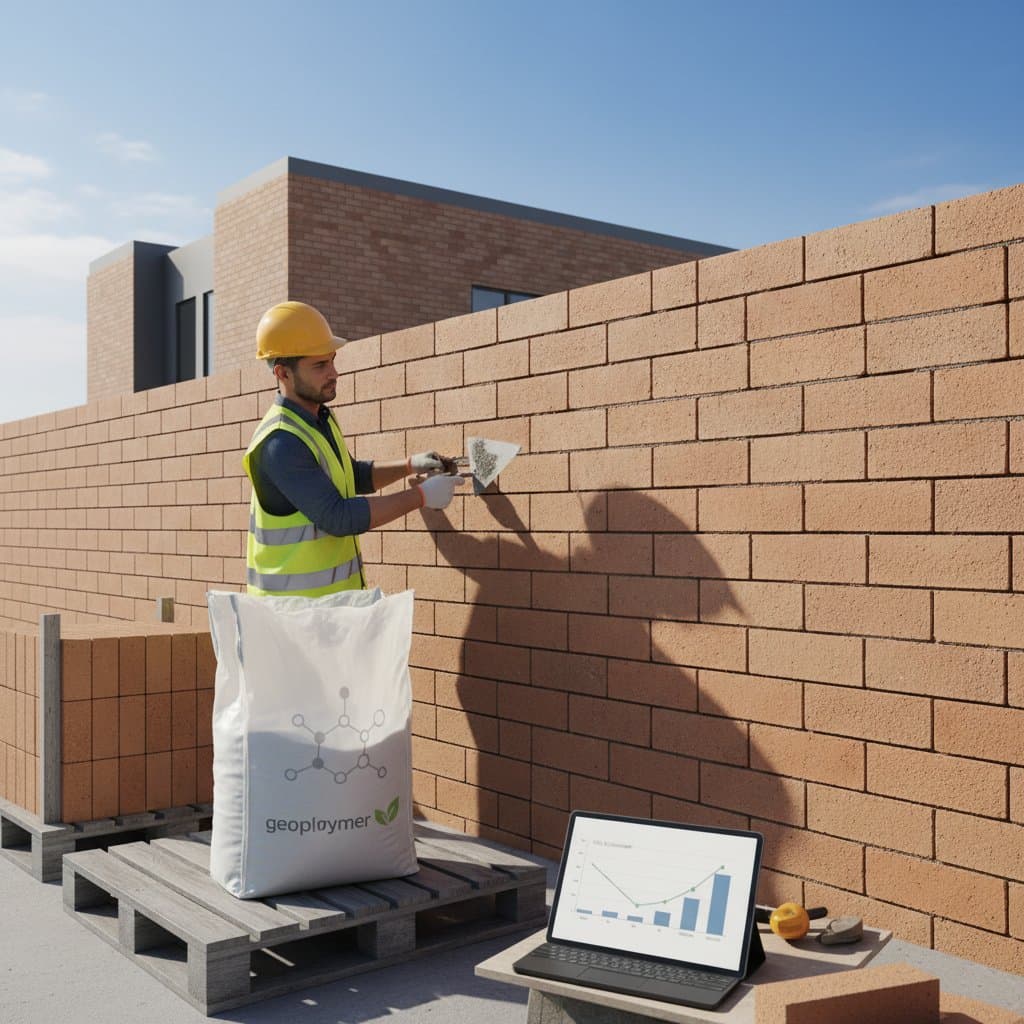
Understanding Zero-Cement Bricks
Zero-cement bricks mark a significant advancement in masonry practices. These units replace Portland cement with geopolymer binders crafted from industrial byproducts, including fly ash, slag, and metakaolin. The resulting product offers durability and performance on par with conventional bricks, yet it imposes a far lighter environmental load.
Cement production generates substantial carbon dioxide emissions due to high-energy kilns and chemical processes. Geopolymer binders circumvent these issues through alkali activation, which unites aluminosilicate materials into a robust matrix at reduced temperatures. This method yields bricks that set rapidly, withstand environmental stresses, and minimize embodied carbon.
Such bricks suit applications demanding both structural reliability and ecological benefits, from load-bearing walls to paving and retaining walls. They replicate the aesthetics of clay or concrete bricks while curtailing waste and energy demands. Builders benefit from grasping the distinctions in chemistry, curing, and installation techniques to achieve optimal outcomes.
The Importance of Geopolymer Technology
Construction professionals and property owners grapple with integrating cost-effectiveness, robustness, and sustainability. Cement contributes heavily to worldwide building emissions, making its substitution with geopolymer binders a direct path to diminishing a project's carbon profile.
These bricks enhance longevity by resisting sulfate attacks, chloride ingress, and thermal breakdown more effectively than standard masonry. This durability leads to reduced upkeep expenses and prolonged usability.
Geopolymer manufacturing ensures uniform strength progression, supporting dependable performance in structural and non-structural roles. When engineered correctly, these bricks surpass established benchmarks for traditional materials.
Deciding Between DIY and Professional Installation
The principles behind zero-cement bricks appear straightforward, yet fabricating them requires specialized expertise beyond typical home projects. Geopolymer activation demands exact proportions of alkali solutions, water, and raw materials. Managing activators like sodium hydroxide necessitates safety equipment and technical proficiency.
Homeowners should opt for pre-manufactured zero-cement bricks from verified producers. Installation aligns closely with standard bricklaying, employing mortar formulated for geopolymer compatibility, which places it within reach for skilled DIY enthusiasts.
For substantial endeavors, such as load-bearing walls or retaining structures, engage a structural engineer or certified mason versed in geopolymer systems. Professionals evaluate load dynamics, curing timelines, and adhesion properties to safeguard integrity.
Project Planning Essentials
Site Evaluation
Begin by examining soil stability at the build location. Soils high in clay or prone to poor drainage require a compacted gravel base or concrete footing for support. Direct the site to slope gently away from the wall to avert water accumulation.
In exterior settings, account for solar exposure and freeze-thaw occurrences. Geopolymer bricks tolerate temperature fluctuations adeptly, provided the mortar and base align with their thermal characteristics.
Key Measurements
Determine the structure's length, height, and thickness. Calculate total volume, then divide by a single brick's volume to determine quantity needs. Include an additional 10 percent to accommodate cuts and breakage.
Factor in mortar joint spacing, typically 3/8 inch. For pathways or landscape walls, establish guide lines using stakes and string prior to excavation or initial placement.
Environmental Considerations
Ambient humidity and temperature influence curing efficacy. Geopolymer bricks thrive in temperate conditions. Refrain from installation amid heavy precipitation or under blazing sunlight, as these can accelerate mortar drying.
In areas subject to frequent freezes, select mortar rated for freeze-thaw cycles and uphold uniform joint widths to eliminate vulnerabilities.
Anticipated Challenges
Zero-cement bricks weigh marginally more than standard clay varieties. Transport them cautiously, wearing gloves and employing correct lifting methods. Enlist assistance for extended walls or elevations above waist height. Secure scaffolding or platforms for elevated work.
Surface textures may exhibit minor variations, so verify level and plumb alignment after every few layers to sustain uniformity.
Selecting Appropriate Materials
Zero-cement bricks vary by formulation, each leveraging distinct base components and curing approaches.
Fly Ash-Based Geopolymer Bricks
- Advantages: Superior compressive strength, sleek surface, cost-effective, repurposes waste materials.
- Drawbacks: Regional supply constraints, requires controlled moisture during curing.
- Pricing: Aligns with average concrete brick costs.
- Required Expertise: Moderate; ideal for DIY setup.
- Optimal Applications: Internal or external walls featuring adequate drainage.
Slag-Based Geopolymer Bricks
- Advantages: Exceptional chemical and salt resistance, extended durability.
- Drawbacks: Greater density and weight, demands robust substructures.
- Pricing: Marginally above fly ash variants.
- Required Expertise: Intermediate to advanced.
- Optimal Applications: Marine or industrial settings.
Metakaolin-Based Geopolymer Bricks
- Advantages: Refined appearance, consistent pigmentation, outstanding thermal tolerance.
- Drawbacks: Elevated cost, sensitive to curing precision.
- Pricing: Premium category.
- Required Expertise: Advanced or professional oversight.
- Optimal Applications: Decorative exteriors or heat-exposed areas like hearths.
Essential Tools and Supplies
Manual Implements
- Brick trowel to apply mortar evenly.
- Spirit level to confirm straightness.
- Brick hammer for precise trimming.
- Mason's line with blocks to guide even rows.
- Jointer tool to profile mortar seams.
Powered Devices
- Masonry saw or angle grinder fitted with a diamond blade for accurate divisions.
- Paddle mixer to achieve homogeneous mortar blends.
- Cordless drill for securing anchors and fittings.
Equipment Rentals
- Plate compactor to solidify the foundation.
- Mortar mixer for extensive volumes.
- Scaffolding systems for vertical builds.
Practical Advice: Lease mixing apparatus for mortar quantities surpassing one cubic yard. Hand-mixing risks inconsistent textures.
Supply Inventory
- Zero-cement bricks, including 10 percent surplus.
- Geopolymer-compatible mortar.
- Gravel or sand for base preparation.
- Water for mixing and post-installation rinsing.
- Joint sealant for moisture-prone exposures.
Detailed Installation Guide
- Foundation Setup: Dig to the specified depth, often 6 to 8 inches for modest walls. Compact gravel layers to create a firm base.
- Initial Layer Placement: Establish a reference line with a level. Apply a slim mortar layer, position bricks securely, and verify horizontality and alignment.
- Subsequent Courses: Offset joints by half a brick to bolster stability. Maintain uniform mortar depth. Gently tap bricks into position using the trowel handle.
- Frequent Verifications: Employ the level after every two or three rows. Address any misalignments promptly to prevent escalation.
- Joint Completion: As mortar sets, tool the seams to densify and contour them. Remove surplus before full hardening.
- Curing Protocol: Moisten the assembly for a minimum of two days. Drape with plastic in arid or breezy weather.
- Optional Sealing: For vulnerable sites, coat with a permeable sealer to limit water uptake while permitting vapor escape.
Expert Recommendations
- Surplus Planning: Procure 10 percent additional bricks and mortar to offset damages and alterations.
- Integrity Test: Lightly strike bricks; a resonant tone signals proper density and set.
- Alternative Tools: Substitute a masonry saw with a cold chisel and hammer for minor modifications.
- Straightness Support: Chalk lines per row ensure linear progression.
Long-Term Care and Upkeep
Post-curing, scrutinize for fissures or voids in joints. Patch imperfections with new mortar. For exposed faces, clear debris with a brush and flush with water.
Apply annual inspections in harsh climates, focusing on joint integrity and surface erosion. Refresh sealants as needed to preserve protective qualities. This routine sustains the bricks' performance, ensuring decades of reliable service while upholding environmental gains.