
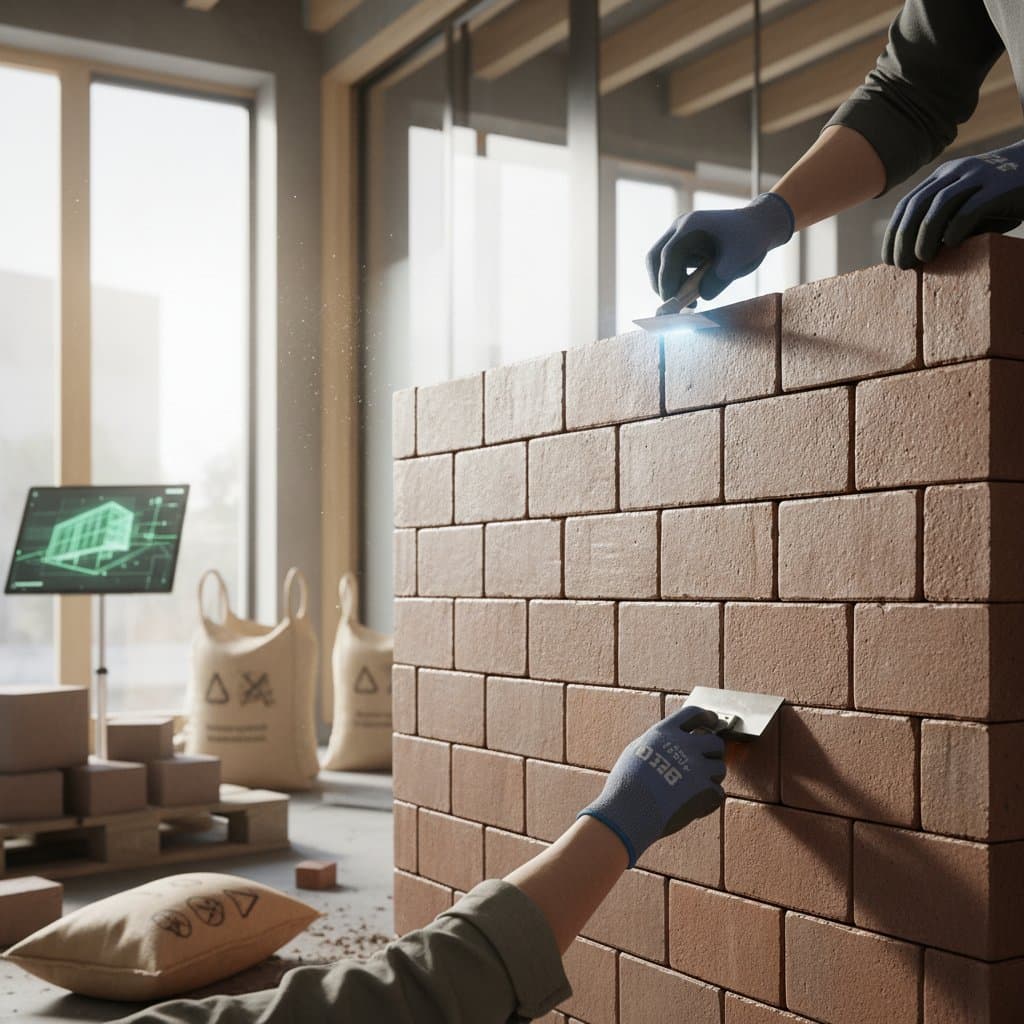
Zero-Cement Bricks: Revolutionizing Sustainable Masonry
Zero-cement bricks, also known as geopolymer bricks, substitute traditional Portland cement with industrial byproducts that solidify via chemical reactions. These units resemble conventional masonry in appearance and handling yet significantly lower carbon emissions without compromising structural integrity or longevity.
The shift to zero-cement options addresses the environmental impact of cement production, which accounts for a substantial portion of global emissions. Builders and homeowners alike can adopt these materials to support greener projects while maintaining high performance standards.
Understanding Zero-Cement Bricks
These bricks rely on binders derived from fly ash, slag, or similar aluminosilicate sources, activated by alkaline solutions to create a stone-like matrix. This process eliminates the need for cement, avoiding the energy-intensive limestone calcination and associated carbon dioxide release from the binder production.
The resulting material forms a robust, inorganic structure that bonds at ambient temperatures. Unlike cement-based products, zero-cement bricks leverage waste from industries like power generation and steel manufacturing, promoting resource efficiency.
Advantages and Drawbacks
Advantages
- Substantially reduced carbon footprint, with emissions reductions exceeding 50 percent relative to traditional cement blocks.
- Superior compressive strength, frequently surpassing 5,000 psi for enhanced load-bearing capacity.
- Strong resistance to elevated temperatures and chemical degradation, ideal for harsh environments.
- Low water absorption rates below 10 percent, minimizing issues like efflorescence and freeze-thaw damage.
- Seamless integration with standard masonry equipment and techniques.
Drawbacks
- Availability limited to certain suppliers, potentially increasing upfront costs in underserved areas.
- Necessitates precise mixing ratios and controlled curing to optimize strength development.
- Alkaline activators pose handling risks due to their corrosive nature, requiring personal protective equipment.
- Ongoing research continues to refine performance metrics for diverse climates and extended exposure scenarios.
Cost Considerations
Geopolymer brick materials generally cost between $3 and $6 per square foot. Installation expenses range from $10 to $18 per square foot, influenced by local labor rates, design intricacy, and site conditions. Factors such as custom pigmentation, specialized coatings, or limited batch sizes can elevate prices, while bulk orders utilizing nearby waste sources often yield savings.
For large-scale endeavors, economies of scale further decrease per-unit expenses. Budgeting should account for potential transportation fees if local suppliers are scarce.
Expected Lifespan and Upkeep
When fabricated correctly, zero-cement bricks endure for 50 years or longer, akin to premium concrete masonry. They exhibit minimal cracking or surface deterioration under proper drainage conditions. Routine maintenance involves annual inspections of mortar joints, with repointing as needed to preserve integrity.
Cleaning requires only mild detergent applied with a soft brush, followed by a low-pressure rinse. Optional sealants provide added protection against stains in humid or marine settings, extending aesthetic appeal.
Key Specifications to Evaluate
- Compressive strength: Target a minimum of 5,000 psi to ensure reliability in wall applications.
- Water absorption: Select options under 10 percent for outdoor durability.
- Freeze-thaw resistance: Verify ratings suitable for your local climate to prevent spalling.
- Dimensional accuracy: Confirm adherence to standards like ASTM C90 for consistent fitting.
- Color uniformity: Test samples from production batches to guarantee even wall finishes.
Prioritizing these specs helps select materials that align with project demands and regulatory requirements.
Project Planning and Preparation
Treat zero-cement bricks like traditional masonry by starting with a solid foundation and effective drainage systems. Incorporate expansion joints in longer walls to accommodate movement. Store materials in dry conditions, as excess moisture can disrupt the activation process.
Designate secure zones for mixing and handling, especially with liquid activators that demand ventilation and protective measures. Consult local building codes early to validate structural approvals.
Step-by-Step Installation Guide
- Mark wall or pavement layouts using string lines and stakes for precision alignment.
- Prepare mortar formulated for geopolymer compatibility, or opt for dry-stack interlocking systems.
- Apply mortar evenly to brick surfaces and position units, securing with a rubber mallet.
- Maintain uniform joint thicknesses of approximately 3/8 inch throughout the layout.
- Smooth joints with a tool once the mortar gains initial firmness.
- Shield newly laid sections from precipitation and intense sunlight to support even curing.
- Perform joint cleaning only after full surface hardening, typically after 24 to 48 hours.
Following these steps ensures a stable, professional-grade result.
Design Patterns and Variations
Zero-cement bricks adapt well to various layouts, including running bond for structural stability, stack bond for contemporary aesthetics (with added reinforcement), and herringbone or basketweave for decorative pavements and accents. Running bond remains the go-to for load-bearing walls due to its interlocking strength.
Available hues range from neutral grays and earthy reds to bespoke shades achieved through mineral additives. Experiment with combinations to enhance visual interest without altering core functionality.
DIY Projects Versus Professional Installation
Experienced individuals can manage modest tasks like garden borders or ornamental paths with prefabricated units. The process mirrors conventional brickwork, though monitoring environmental factors during curing proves essential. Source pre-mixed products to simplify handling.
Engage certified masons for structural elements, multi-story builds, or extensive retaining walls. Professional expertise is crucial when dealing with on-site mixing of activators, ensuring safety and compliance.
Addressing Common Issues and Solutions
- Brittle or powdery units: Often result from inadequate mixing or activator imbalances; discard and recalibrate the formula for replacements.
- Surface cracks: Stem from inconsistent curing or foundational shifts; seal minor fissures with matching repair compounds and monitor for progression.
- Salt efflorescence: Arises from moisture-trapped impurities; remove by dry brushing and gentle rinsing, then enhance site drainage.
- Failing mortar bonds: Indicate adhesion problems or structural settling; repoint using geopolymer-specific mixes to restore cohesion.
Prompt intervention prevents minor problems from escalating.
Adapting to Regional Climates
In regions prone to freezing, prioritize bricks with proven exterior ratings and implement robust drainage to avert water ingress. Arid, high-heat areas benefit from shading during initial curing to avoid shrinkage cracks from rapid drying.
Coastal zones and industrial sites leverage the inherent resistance of geopolymer matrices to salinity and acidity, outperforming traditional options in corrosive atmospheres.
Viable Alternatives
Where zero-cement bricks prove inaccessible, explore blended cements with reduced clinker content or lime-pozzolan formulations, both offering lower emissions than standard Portland mixes. Autoclaved aerated concrete blocks serve lightweight needs with superior insulation, albeit at reduced density.
Reclaimed clay bricks provide another eco-friendly path when sourcing and logistics permit, recycling existing materials effectively.
Implementing Zero-Cement Bricks Effectively
Begin adoption by identifying certified regional providers who supply verified composition and performance documentation. Obtain prototypes for on-site trials to assess handling and aesthetics. Tailor timelines to ambient conditions, as geopolymer setting responds to temperature and humidity variations.
Secure building permit approvals for load-bearing applications through code-compliant testing. This proactive approach integrates zero-cement solutions into diverse projects, from residential additions to commercial facades.
By repurposing industrial residues into resilient components, zero-cement bricks exemplify circular economy principles. They enable emission reductions and resource conservation, fostering durable structures that align with long-term sustainability objectives.