
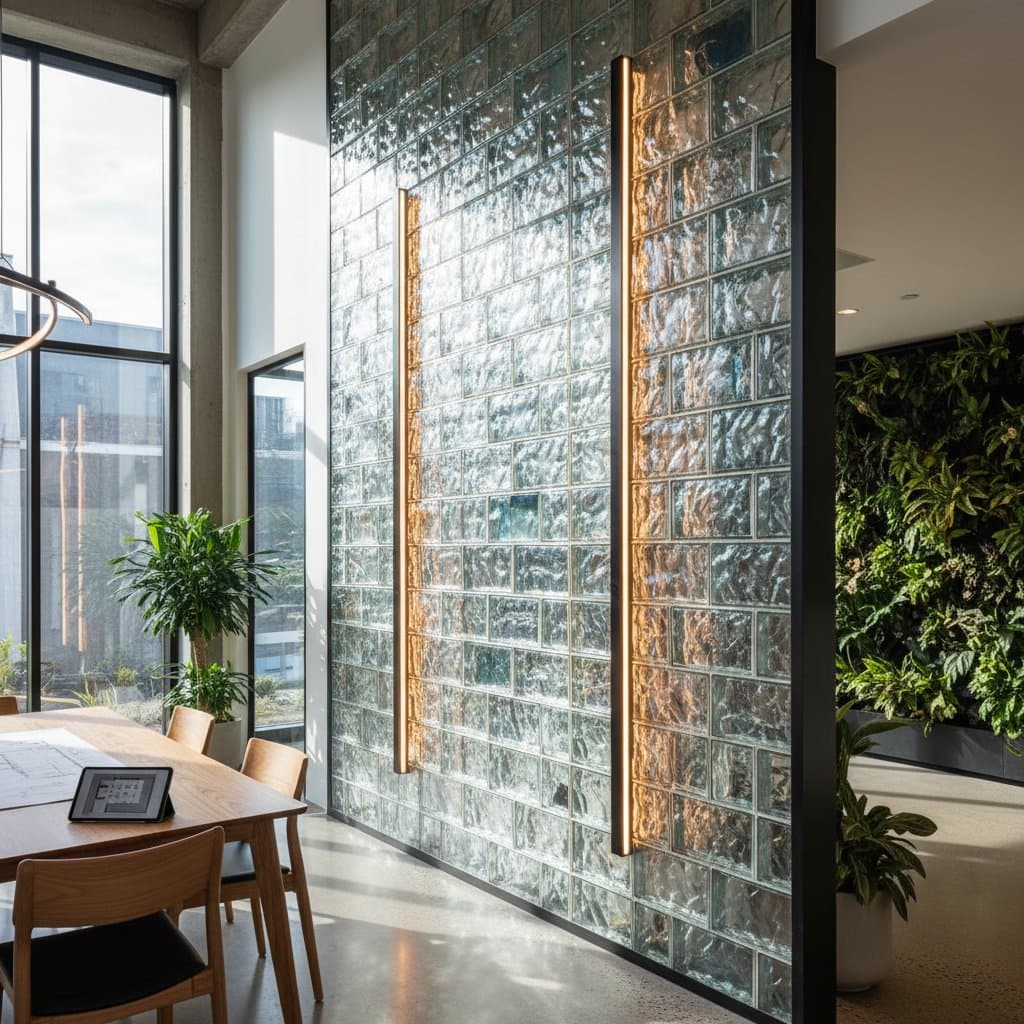
Understanding Recycled Glass Bricks
Recycled glass bricks redefine masonry practices for builders and designers. Manufacturers collect post-consumer glass waste, melt it at high temperatures, and mold it into robust, semi-transparent blocks suitable for load-bearing and ornamental applications. These bricks stand out for their eco-friendly production and ability to transmit light, creating brighter interiors without additional energy costs.
Unlike conventional clay bricks, which demand substantial energy for kiln firing and deplete natural clay deposits, recycled glass bricks utilize abundant waste materials. This approach diminishes reliance on virgin resources and promotes a circular economy in construction. Although their appearance differs from opaque clay options, recycled glass bricks adhere to established standards for compressive strength, thermal performance, and assembly techniques.
The Role of Recycled Glass in Modern Masonry
Masonry traditionally prioritizes durability and visual harmony. Recycled glass bricks advance this legacy by incorporating superior environmental attributes. Their non-porous composition resists water absorption, thereby preventing issues such as mold growth and structural degradation from freeze-thaw cycles in colder climates.
The inherent translucency of these bricks facilitates the passage of natural light, which lowers electricity consumption for illumination in hallways, atriums, or office spaces. This feature enhances occupant well-being while maintaining the material's proven mechanical properties. In residential settings, they create serene, light-filled rooms; in commercial projects, they support energy-efficient layouts.
Sustainability drives their adoption further. Glass constitutes a significant portion of municipal waste, persisting in landfills for centuries without breaking down. Transforming it into bricks conserves resources, cuts carbon emissions from production, and aligns with green building certifications like LEED.
Planning a Recycled Glass Brick Project
Effective planning ensures that recycled glass bricks integrate seamlessly with your architectural vision. Evaluate project scale, location, and performance requirements to select the optimal type and method.
Site Assessment
Begin by inspecting the foundation for stability and evenness. Measure load requirements precisely; structures bearing weight, such as retaining walls or upper-story partitions, necessitate input from a licensed structural engineer. Simpler applications, including freestanding garden screens or room dividers, suit hands-on enthusiasts with basic masonry experience.
Consider environmental factors like sunlight exposure and humidity levels, as these influence light diffusion and longevity. Obtain necessary permits early, especially for exterior installations that alter building envelopes.
Material Selection
Select bricks based on desired strength, light transmission, and budget. Each variant offers distinct advantages for specific uses.
Solid Recycled Glass Bricks
Fully dense blocks produced from melted glass, available in clear, tinted, or patterned finishes.
Advantages: Exceptional compressive strength exceeding 1,000 psi, timeless appearance, and resistance to weathering.
Disadvantages: Increased weight demands reinforced supports; higher initial cost.
Ideal Applications: Exterior facades, fire-rated walls, or statement features in lobbies.
Hollow Recycled Glass Blocks
Lightweight units with internal voids, crafted from recycled cullet for enhanced insulation.
Advantages: Superior thermal and acoustic properties; simpler transport and placement.
Disadvantages: Reduced load capacity requires framing for spans over 8 feet; potential for mortar adhesion challenges.
Ideal Applications: Privacy screens in bathrooms, shower enclosures, or interior dividers.
Mixed Aggregate Glass Bricks
Composites blending crushed recycled glass with cementitious binders for a rustic texture.
Advantages: Cost-effective production; customizable colors from glass sources.
Disadvantages: Limited light passage; surface variability may require finishing coats.
Ideal Applications: Paved walkways, retaining walls, or decorative borders in landscapes.
Essential Tools and Supplies
Assemble a toolkit tailored to glass masonry's unique demands. Key items include:
- A pointing trowel and spirit level for precise mortar application and alignment.
- A soft-faced rubber mallet to tap bricks into place without chipping edges.
- Polymer-modified mortar formulated for non-absorbent surfaces to ensure strong bonds.
- Plastic joint spacers (1/4 to 1/2 inch) for uniform gaps that allow expansion.
- Protective equipment such as cut-resistant gloves, safety glasses, and dust masks to handle glass fragments safely.
Purchase 10 to 15 percent more bricks than calculated to account for cuts, defects, or on-site mishaps. Source materials from certified suppliers to verify recycled content and compliance with building codes.
Detailed Installation Guide
Follow these steps methodically to achieve a professional finish with recycled glass bricks.
-
Prepare the Foundation. Clear debris from the base surface and verify its levelness with a long straightedge. Apply a bonding agent if adhering to concrete or existing masonry.
-
Prepare Mortar Mix. Combine dry ingredients with water per product guidelines, aiming for a creamy consistency that holds shape on the trowel. Allow it to slake for 10 minutes before use.
-
Lay the Initial Course. Spread a 1/2-inch mortar bed, position the first brick, and use the level to confirm plumb and even alignment. Insert spacers at joints to prevent shifting.
-
Build Upper Courses. Apply mortar to brick ends and beds, staggering seams by at least half a brick for interlocking stability. Tap gently with the mallet to achieve flush contact.
-
Finish Joints. Tool joints with a concave jointer once mortar thumbs-up sets, then remove excess with a damp sponge. Avoid overworking to preserve bond integrity.
-
Allow Curing and Protection. Cover the structure with plastic sheeting for 48 hours to retain moisture during initial set. Apply a penetrating sealer after seven days to enhance weather resistance.
For curved or patterned layouts, pre-assemble sections on the ground or use flexible templates. Consult local codes for reinforcement in seismic zones.
Maintaining and Enhancing Recycled Glass Brick Installations
Preserve the vibrancy and functionality of your glass brick features through routine care. Annually examine mortar joints for cracks or erosion, repointing with compatible filler as needed to block water entry.
Clean surfaces quarterly using a solution of warm water and neutral pH detergent, applied with a soft cloth or low-pressure rinse. Steer clear of harsh chemicals or wire brushes that could etch the glass.
Amplify design impact by pairing bricks with complementary elements, such as solar-powered accent lights behind translucent panels or native plants framing outdoor walls. These integrations not only highlight the material's luminescence but also amplify overall sustainability benefits, yielding spaces that inspire and endure.