
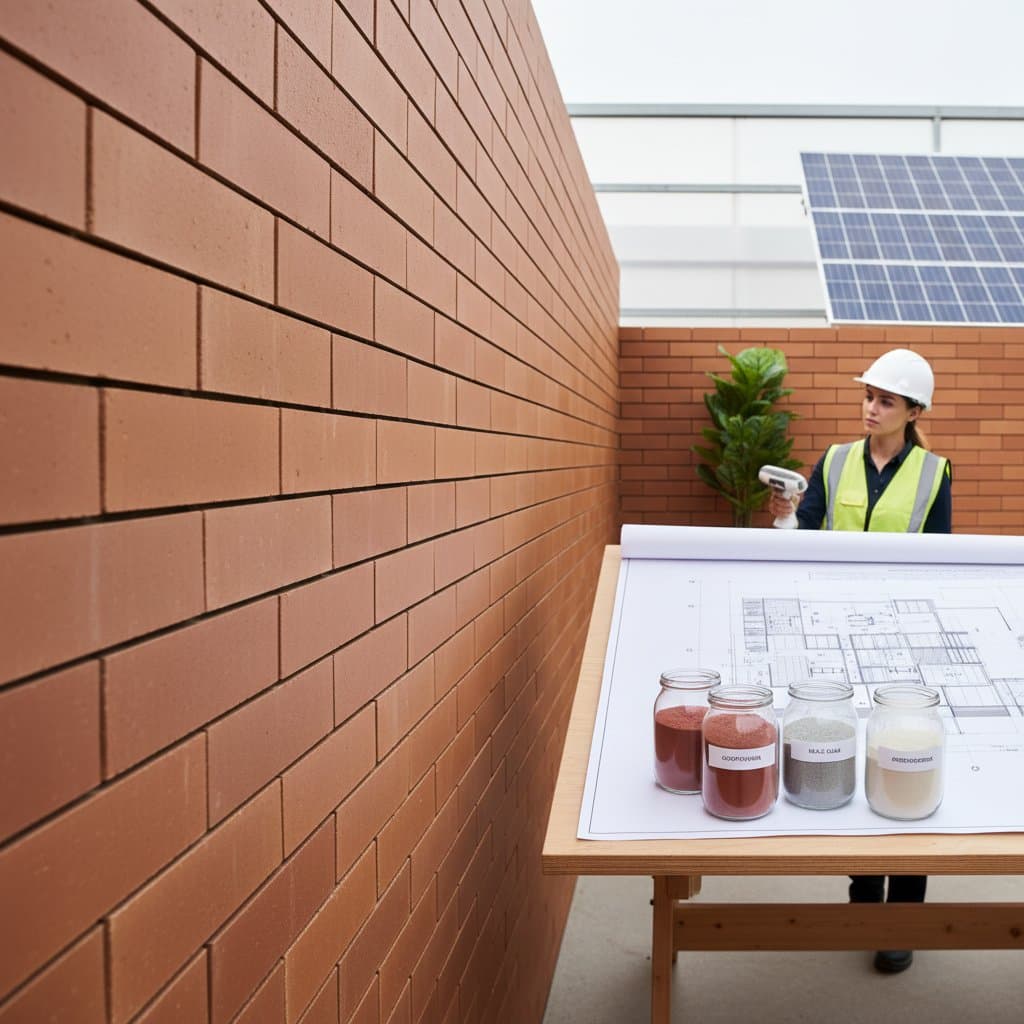
Understanding Geopolymer Bricks
Geopolymer bricks represent a significant advancement in sustainable masonry. Builders and homeowners increasingly turn to these zero-cement options as alternatives to ordinary Portland cement bricks, which generate substantial carbon emissions during production. Geopolymer bricks form through the combination of industrial by-products such as fly ash, slag, and aluminosilicates with alkaline activators, yielding a robust material that matches or exceeds the performance of traditional bricks.
This approach aligns with the growing emphasis on cement-free masonry, which minimizes greenhouse gas emissions, preserves natural resources, and reduces the overall energy embedded in building materials. For architects, contractors, and homeowners committed to green construction, geopolymer bricks provide a viable path to creating structures that balance environmental responsibility with structural integrity.
The Importance of Geopolymer Technology
Producing traditional cement involves decomposing limestone, a process that liberates considerable carbon dioxide. Geopolymer technology circumvents this issue by employing aluminosilicate polymers that solidify via polymerization rather than hydration. This method forms a compact, stable matrix independent of calcium compounds, thereby slashing emissions while enhancing resistance to elevated temperatures, chemical degradation, and erosion.
Practically, these bricks endure longer under stress, manage moisture more effectively, and perform reliably in harsh environments. Their reduced thermal conductivity aids in maintaining comfortable indoor climates, positioning them as a strong choice for energy-conscious homes and commercial buildings.
Planning a Geopolymer Brick Project
Embarking on a project with geopolymer bricks demands thorough preparation. Although the laying process resembles conventional masonry, variations in material properties and curing protocols require attention to achieve optimal outcomes.
Evaluating the Site
Begin with an assessment of soil stability and drainage. Geopolymer bricks exhibit strong moisture resistance, yet extended water contact may compromise mortar bonds. Sites with inadequate drainage or elevated water tables benefit from reinforced foundations and waterproof barriers. Level ground simplifies construction, but gentle inclines can accommodate grading adjustments.
Key Measurements
Calculate the wall's length, height, and thickness to determine the required brick quantity. Compute the surface area and divide by the coverage rate per brick, then incorporate a 10 percent allowance for cuts and waste. Standard geopolymer bricks provide coverage akin to their cement counterparts.
Environmental Considerations
- Temperature and humidity levels: Certain formulations achieve optimal curing in moderate warmth and low moisture.
- Rainfall risks: Shield newly laid bricks from precipitation to prevent curing disruptions.
- Soil composition: Reactive alkaline soils might alter brick aesthetics, but they pose no threat to load-bearing capacity.
Potential Challenges
Sourcing geopolymer bricks often involves specialized vendors, which may extend delivery timelines in certain areas. Review all supplier details, including curing guidelines, prior to commencement to avoid delays.
Selecting Materials
Evaluate geopolymer brick variants based on their composition, compressive strength, and surface qualities to match your project's needs.
Fly Ash-Based Geopolymer Bricks
Overview: These bricks derive from fly ash activated by an alkaline solution.
Advantages: They weigh less, offer a refined finish, and provide superior insulation against heat.
Drawbacks: Initial strength develops more gradually, necessitating monitored curing.
Pricing: Typically economical relative to standard bricks.
Required Expertise: Moderate; focus on environmental controls during setup.
Slag-Based Geopolymer Bricks
Overview: Formed from ground granulated blast furnace slag and activators.
Advantages: They gain strength quickly and resist corrosive substances effectively.
Drawbacks: Greater weight demands cautious transport and placement.
Pricing: Moderately elevated owing to processing demands.
Required Expertise: Intermediate to advanced handling skills.
Hybrid By-Product Bricks
Overview: Blends of fly ash, slag, and additional pozzolans.
Advantages: Deliver equilibrated durability, uniform results, and adaptable hues.
Drawbacks: Supply chains may vary regionally.
Pricing: Balanced within the market range.
Required Expertise: Moderate; suitable for diverse applications.
Recommendation: Order 10 percent extra bricks to account for on-site losses and imperfections.
Essential Tools and Supplies
Manual Tools
- Brick trowel: Applies mortar uniformly for secure bonds.
- Masonry hammer: Shapes and fits bricks precisely.
- Level and plumb bob: Maintains vertical and horizontal accuracy.
- Tape measure: Ensures uniform spacing and dimensions.
Powered Equipment
- Masonry saw or grinder: Executes clean, accurate cuts.
- Drill with mixer attachment: Prepares consistent mortar batches.
Rented Gear
- Mortar mixer: Streamlines large-scale mixing; manual methods suffice for smaller tasks.
- Wheelbarrow and scaffolds: Facilitate safe material transport and elevated work.
Required Materials
- Geopolymer bricks, including 10 percent surplus
- Compatible geopolymer mortar or adhesive
- Waterproofing sealant or base coat
- Fresh water for mixtures and cleanup
- Tarps or sheets for curing protection
Construction Guide
- Foundation Setup: Confirm the base remains even, moisture-free, and capable of supporting loads. Geopolymer assemblies depend on this stability for uniform stress distribution.
- Initial Layer Placement: Snap a chalk line for guidance. Spread mortar consistently and position bricks, verifying alignment with level tools.
- Subsequent Layers: Offset joints vertically to enhance stability. Keep mortar joints at a uniform 0.5-inch depth.
- Ongoing Verification: After every third or fourth row, use a taut string to check for deviations and correct promptly.
- Curing Process: Adhere to producer directives on humidity and heat. Cover the structure as needed to sustain moisture for the specified period.
- Joint Finishing: Once mortar sets partially, smooth the joints with a tool. Remove surplus material using a moist cloth prior to full hardening.
Recommendation: In moist regions, prolong curing by one or two days to maximize bond development.
Safety Protocols and Professional Advice
Prioritize protection during construction. Wear gloves, safety goggles, and dust masks to guard against alkaline activators and airborne particles. Ensure stable footing on scaffolds and use harnesses for heights exceeding six feet. Keep the work area ventilated, particularly when mixing materials, to avoid inhaling fumes.
Consult certified masons for complex designs or large-scale projects. Professionals can address site-specific challenges, such as seismic considerations or integration with existing structures, ensuring compliance with local building codes.
Extending the Project's Impact
Surface Treatments
Apply sealants post-curing to boost weather resistance and preserve color vibrancy. For interior walls, consider breathable paints that complement the brick's natural texture without trapping moisture.
Long-Term Upkeep
Inspect walls annually for cracks or erosion, repairing minor issues with compatible fillers. Clean surfaces gently with low-pressure water to remove dirt, avoiding harsh chemicals that could degrade the geopolymer matrix.
Design Integrations
Incorporate vertical gardens into retaining walls to enhance biodiversity. Embed subtle lighting fixtures to accentuate the bricks' subtle patterns at night. Pair with recycled metals or timber elements for a contemporary, eco-integrated look.
Pitfalls to Sidestep
- Overlooking curing requirements, which compromises overall durability.
- Pairing with standard cement mortars, leading to poor adhesion.
- Ignoring base drainage, inviting water accumulation and potential failure.
Constructing with geopolymer bricks illustrates the potential of innovative materials to fulfill rigorous performance and visual standards. Through meticulous preparation, adherence to safety measures, and precise execution, your project can embody enduring strength and ecological stewardship, setting a benchmark for progressive construction practices.