
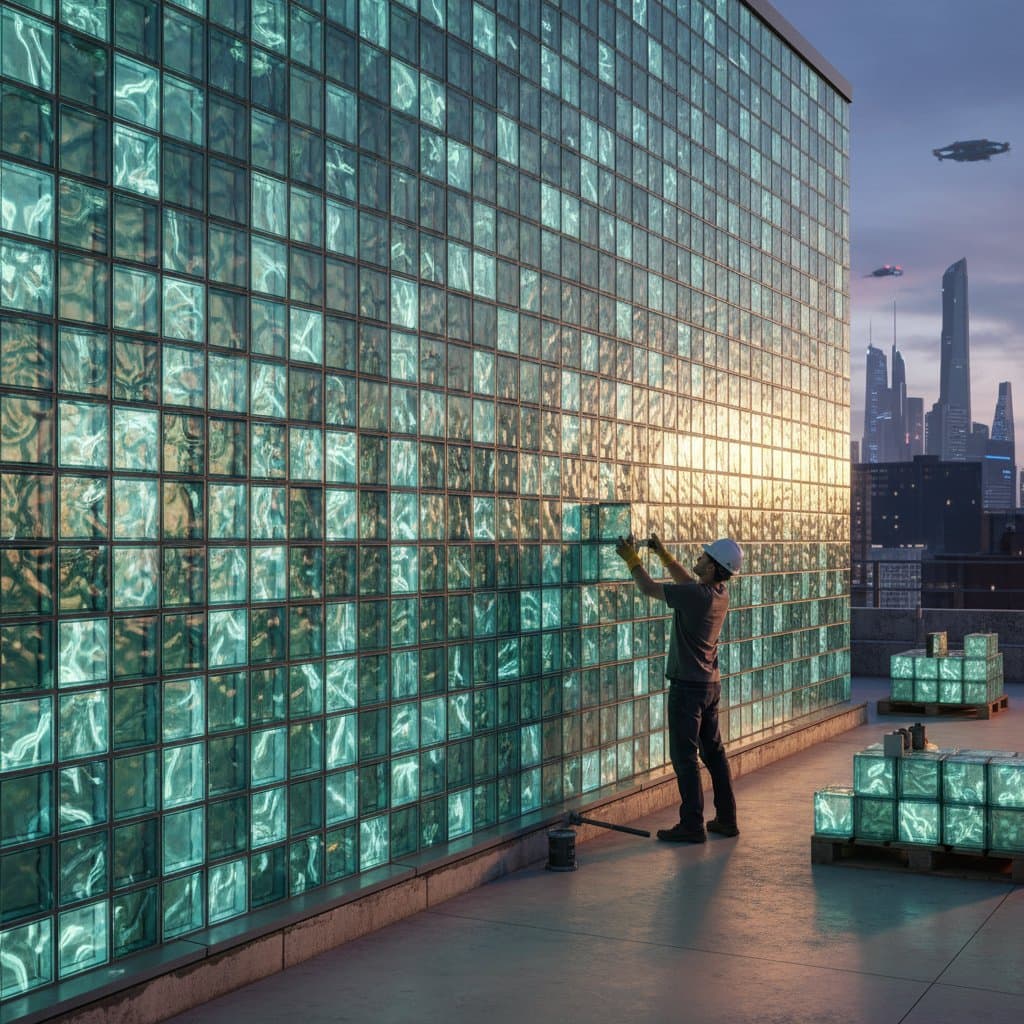
Why Recycled Glass Bricks Will Shine in 2025 Builds
Recycled glass bricks emerge as a standout choice in sustainable construction for 2025. These materials blend aesthetic appeal with structural integrity and environmental benefits. Builders appreciate their ability to transmit light while providing durability. Key challenges include managing initial costs, ensuring precise installation, and addressing moisture concerns.
Essential Checks Before Installation
Verify foundational elements to guarantee long-term performance of recycled glass bricks.
- Ensure wall sightlines remain straight, free from bows or leans in corners.
- Confirm mortar joints appear clean, uniform, and without cracks or gaps.
- Inspect glass units for haze or delamination.
- Validate continuous moisture barriers behind the veneer.
- Check clear drainage paths at sills, parapets, and bases.
- Assess interior light levels to avoid discomfort or glare.
- Examine floors or foundations beneath walls for stability and absence of settlement cracks.
Perform a simple test by rolling a tennis ball along the floor adjacent to the wall. If the ball veers to one side, investigate potential foundation settlement or uneven slab leveling, as these issues stress the glass units. Look for condensation inside units or along mortar lines, which indicates thermal bridging or sealing deficiencies.
Warning Signs of Potential Issues
Identify early indicators to prevent costly failures in recycled glass brick installations.
- Mortar joints detaching from glass edges.
- Ongoing fogging within hollow glass units.
- Efflorescence or lime streaks appearing below wall sections.
- Cracks extending from corners due to rigid restraints.
- Absent or obstructed weep holes in drainage systems.
- Inadequate flashing at window heads or roof returns.
- Rigid structural ties limiting thermal expansion.
These problems can intensify rapidly. Minor cracks may spread from thermal stress rather than physical impact. A single obstructed drainage path traps moisture, leading to freeze-thaw damage.
Practical Remedies and Estimated Expenses
Address issues based on their root causes and project scale.
- Mortar repair and resealing: Involves removing and repointing with flexible, non-staining mortar, costing a few dollars per square foot.
- Replacement of damaged units: Incur moderate expense per brick, with labor at two to three times standard masonry rates.
- Drainage improvements: Install flashing and weep paths, potentially reaching low thousands for small areas.
- Cleaning and polishing: Remove surface haze using mild abrasives or specialized cleaners; steer clear of acid-based products that etch glass.
- Structural reinforcement: Settlement or tie failures demand higher costs, possibly requiring partial wall reconstruction.
Surface sealers provide temporary relief but often conceal underlying defects. Such coatings might trap moisture beneath a glossy finish. Always investigate moisture sources prior to applying any sealant.
Deciding Between Repair and Replacement
Evaluate existing recycled glass brick walls methodically to avoid unnecessary full replacements.
- Glass units: Opt for repair if cracks remain isolated and mortar holds firm; replace solely for seal breaches or safety hazards.
- Mortar or grout: Begin with repointing; consider panel replacement only after assessing movement and drainage.
- Framing or anchoring: Enhance with stainless steel clips or flexible anchors instead of rigid brackets.
- Lighting integration: Retain functional LED or fiber channels; replace if corrosion or electrical faults appear.
Follow this principle: Repair elements that maintain safety and water resistance. Reserve replacement for cases where damage or incompatibility demands it.
Assembling the Right Team and Workflow
Recycled glass brick projects require coordination across multiple specialties. Assemble the team at the outset.
- Inspector: Select one experienced in glass or translucent masonry to verify moisture paths, ties, and compliance with fire and load codes.
- Architect: Involve early for decisions on wall thickness, thermal breaks, and lighting integration.
- Mason: Choose a specialist in glass or custom bricks, as spacing, mortar selection, and curing differ from traditional clay work.
- Lighting or electrical expert: Essential for backlighting or embedded LEDs.
- General contractor: Oversees sequencing to minimize damage from subsequent trades.
A project manager increases costs by ten to twenty percent but mitigates overruns through better coordination. Vet trades concurrently rather than sequentially to ensure compatibility before commitments.
Prioritizing Project Elements
Concentrate on features that enhance durability, safety, and efficiency.
- Moisture management: Implement flashing, drainage mats, and breathable sealants first.
- Thermal isolation: Use insulating spacers or backer boards to curb condensation.
- Structural integrity: Verify load paths, given glass's brittleness under uneven settlement.
Design lighting and power systems before enclosing walls, as retrofits prove expensive and disruptive. Apply shading or UV films for sun-exposed walls to prevent discoloration from iron or copper in recycled glass. Postpone decorative elements like color gradients unless they serve as primary focal points; simplicity aids maintenance.
Budgeting and Work Sequence
Sequence tasks according to dependencies for efficient execution.
- Establish drainage and moisture control: Grade the site, redirect downspouts, and prepare the base course for free drainage.
- Build structure and envelope: Secure foundations, anchors, and lintels prior to the initial course.
- Install electrical and lighting: Route conduits and conduct tests before mortar hardens.
- Apply air sealing and insulation: Treat surrounding walls and ceilings to eliminate edge condensation.
- Complete finishes and trim: Add coatings and interior details after moisture verification.
Disregarding this order invites rework. Installing glass walls prematurely often necessitates disassembly for drainage or electrical adjustments.
Key Material Properties and Performance
Recycled glass bricks surpass traditional glass blocks in density and versatility. Produced from melted crushed bottles or industrial cullet and cast into molds, they offer varied colors and textures.
Performance highlights include:
- Strength: Compressive capacity equals or surpasses clay bricks when cast correctly.
- Thermal properties: Rapid heat transmission necessitates thermal breaks.
- Light diffusion: Ranges from clear to textured for controlled transmission.
- Acoustic isolation: Thicker units dampen sound effectively with proper sealing.
- Fire endurance: Solid glass withstands temperature extremes; confirm assembly ratings.
Sustainability stems from waste diversion and reduced energy use versus virgin materials. Overall value hinges on extended lifespan and minimal upkeep, beyond initial outlay.
Frequent Installation Pitfalls
On-site mistakes account for many recycled glass brick shortcomings.
- Applying rigid standard mortar rather than flexible, low-shrink varieties.
- Positioning units without expansion allowances.
- Omitting backer rods or control joints in extended walls.
- Failing to slope sills for water runoff.
- Employing acid cleaners or high-pressure methods that damage surfaces.
- Disregarding curing periods, resulting in moisture entrapment and fogging.
As one experienced mason in Oregon noted, "Glass is honest. It shows every mistake you make." Uneven joints or misplaced ties reveal themselves prominently under illumination.
Aesthetic and Design Strategies
The allure of recycled glass bricks lies in their dynamic light interaction, shifting with time of day and source.
- Backlighting: Ideal for frosted or textured surfaces; employ evenly spaced low-voltage LEDs.
- Edge illumination: Produces gentle glows to accentuate patterns.
- Ambient applications: Suit accent walls or stairwells with natural light passage.
- Privacy features: Frosted options diffuse light while obscuring views.
- Color management: Warm tones minimize glare; cooler shades amplify brightness.
Effective designs mitigate glare and prevent visual fatigue. In residential or mixed spaces, subtle gradients outperform bold color saturations.
Sustaining Long-Term Appearance
Routine maintenance preserves the appeal of recycled glass bricks.
- Conduct annual inspections for cracks and seal integrity.
- Clean using mild detergent and soft tools.
- Clear weep holes of debris.
- Refresh sealant joints periodically.
- Observe condensation during cooler months.
Refrain from heavy paints or impermeable coatings. Maintain breathability to exclude water while allowing vapor escape.
Financial Aspects and Returns
Initial expenses exceed those of clay or concrete blocks due to specialized production. However, benefits include prolonged service life, daylighting energy reductions, and reduced upkeep with sound detailing.
Installed costs fall in the mid-to-high range per square foot, influenced by customization and lighting. Freight elevates prices for bespoke items. Savings accrue from lower lighting needs in passive solar setups, partially recouping premiums.
Curbside decorative expansions; each addition heightens complexity and potential issues.
Enduring Advantages
Well-executed recycled glass brick installations endure for decades. They resist ultraviolet degradation, avoid rot, and eliminate repainting needs. Joints and anchors represent primary service areas, accessible without extensive disruption. At lifecycle's end, crushing and remelting enable full material reuse, a rare closed-loop efficiency.
Steps to Proceed Confidently
Test recycled glass bricks with a modest sample installation. Monitor responses to condensation, glare, and cleaning protocols. Validate your mortar and anchoring approaches. Evaluate base drainage post-rainfall.
With proven results from the trial, scale up assuredly. These bricks unite illumination, resilience, and eco-friendliness through meticulous execution. Prioritize moisture exclusion, joint flexibility, and structural accuracy for optimal outcomes.