
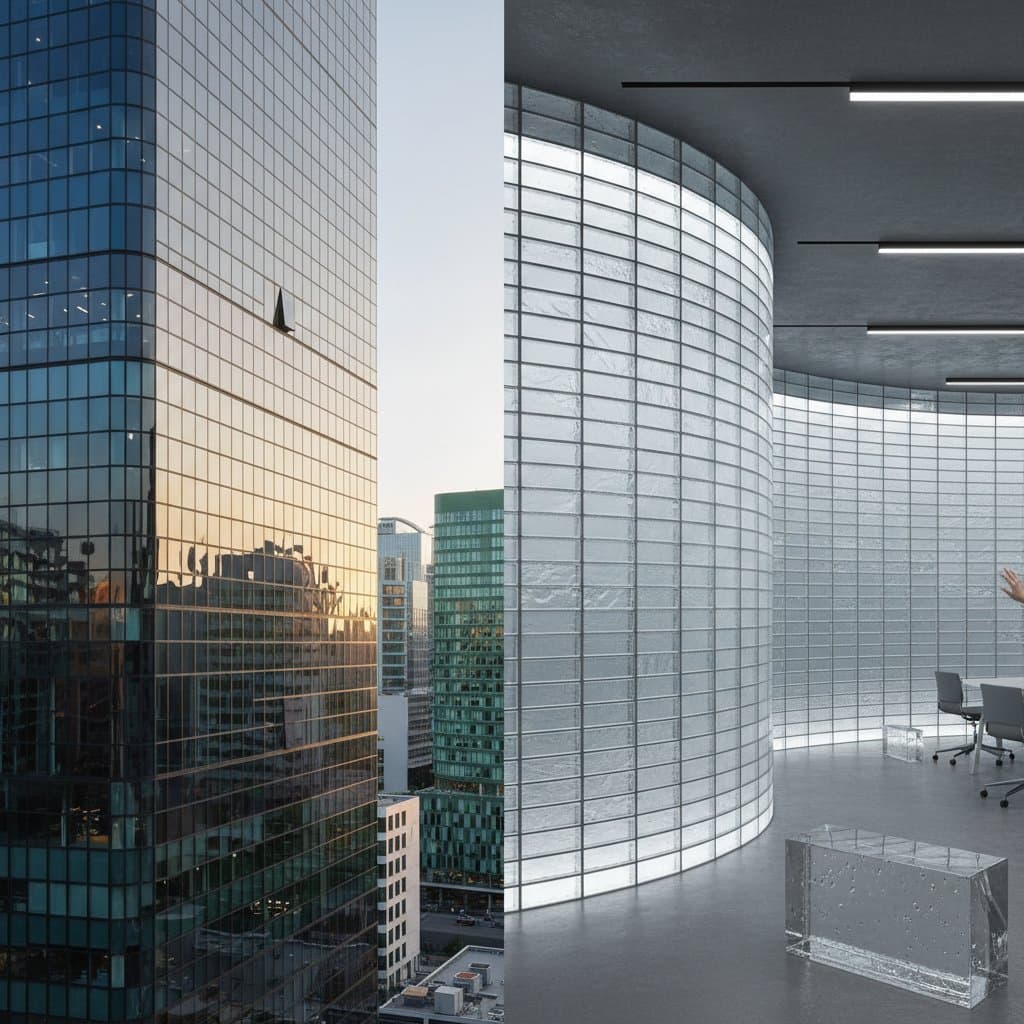
Understanding Recycled Glass Bricks
Recycled glass bricks alter the approach to masonry for architects and builders alike. These blocks form from crushed or melted post-consumer glass, providing unmatched strength, varied colors, and light permeability that surpass standard clay or concrete options. They integrate environmental benefits with practical design versatility, converting discarded glass into a resilient, light-diffusing element for construction. The outcome yields a masonry solution that supports sustainable practices while aligning with contemporary visual standards.
Glass bricks appear in two primary configurations. Solid recycled bricks possess density suitable for load-bearing applications, such as accent walls or ornamental exteriors. Hollow glass blocks weigh less and transmit more light, making them ideal for internal dividers and illumination shafts. Each variant delivers the core ecological benefit: one unit diverts glass from landfills and lessens the need for virgin resources.
The Significance of Recycled Glass Bricks in Masonry
Conventional masonry relies on materials like fired clay and Portland cement, both of which demand substantial energy for production. Recycled glass bricks utilize pre-processed glass that melts at reduced temperatures, thereby consuming less energy overall. This process lowers greenhouse gas emissions and conserves natural resources. Professionals achieve comparable structural reliability while fulfilling rigorous sustainability criteria.
Visual qualities further elevate their importance. The inherent gloss of glass diffuses and bounces light, producing dynamic surfaces that evolve with daily illumination. Incorporation of pigments or aggregate inclusions introduces nuanced textures. Designers leverage these bricks to harmonize seclusion with luminosity, permitting light penetration while upholding integrity and security.
Project Planning with Recycled Glass Bricks
Evaluate potential applications for glass bricks early in the design phase. Position them in areas where light enhancement proves valuable, including shower enclosures, landscape edging, or welcoming entryways. Refrain from assigning loads beyond their specified capacity without input from a licensed engineer. For outdoor installations, verify compatibility of the brick variety and mortar with local weather conditions to avoid thermal expansion issues.
Selecting Appropriate Materials
- Clear glass bricks: These maximize light passage and convey a minimalist, contemporary appearance. They remain cost-effective and simple to maintain, though they reveal smudges and moisture marks easily.
- Frosted or textured bricks: Such options ensure discretion while admitting natural light. They incur a modest price increase and demand precise placement to preserve uniform patterns.
- Colored glass bricks: These infuse creative flair. Positioned as premium selections, they suit focal accents or themed panels to control expenses and installation demands.
Consider purchasing an additional 10 percent of bricks to account for potential damage or subsequent repairs.
Essential Tools and Supplies
Small-scale projects typically require the following items:
- Trowel and pointing tool: Employ these for applying and finishing mortar.
- Level and spacers: These maintain even joints and vertical alignment.
- Rubber mallet: Use it to position bricks gently, preventing fractures.
- Wet saw equipped with a diamond blade: Necessary for any necessary cuts. Don protective eyewear and gloves at all times.
Extensive walls might necessitate scaffolding and mechanical mixers for mortar. Secure these rentals solely with relevant experience or expert supervision.
Step-by-Step Installation Guide
- Prepare the foundation surface. Ensure it remains free of debris, perfectly level, and capable of supporting the structure.
- Position the initial row. Apply mortar uniformly, seat each brick firmly, and confirm straightness across the entire line.
- Build additional layers. Insert spacers for uniform gaps and recheck horizontality at regular intervals.
- Complete the mortar joints. Tool them smoothly to achieve a secure, impermeable bond, and remove excess material prior to hardening.
Exercise deliberate pacing during the process. Hasty work often results in irregular seams and compromised adhesion.
Maintenance and Finishing Techniques
Apply a sealant to cured mortar surfaces to guard against water-induced discoloration. Wipe glass faces using gentle detergent and a non-abrasive cloth. Steer clear of harsh scrubbers that might scratch the surface. Conduct yearly examinations for voids or fissures, particularly on external features.
Integrating Recycled Glass Bricks for Lasting Impact
Recycled glass bricks fuse ecological stewardship, enduring performance, and creative expression. They diminish waste volumes, welcome ambient light, and empower constructors to develop edifices that blend solidity with radiance. From accentuating prominent walls to illuminating interior environments, these materials affirm that conscientious selections yield enduring beauty and functionality.