
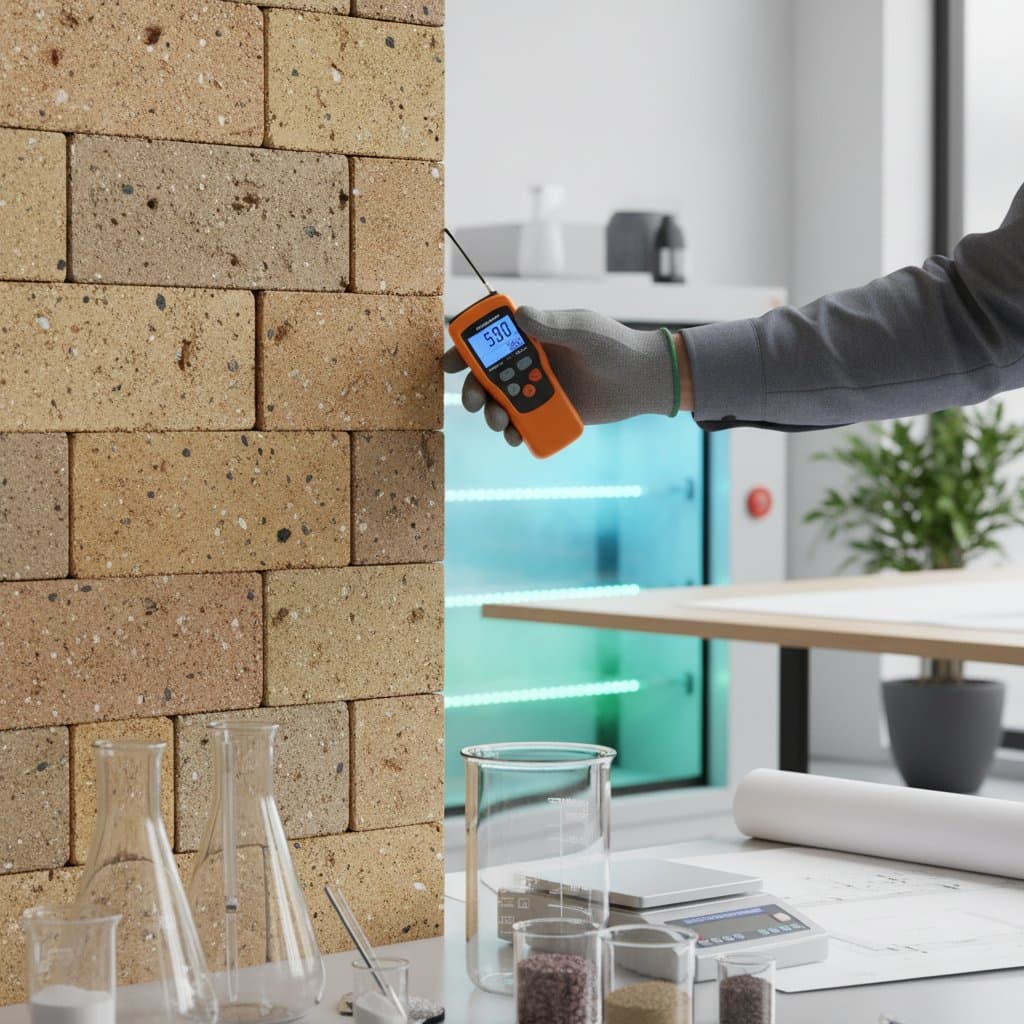
Zero-Cement Bricks: Revolutionizing Sustainable Masonry
Zero-cement bricks employ industrial byproducts as alternatives to Portland cement, forming a resilient and long-lasting matrix. These materials promote environmental benefits by reducing carbon emissions associated with cement production. Yet, the primary challenge lies in maintaining consistent quality during mixing and curing stages.
Cost factors encompass sourcing of raw materials, activation of binders, and transportation of bulk minerals. Builders and homeowners benefit from understanding these elements to make informed decisions. Proper oversight ensures that the advantages of sustainability translate into practical performance.
Quick Take
Zero-cement bricks harden through geopolymer reactions rather than hydration, offering superior resistance to chemicals and shrinkage. Industrial byproducts such as fly ash or slag serve as key components, activated by alkaline solutions. Inconsistent ratios during production lead to structural weaknesses over time.
Material expenses vary by region, often aligning closely with those of clay or concrete blocks. Labor requirements remain comparable, though specialized handling may add minor costs. Bulk purchasing and local sourcing mitigate logistical expenses effectively.
What To Check
Homeowners and builders can evaluate bricks prior to installation through simple observations and tests. Uniform color and density indicate reliable batch consistency. A sound test involves tapping two bricks together; a clear ring suggests solid curing, while a dull thud reveals potential voids.
Examine edges for crispness; they should withstand light finger pressure without crumbling. Request certificates or lab reports that confirm compressive strength exceeds 5,000 psi and water absorption stays below 10 percent. Verify labeling details the binder composition, ensuring no hidden cement inclusions.
In practical settings, subject bricks to wetting and drying cycles to assess dimensional stability. A chalky residue on surfaces signals incomplete geopolymer reactions. These checks provide early assurance of material reliability.
Red Flags
White efflorescence appearing on stored bricks points to excess salts from improper mixing. Edges that crush under manual pressure indicate insufficient binder activation. Color variations across pallets from the same production run suggest inconsistent processing.
Suppliers who hesitate to provide test data raise concerns about transparency. Lack of information on curing duration or temperature controls implies inadequate production standards. Claims of zero cement without binder specifications often mask subpar formulations.
These indicators forecast potential issues like structural instability or moisture ingress. Addressing them early prevents costly interventions later. Vigilance during selection safeguards project outcomes.
Likely Fixes and Rough Costs
Installation costs for zero-cement brick walls approximate those of standard clay or concrete block systems, varying by location and shipping distances. Material prices range from moderate to elevated, influenced by binder quality and volume. Labor parallels conventional methods, with adjustments for specialized mortars.
Poor bonding requires replacing affected sections and selecting compatible joint materials. Standard cement-lime mortars weaken geopolymer connections, so opt for low-calcium or geopolymer-based alternatives. Superficial patches fail to address core binder deficiencies; full replacement with tested bricks ensures longevity.
Blending zero-cement units with traditional masonry risks scope expansion due to differing moisture behaviors. Bond disparities and expansion rates may cause cracking. Professional guidance minimizes these integration challenges.
Repair vs Replace
For walls, preserve intact masonry that remains dry, level, and structurally sound. Repoint joints using compatible mortars, avoiding rigid cement blends that exacerbate stress. Replace only sections where bricks exhibit significant integrity loss.
Address mortar joints by repairing lost bonds with matching binder chemistries. Full section replacement becomes necessary if stability is compromised. This targeted approach conserves resources while restoring performance.
Retain breathable finishes like lime washes on exterior layers. Synthetic coatings trap moisture, impairing geopolymer breathability. Foundations demand enhanced drainage; new bricks alone cannot remedy underlying base flaws.
At roof-to-wall junctions, ensure proper flashing and drip edges direct water away. Chronic exposure undermines even premium zero-cement bricks. Systematic evaluation guides repair decisions effectively.
Team and Process
Engage an inspector or engineer experienced in alternative binders prior to major projects. Traditional masons may lack familiarity with geopolymer nuances, necessitating upfront discussions on mix designs and curing protocols. Alignment prevents on-site complications.
Architects assist in coordinating wall thickness, insulation integration, and finish selections. General contractors oversee material delivery, ensuring items arrive fully cured and certified. Specialists in geopolymer or sustainable masonry validate supplier assertions.
Their involvement incurs fees equivalent to 10 to 20 percent of project totals but averts expensive demolitions. Concurrent evaluation of suppliers and installers aligns teams for seamless execution. This collaborative framework enhances overall efficiency.
Scope Priorities
Prioritize interventions that yield high returns, such as moisture management and envelope integrity. Upgrade site drainage to divert water from foundations. Verify roof runoff directs away from walls effectively.
Implement air sealing and attic insulation ahead of aesthetic updates. Passive wall designs naturally moderate temperatures, amplifying energy savings. Delay ornamental finishes until core functionality proves reliable.
Avoid low-value expenditures like complex facade overhauls or water-trapping veneers. Preserve original masonry where possible, integrating hybrid systems judiciously. Balanced detailing maintains moisture equilibrium in mixed assemblies.
Budget and Sequencing
Zero-cement projects demand precise phasing to optimize outcomes.
- Halt water intrusion by regrading soil, fixing gutters, and shielding exposed areas.
- Secure structural elements by replacing compromised supports.
- Validate material batches through strength testing prior to shipment.
- Erect walls with uniform joint thicknesses in controlled environments.
- Apply permeable finishes like lime or mineral coatings.
- Complete seals at openings and transitions.
Omission of steps prompts revisions. Geopolymer curing relies on chemical processes, rendering premature rain exposure detrimental. Adherence to sequence upholds material integrity.
Field Insight
A mason from Ontario observed, “These blocks act like stone when right, but they crumble fast when mixed sloppy.” This perspective underscores the critical role of procedural rigor over mere composition.
Production quality hinges on accurate ratios of aluminosilicates and activators. Deviations compromise durability. A practical field evaluation soaks sample bricks for 24 hours, followed by drying; absence of cracks or powdering confirms reaction completion.
This no-cost method anticipates installation risks. Consistent application during construction elevates project success rates.
Maintaining Your Investment
Geopolymer masonry requires ongoing attention akin to conventional systems. Maintain dry surfaces, intact joints, and cleared vegetation. Annual inspections of weep holes and flashing detect early issues.
For repainting, select mineral-based products exclusively. Acrylic or elastomeric options impede vapor transmission. Cleaning involves low-pressure rinsing with mild detergents, eschewing acids.
Superior geopolymer walls surpass concrete in resisting chemical degradation and cracking. Consistent curing and moisture oversight unlock these advantages. Enhanced thermal mass stabilizes indoor climates, curbing energy use over decades.
Your Next Steps
Assess your site for moisture accumulation around gutters, downspouts, and grading. Stable, dry walls may require only minor upkeep rather than overhaul.
When considering zero-cement bricks, demand compressive strength and absorption data. Seek references from installations operational for at least three years.
For new constructions or extensions, consult architects and contractors on geopolymer suitability early. Confirm comprehension of curing needs and mortar compatibilities.
Sustainable masonry thrives on foundational principles like water diversion, curing precision, and verification testing. Zero-cement bricks integrate effectively within this framework, delivering resilient performance when executed thoughtfully.