
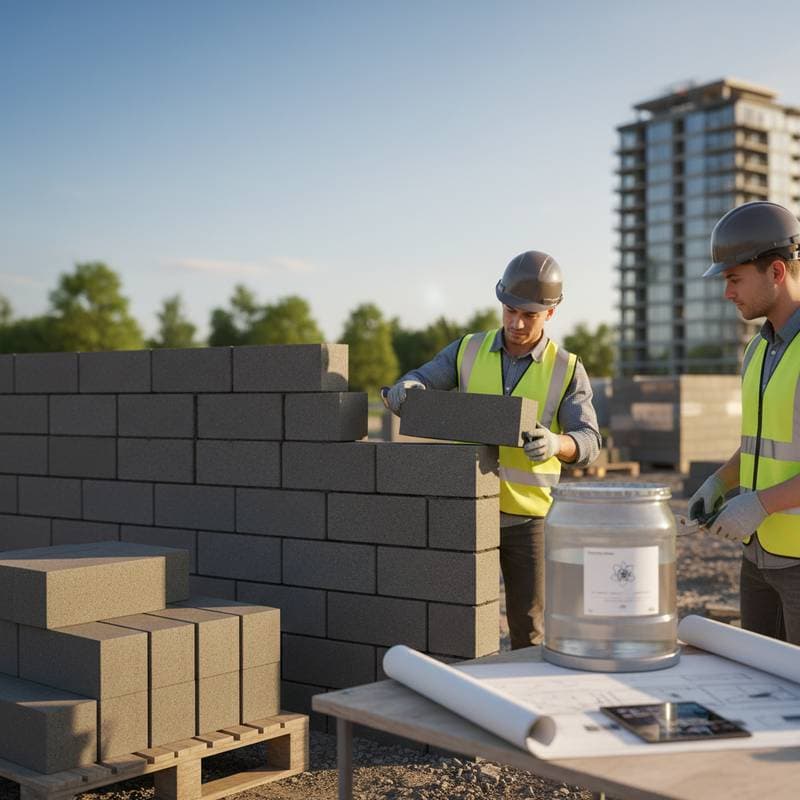
Zero-Cement Bricks Set to Reshape Masonry by 2026
Quick Take
A emerging category of zero-cement bricks transitions from laboratory trials to active construction sites. These bricks employ geopolymer chemistry in place of traditional Portland cement. This change promises substantial reductions in carbon emissions, shorter curing periods, and greater overall durability. Potential drawbacks include unproven supply chains and variable performance in real-world applications. Key cost factors encompass material procurement, initial production volumes, and the adaptation required by contractors.
What To Check
Builders and property owners can evaluate preparedness for geopolymer masonry by inspecting essential on-site conditions. Success hinges on precise moisture management and consistent mixture proportions, principles that align with conventional masonry standards.
- Ensure sightlines across walls remain straight. Deviations such as leans or bulges point to irregular curing or foundational settling.
- Verify mortar joints appear secure, even, and devoid of powdery buildup.
- Inspect for efflorescence or white salt deposits on surfaces. Such signs indicate moisture movement that undermines adhesion.
- Gently tap bricks with a hammer handle. A hollow sound suggests inadequate compaction or air pockets.
- Assess color uniformity. Variations may reveal inconsistencies in batches or curing processes.
Red Flags
- Cracks that trace mortar joints rather than penetrating bricks, indicating deficient bonding.
- Ongoing dampness at wall bases, which points to inadequate drainage or capillary action.
- Discoloration near initial geopolymer installations, typically from alkali residue leaching.
- Absence of testing data or manufacturer guidance on freeze-thaw cycles or load-bearing capacity.
- Insufficient experience among installers, which magnifies errors in mixing or placement.
Likely Fixes and Rough Costs
Most problems that arise can receive resolution through established masonry methods, though severe cases necessitate full replacement. Patching or repointing efforts generally cost between 8 and 15 dollars per square foot. Complete wall reconstructions range from 25 to 45 dollars per square foot, influenced by design complexity and site accessibility.
For batches exhibiting inadequate curing or cracking, opting for replacement often proves more economical than repeated repairs. Fine-tuning water ratios or extending curing durations can address minor flaws, yet structural fissures seldom remain contained. Builders must validate compatibility between geopolymer mortar and brick formulations, as incompatible elements lead to delamination under humid conditions.
Applying inexpensive sealants might conceal visible issues but fails to halt moisture penetration. Once water infiltrates the material matrix, it interacts with alkaline components and erodes surface integrity. Sustainable remedies emphasize effective drainage, rigorous mix oversight, and adherence to specified curing temperatures.
Repair vs Replace
Bricks: Address cracked joints or isolated units when the surrounding wall structure holds firm. Proceed with replacement only if bonding or alignment suffers compromise. Reconstructing with enhanced drainage and certified material lots averts future problems.
Mortar: Select geopolymer mortar that matches the brick's chemical profile. Refrain from combining traditional cement mortar with geopolymer bricks. Such pairings provoke expansion differences and precipitate premature deterioration.
Drainage: Rectify site grading prior to any masonry interventions. Geopolymer bricks exhibit stronger water resistance than cement alternatives, yet pooled moisture accelerates aging.
Finishes: Opt for breathable coatings or limewash applications. Steer clear of impermeable sealers that confine vapor within the assembly.
Team and Process
Integrating novel material systems demands prompt collaboration among stakeholders. Engage an independent inspector versed in alternative masonry to examine samples and prototypes. This step minimizes expensive modifications downstream.
Architects must verify that wall configurations comply with regulations for structural integrity, fire resistance, and thermal performance. Geopolymer blocks demonstrate strong capabilities yet may lack alignment with conventional evaluation protocols. General contractors provide cost oversight and coordinate timelines to synchronize curing requirements with material deliveries.
Consult specialists for thermal simulations, moisture assessments, or sustainability certifications. Involving them during preliminary design phases eliminates subsequent revision expenses. Concurrent evaluation of suppliers and installation teams mitigates risks from incompatible components.
Professional project oversight incurs an additional 10 to 20 percent in expenses, yet it curtails budget excesses when deploying unfamiliar materials. Thorough upfront documentation and defined responsibilities forestall conflicts as construction advances.
Scope Priorities
Property owners experimenting with geopolymer masonry should target zones where benefits outweigh coordination efforts. Initiate with non-load-bearing elements like freestanding walls, garages, or modest extensions prior to broader structural applications.
Prioritize these enhancements for optimal results:
- Refine drainage systems and foundation preparations to leverage the materials' moisture resilience.
- Implement air barriers and insulation above ground level to maintain consistent thermal conditions.
- Authenticate quality of brick and mortar batches before committing to large orders.
Deem these actions lower priority:
- Ornamental feature walls that do not warrant the investment in system familiarization.
- Intricate shapes or arches until crews master the material's handling characteristics.
Retain functional existing masonry. Replace solely when repairs become uneconomical or structural integrity falters.
Budget and Sequencing
Work sequence directly impacts expense management. While geopolymer bricks expedite curing, procedural order remains critical.
- Validate site drainage and foundation soundness before materials arrive.
- Erect a modest test wall to gauge color, texture, and curing outcomes.
- Finish structural framing and roofing to shield walls from precipitation during assembly.
- Track moisture content throughout curing. Withhold sealants or paints until levels normalize.
- Apply surface treatments only after achieving designated strength and equilibrium moisture.
Adhere strictly to this progression. Each phase builds upon the previous. Bypassing moisture verification or hastening curing invites superficial flaking and subsurface fractures.
Long-Term Benefits
Once manufacturing processes mature, geopolymer bricks surpass traditional cement masonry in key areas. They withstand sulfate exposure, exhibit minimal shrinkage during setting, and tolerate thermal fluctuations effectively. Their primary ecological advantage stems from eliminating clinker-intensive cement production, thereby slashing emissions from the outset.
In terms of upkeep, geopolymer structures demand less frequent joint renewals and resist degradation from salts in marine or winter-treated settings. Surfaces retain hardness and pigmentation longevity, thereby lowering refresh expenses.
A seasoned mason from the Midwest observed, "The first walls took longer, but once we understood the mix, the joints stayed cleaner and stronger." This insight mirrors experiences from initial implementations. Initial adaptation periods exist, but returns manifest in reduced labor and service calls.
Maintaining Your Investment
Early adopters of zero-cement masonry benefit from routine annual inspections for moisture and fissures. Employ a portable moisture meter and record measurements at fixed locations. Elevations in readings alert to drainage deficiencies or vapor entrapment. Maintain clear gutters and downspouts, directing runoff distant from foundations.
For repainting tasks, choose vapor-permeable formulations. Eschew heavy elastomeric layers that impede evaporation. Retain surplus bricks from the initial production for future matching repairs.
Geopolymer installations thrive under consistent care. Their robustness relies on balanced humidity and climate exposure. Sound engineering and vigilant monitoring extend service life while diminishing ecological impact.
Next Steps for Implementation
Identify local suppliers and obtain documentation on compressive strength, freeze-thaw endurance, and alkali tolerance. Benchmark these metrics against established masonry standards to assess suitability for upcoming endeavors.