
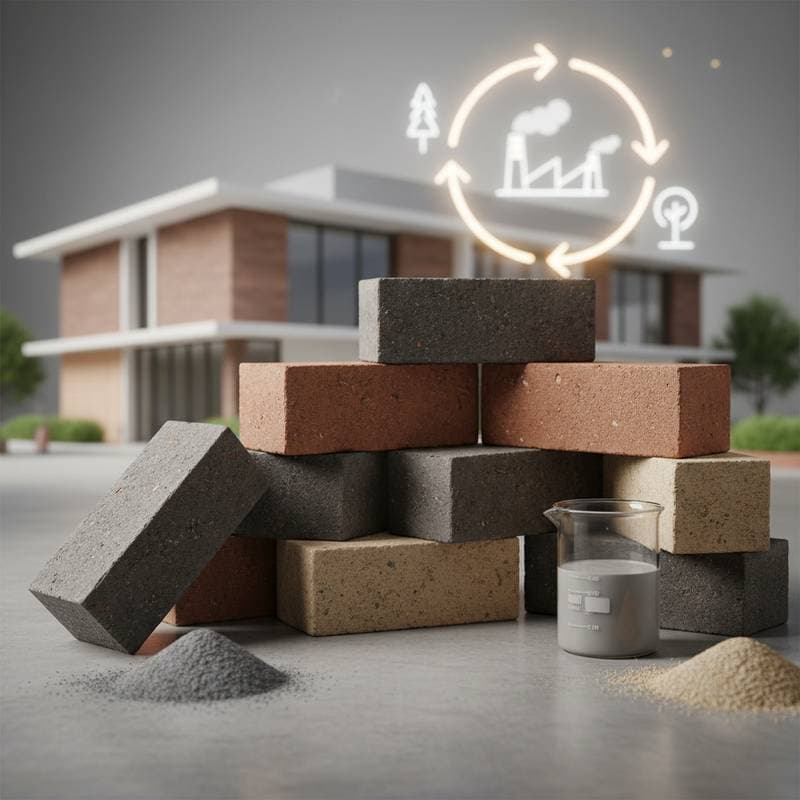
Understanding Zero-Cement Bricks
Zero-cement bricks represent a significant advancement in sustainable masonry. These bricks eliminate the need for traditional Portland cement by utilizing geopolymers derived from industrial byproducts like fly ash and ground granulated blast furnace slag. When combined with alkaline activators, these materials create a hardened matrix that matches the strength of conventional cement while reducing the environmental impact substantially.
The production of traditional cement demands high energy inputs and releases substantial carbon dioxide emissions. In contrast, zero-cement bricks minimize these emissions and repurpose waste materials that might otherwise accumulate in landfills. This approach supports a circular economy, where industrial residues find new purpose in construction.
The Importance of This Transition
Masonry materials have long been prized for their durability, thermal properties, and aesthetic appeal. However, rising sustainability standards are compelling the construction sector to address embodied carbon more effectively. The binder in bricks contributes significantly to this carbon footprint, prompting the exploration of alternatives like geopolymers.
Builders, architects, and property owners now recognize that material choices affect both building longevity and planetary health. Zero-cement bricks meet this need by preserving structural integrity alongside reduced environmental harm. They enable projects that align with green building certifications and regulatory pressures.
The Science Behind Geopolymer Bricks
Geopolymerization involves a chemical process that links aluminosilicate particles into a robust, stone-like structure through exposure to alkaline solutions. This reaction produces bricks with low porosity, high density, and strong resistance to environmental degradation and chemical exposure. Production requires far less energy than firing traditional clay bricks, as curing occurs at ambient or moderately elevated temperatures.
The manufacturing sequence includes precise steps to ensure quality:
- Preparation of raw materials: Select and blend fly ash or slag with alkaline activators, such as sodium hydroxide and sodium silicate, to achieve the desired reactivity.
- Forming the mixture: Pour the activated blend into molds and compress it using hydraulic presses to shape uniform bricks.
- Curing process: Allow the bricks to set in controlled humidity and temperature conditions, typically for 24 to 48 hours, to attain full strength.
Local sourcing of materials optimizes this process by cutting transportation needs and adapting to regional waste availability. For instance, power plants provide fly ash, while steel mills supply slag, integrating construction with local industries.
Key Comparisons with Traditional Materials
Assessing zero-cement bricks involves examining multiple attributes against standard cement or clay options. Geopolymer bricks offer distinct advantages in performance and sustainability.
- Strength and physical properties: They achieve compressive strengths exceeding 20 megapascals, comparable to high-quality concrete blocks, with superior water impermeability that prevents moisture ingress.
- Long-term durability: Resistance to sulfate and acid attacks surpasses that of Portland cement products, potentially doubling service life in harsh environments.
- Economic factors: Production setup may require initial investment in mixing equipment, but ongoing costs drop due to inexpensive raw materials and energy savings, often yielding 20-30 percent lower expenses over time.
- Installation requirements: Standard masonry tools and techniques apply, allowing skilled laborers to lay bricks with mortar or thin-joint methods; beginners should practice on non-structural elements first.
- Upkeep needs: Surfaces show minimal efflorescence or cracking, reducing repair frequency and preserving appearance without frequent sealing.
- Ideal applications: Suited for load-bearing walls, retaining structures, and pavements in areas prone to freeze-thaw cycles, seismic activity, or corrosive soils.
- Visual and finishing options: Natural colors range from subtle grays to earthy reds, derived from source materials, eliminating dyes and enabling seamless integration with various architectural styles.
These attributes position zero-cement bricks as versatile choices for both residential and commercial builds.
Addressing Potential Hurdles
While promising, zero-cement bricks present certain challenges that professionals must navigate. Variations in byproduct quality, such as particle size or chemical composition, demand rigorous testing to maintain consistency. Accurate proportioning of activators proves critical to avoid weak bonds or excessive brittleness.
For non-professionals, applications should focus on low-risk areas like decorative fences or patios. Load-bearing or seismic designs necessitate input from structural engineers versed in geopolymer specifications, including standards from bodies like ASTM for compressive testing.
Safety guidelines: Alkaline components can irritate skin and eyes. Use protective gear including nitrile gloves, goggles, and protective clothing. Mix in areas with good airflow, and neutralize spills with vinegar or water per product guidelines. Store materials securely to prevent accidental exposure.
Advancing Toward Widespread Adoption
Ongoing research enhances geopolymer formulations, improving scalability and performance metrics. Pilot installations in urban developments and eco-villages showcase their resilience over years, with minimal degradation observed.
Professionals can start by incorporating zero-cement bricks in hybrid projects, blending them with traditional elements for phased transitions. Suppliers increasingly offer ready-to-use options, simplifying procurement for smaller operations.
This technology evolves masonry practices thoughtfully, honoring proven methods while embracing eco-conscious innovation. Structures built with these bricks not only endure but also contribute to a lighter environmental load, fostering sustainable communities for generations.