
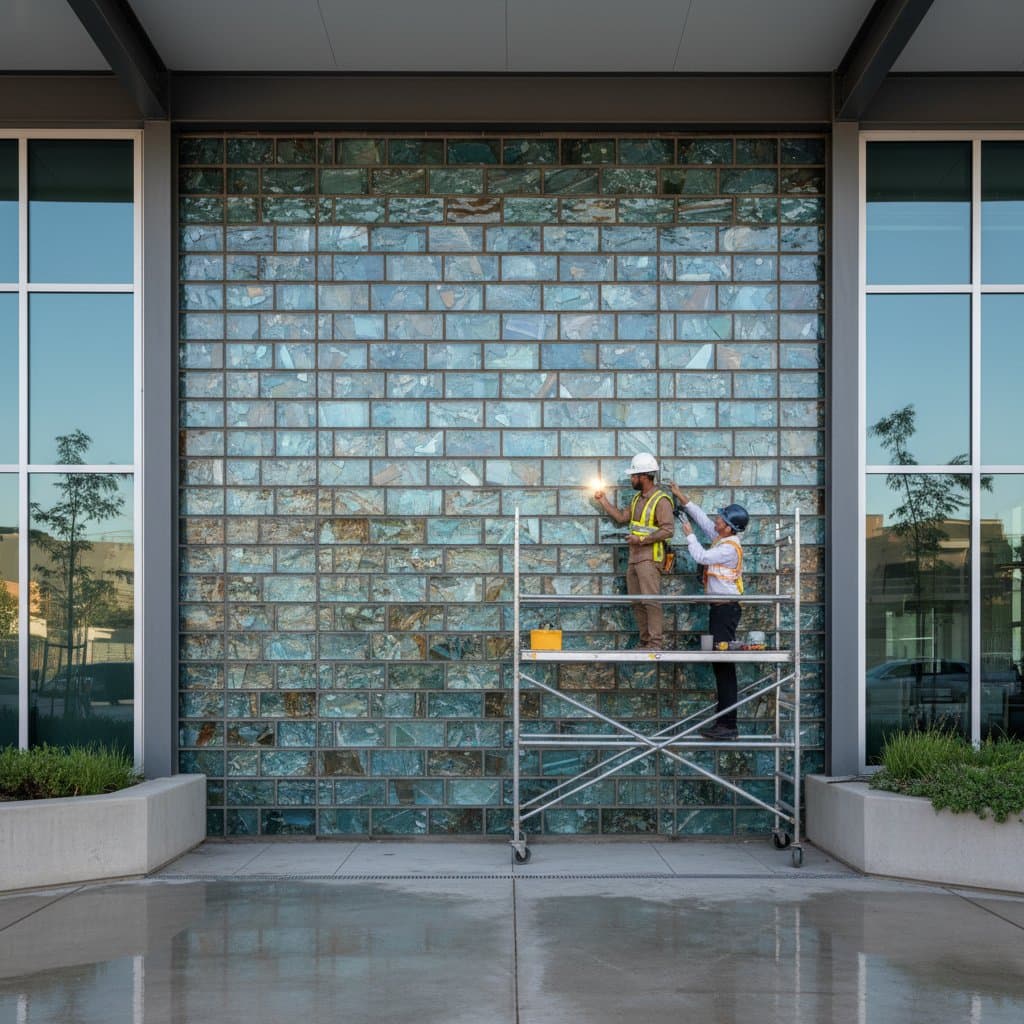
Recycled Glass Masonry: Sustainable Shine for 2026
Quick Overview
Recycled glass masonry converts waste glass into durable blocks that capture light and enhance building aesthetics. This material reduces landfill waste and lowers energy costs compared to traditional clay or concrete options. However, inconsistent quality and faulty installation can cause cracking, water penetration, or color inconsistencies.
Essential Field Checks
Perform these straightforward inspections on recycled glass masonry to identify issues early, much like evaluating standard masonry products.
- Surface uniformity. Examine for consistent color, straight edges, and secure joints without gaps.
- Sound test. Gently tap the block; a clear, resonant tone indicates solid internal structure, while a muffled sound suggests voids or poor bonding.
- Moisture response. Mist a section with water; uniform darkening without rapid absorption points to proper binder ratios.
- Bonding integrity. Inspect mortar or adhesive contact for complete coverage and no air pockets.
- Thermal variation. Compare block temperatures in sunlit and shaded areas; significant differences may lead to future stress cracks.
- Alignment accuracy. Verify that rows align vertically with plumb lines and joints stay within standard tolerances.
These assessments uncover roughly 80 percent of problems prior to large-scale purchases or installations.
Critical Warning Signs
Watch for these indicators of potential defects in recycled glass masonry units.
- Internal bubbles or voids concentrated near edges.
- Size variations exceeding one-eighth inch in a single batch.
- Discoloration originating from within the block, beyond mere surface grime.
- Cracks appearing in mortar joints shortly after the curing period.
- Early efflorescence, such as white powdery deposits after moisture exposure.
- Warping or bowing in oversized panels.
- Suppliers lacking documentation on batch details, strength tests, or recycled content verification.
Such issues often predict elevated replacement needs or long-term water damage.
Common Repairs and Estimated Costs
Address minor surface porosity with a sealant application, costing two to three dollars per square foot. For small wall sections requiring thorough cleaning and resealing, budget around five dollars per square foot. When blocks spall or chip, removal and replacement typically range from fifteen to twenty-five dollars per square foot, influenced by site accessibility.
Uneven bonding between blocks and mortar may require specialized epoxy, at about ten dollars per square foot, but limit this to areas affecting less than 20 percent of the wall. Beyond that threshold, a complete rebuild proves more economical over time. Color mismatches seldom warrant correction; grinding or polishing to refresh the surface costs twelve to fifteen dollars per square foot but risks compromising the protective glaze.
Underestimating substrate preparation frequently escalates expenses. Recycled glass masonry demands a stable, dry foundation; correcting damp backing through improved drainage or flashing can add thousands to what begins as a simple repair.
Deciding Between Repair and Replacement
Around Windows and Openings. Retain square, moisture-free frames and incorporate recycled glass blocks in fixed positions, such as sidelights or high clerestory windows. Solid panels suit privacy barriers but avoid them in required exit paths.
On Walls. Seal isolated cracks using color-matched mortar. Replace individual blocks only if damage extends structurally or moisture stains affect multiple rows.
For Roof Parapets and Copings. Secure recycled glass caps enhance appearance, yet prioritize repairing underlying flashing. Installing new caps without addressing drainage invites leaks.
In Foundation Areas. Steer clear of recycled glass below grade level, as it withstands occasional dampness but not sustained water pressure. Emphasize site grading and diversion before adding surface-level decorative elements.
Interior Partitions. Opt for clear or frosted matching blocks in repairs where possible. Full replacement becomes necessary for delamination or when legacy mortar conflicts with modern eco-friendly binders.
Assembling the Right Team
Engage a masonry inspector experienced in recycled materials to spot bonding or curing defects early, before bulk ordering. Consult an architect or designer to pinpoint ideal applications, like accent walls or light-diffusing panels, ensuring harmony with the overall structure.
The general contractor oversees installation sequencing, accounting for extended curing under controlled temperatures, as recycled glass responds uniquely to heat fluctuations. Involve a materials specialist or structural engineer for load-bearing setups to validate strength and accommodate expansion.
Coordinated expertise from the outset adds ten to twenty percent to project costs but minimizes rework from integration challenges.
Prioritizing Project Scope
Focus on high-impact uses in protected, low-moisture environments for maximum benefit.
- Backsplashes that amplify ambient light.
- Partitions in stairwells or bathrooms to share illumination between spaces.
- Garden or retaining walls incorporating blocks for evening glow.
These features deliver aesthetic and functional gains with minimal structural demands. Conversely, avoid expansive exterior facades in severe freeze-thaw climates, where upkeep and failure risks eclipse visual appeal. Limit basement use to confirmed dry sites with proper drainage.
Integrate recycled glass selectively into existing masonry to conserve resources and maintain the building's inherent character.
Sequencing for Success
Follow this step-by-step approach to safeguard your project and avoid costly revisions.
- Tackle moisture sources. Direct water flow via gutters, downspouts, and sloped grading.
- Condition the base. Clean, level, and reinforce the substrate, confirming its stability.
- Install barriers. Add vapor retarders or flashing to block moisture migration.
- Test dry assembly. Arrange blocks to check spacing and pattern alignment.
- Use appropriate mortar. Adhere to specified mix ratios to prevent curing cracks.
- Control curing environment. Shield from sun and wind for initial days.
- Apply protective sealants. Select UV- and temperature-resistant options that allow vapor escape.
- Conduct final review. Address any fine cracks or loose joints promptly.
Once stable, incorporate lighting or trim elements. Always verify load ratings before attaching anchors or fixtures to panels.
Performance Expectations
With vigilant moisture and thermal management, recycled glass masonry endures effectively. Compressive strengths typically span 3,000 to 6,000 psi, adequate for non-structural walls. Primary wear factors include acid rain etching, impact damage to edges, and binder mismatches.
A Pacific Northwest mason notes, "The first thing you control with glass block work is water. Once water gets behind the joint, the freeze cycle does the rest." Maintain continuous sealants, refresh them decennially, and monitor for leaching.
Well-installed units retain vibrancy and light transmission for decades, thanks to embedded pigments. Steer clear of abrasives in cleaning to preserve the smooth finish.
Environmental Benefits
This masonry diverts glass waste from landfills and curtails energy demands of new aggregate production. A single square foot incorporates pounds of recycled content, with lower firing temperatures than clay bricks reducing fuel consumption.
Sourcing from nearby recycling facilities minimizes transport emissions; request supplier data on origins. Over its lifespan, the material offsets embodied energy through durability and reduced refinishing.
While some binders still use Portland cement, innovative geopolymer alternatives further slash emissions.
Creative Design Applications
Available in clear, frosted, or colored variants, recycled glass blocks include rectangular standards and specialty shapes like hexagons or curves. They scatter natural light into interiors while preserving seclusion.
Outdoors, they harmonize with metals, woods, and stones; indoors, they accent polished floors or salvaged beams. Use sparingly to avoid overpowering spaces—opt for bands or elevated strips for balanced effect.
Enhance with rear-mounted LEDs for efficient lighting, ensuring wiring remains serviceable and heat dissipation adequate.
Ongoing Care Routines
Inspect joints seasonally for cracks or sealant degradation. Clean with gentle soap and soft tools, bypassing corrosives that haze the surface. Monitor for internal condensation in hollow blocks, signaling seal failure that demands replacement.
Sustaining Long-Term Value
Diligent checks and maintenance extend the lifespan of recycled glass masonry, maximizing its eco-advantages and visual appeal. By addressing issues proactively, projects achieve enduring performance and reduced environmental impact.