
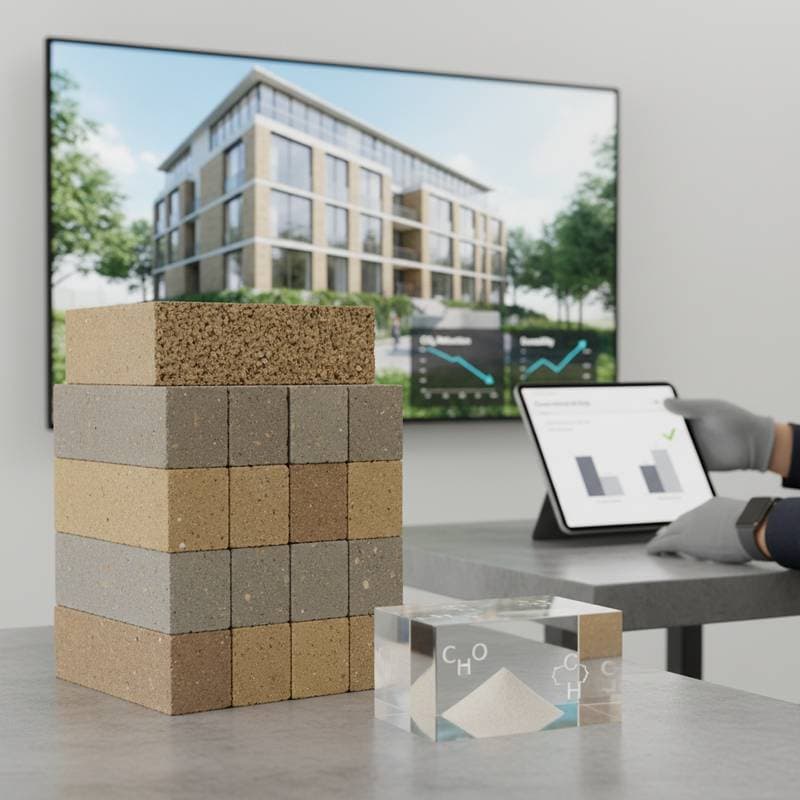
Understanding Geopolymer Bricks
Geopolymer bricks represent an innovative approach to sustainable masonry. These materials form through a chemical reaction involving industrial byproducts such as fly ash and slag, which bind together without relying on Portland cement. This process eliminates the high-energy calcination required for cement production, thereby slashing carbon emissions by up to 80 percent compared to traditional bricks.
The resulting bricks exhibit superior durability. They withstand extreme weather conditions, resist fire penetration, and repel chemical degradation better than standard clay or concrete units. Production requires minimal water during curing, which conserves resources and simplifies on-site handling. As demand grows for green building materials, geopolymer bricks emerge as a practical solution that aligns environmental goals with structural performance.
Key Benefits for Builders and Homeowners
Adopting geopolymer bricks offers multiple advantages beyond carbon reduction. Their dense composition provides excellent thermal mass, helping regulate indoor temperatures and lowering energy costs for heating and cooling. In regions prone to seismic activity, these bricks demonstrate enhanced flexibility under stress, reducing the risk of cracking.
Cost efficiency stands out as a primary draw. While initial prices may vary, local production minimizes transportation expenses, often matching or undercutting the cost of imported clay bricks. Long-term savings arise from reduced maintenance needs, as the bricks resist efflorescence and erosion that plague conventional masonry.
Essential Checks for Quality Assurance
Before incorporating geopolymer bricks into a project, perform straightforward field evaluations to verify quality. These steps ensure the materials meet performance standards and avoid potential pitfalls.
- Examine the brick's weight and surface texture alongside traditional fired clay or concrete samples. High-quality geopolymer units feel uniformly dense with a smooth, fine-grained finish.
- Apply a few drops of water to the surface. Well-cured bricks absorb moisture gradually without producing a powdery or chalky residue.
- Review the edges and corners for consistent shaping. Irregularities often indicate inadequate mixing or insufficient compaction during manufacturing.
- Inquire with the supplier regarding the binder composition and curing conditions. Optimal results stem from balanced fly ash ratios and controlled temperatures around 60 to 80 degrees Celsius.
- Request documentation of compressive strength tests from an accredited laboratory. Reputable manufacturers provide batch-specific results exceeding 20 megapascals, aligning with industry benchmarks.
- Verify compatibility with standard mortar mixes through small-scale adhesion trials.
These checks empower builders to select reliable products without extensive expertise.
Identifying Potential Issues
Spotting defects early prevents costly corrections. Certain visual and tactile cues signal manufacturing shortcomings that could compromise longevity.
- Look for white salt crystals or uneven discoloration on the surface, signs of improper curing or excessive moisture during production.
- Question suppliers unable to specify the origin and quality of fly ash or slag sources, as contaminated byproducts weaken the final product.
- Test durability by gently tapping two bricks together; excessive crumbling or chipping reveals low binder integrity.
- Demand independent verification of strength and resistance to freeze-thaw cycles, essential for cold climates.
- Ensure the bricks conform to modular dimensions and bond effectively with common mortars to avoid installation challenges.
Addressing these red flags through supplier vetting maintains project integrity.
Cost Considerations and Practical Solutions
Geopolymer bricks typically cost the same as premium clay varieties, with small-batch orders potentially 15 to 20 percent higher due to limited scale. However, regional manufacturing offsets logistics fees, narrowing the price differential. Bulk purchases from certified producers often yield discounts, making them competitive for large-scale developments.
For minor imperfections like surface irregularities, apply a thin layer of lime-based parging to achieve a level finish. Steer clear of synthetic sealants that impede vapor transmission and foster internal dampness. If curing inconsistencies arise, professional reheating in a controlled environment can enhance matrix cohesion, though this incurs additional labor and energy expenses.
On-site mixing with unverified components tempts as a budget option but frequently results in subpar strength and accelerated deterioration. Such shortcuts demand extensive repairs later, escalating overall expenditures. To mitigate scope expansion, conduct preliminary tests pairing geopolymer bricks with proposed mortars; alkaline leaching from incompatible mixes can cause staining or bond failure.
Strategies for Repair and Replacement
In existing structures, prioritize repairs over wholesale replacement to preserve value. Intact clay or stone facades with superficial damage benefit from geopolymer-based mortars, which form robust chemical unions without introducing new vulnerabilities. Target areas showing spalling, fissures deeper than 10 millimeters, or efflorescence for targeted intervention.
New construction favors geopolymer bricks in high-exposure zones, such as exterior walls or firewalls. They surpass concrete blocks in heat resistance, maintaining integrity up to 1,200 degrees Celsius. For aesthetic finishes, apply a compatible primer to ensure paint adhesion without compromising breathability.
Assembling the Right Team
Success hinges on collaborative expertise from the outset. Engage a structural engineer versed in non-traditional masonry to validate load-bearing capacities and recommend suitable jointing compounds. Commission a materials testing facility to analyze prototypes for compression, tensile strength, and shear resistance.
The general contractor must account for delivery timelines and on-site curing protocols in the bid. Architects contribute by designing details that accommodate the bricks' expansion coefficients, preventing stress concentrations at interfaces. This integrated approach incurs a 10 to 20 percent premium for oversight but averts discrepancies that delay progress and inflate budgets.
Prioritizing Project Elements
Focus efforts on interventions delivering the greatest impact. Employ geopolymer mortars for joint repairs and infills to boost thermal efficiency without structural overhauls. Combine bricks with vapor-permeable renders to enhance moisture regulation and aesthetic appeal.
De-emphasize superficial enhancements like ornamental facings or opaque coatings, which obscure the material's inherent texture and may trap humidity. Retain exposed brick surfaces where they function effectively, honoring the sustainable ethos.
Planning Budget and Workflow
Structure the timeline around interdependencies for efficiency. Secure proper site drainage and eave protections prior to masonry interventions, as uncontrolled water exacerbates deterioration. Pilot small assemblies to assess performance before scaling to full walls.
Permit adequate curing periods, typically 28 days, before installing veneers or membranes. Sequence insulation and weatherproofing post-masonry stabilization to address moisture gradients precisely. This methodical progression optimizes resource allocation and minimizes disruptions.
Ensuring Long-Term Performance
Sustain the benefits of geopolymer bricks through routine care. Maintain clear gutters to divert runoff, and conduct yearly joint inspections for early erosion detection. Reapply permeable sealants sparingly, guided by surface absorption assessments indicating elevated dampness levels.
Document all materials, including supplier details and batch specifications, to inform ongoing upkeep. While geopolymer bricks cannot rectify foundational design errors, their integration with vigilant water management and load distribution yields resilient, eco-conscious masonry poised to endure for generations.