
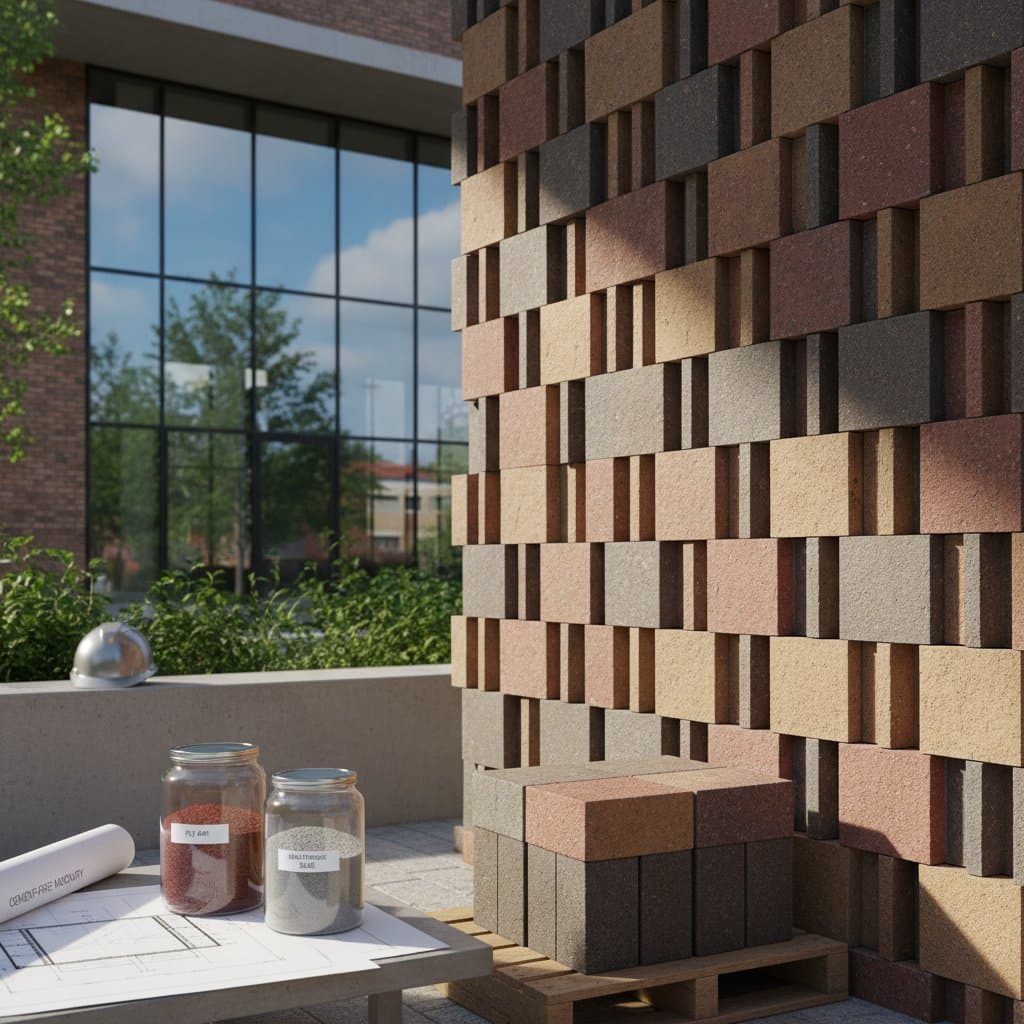
Understanding Geopolymer Bricks
Geopolymer bricks serve as a cement-free alternative in masonry, substituting traditional Portland cement with binders rich in minerals that activate through alkali solutions. Rather than depending on limestone and the high-energy kilns required for cement manufacturing, these bricks incorporate industrial by-products like fly ash, slag, or metakaolin. A chemical reaction occurs when these materials combine with alkaline activators, such as sodium hydroxide, creating a robust and stable matrix akin to natural stone.
This process generates significantly less carbon dioxide compared to standard cement production, positioning geopolymer bricks as a viable choice for professionals pursuing sustainable and low-emission building materials. The outcome yields a compact brick that withstands chemical degradation, elevated temperatures, and humidity more effectively than many conventional masonry products.
The Importance of Geopolymer Technology
Cement manufacturing ranks among the most resource-demanding activities in the construction sector, depleting natural reserves and emitting substantial greenhouse gases. Geopolymer technology alters this dynamic by repurposing existing industrial waste, thereby minimizing the need for new raw material extraction and reducing overall emissions. Such an approach positions it as a pivotal advancement in sustainable masonry and environmentally responsible building.
In addition to ecological gains, geopolymer bricks provide notable performance enhancements. Their less porous microstructure limits water penetration, bolstering resistance to freeze-thaw cycles. These bricks also endure higher temperatures, rendering them appropriate for applications demanding fire resistance or exposure to intense heat.
Applications for Geopolymer Bricks
Geopolymer bricks integrate seamlessly into scenarios typically reserved for standard masonry, including load-bearing walls, paving surfaces, and landscaping elements. Their compressive strength and resistance to chemical corrosion prove especially valuable in coastal zones or industrial settings, where humidity and harsh conditions accelerate the deterioration of ordinary concrete. Dimensional stability further supports their use in architectural facades, where precise alignment and consistency matter.
Formulations of geopolymer mixes differ considerably, with certain blends optimized for structural demands and others tailored for ornamental purposes. Consult manufacturer guidelines to confirm load-bearing capacities, curing protocols, and compatibility with mortars or adhesives.
Installation: DIY or Professional Approach
Skill level: Intermediate
Construction with geopolymer bricks adheres to established masonry methods, though preparing the geopolymer binders demands exact measurements. The alkaline activators involved possess caustic properties, necessitating protective equipment like gloves and goggles. For these reasons, professionals or specialized suppliers handle binder mixing, often providing pre-formed bricks.
With bricks ready, an experienced DIY enthusiast can manage placement using familiar techniques. Employ standard trowels, levels, and mortar joints, adhering to supplier advice on compatible mortars, as geopolymer bricks may not adhere reliably to cement-based varieties.
Project Planning for Geopolymer Bricks
Thorough preparation ensures reliable and enduring outcomes in any geopolymer brick endeavor.
Site Evaluation
Examine foundation stability, drainage patterns, and soil composition. Although geopolymer bricks handle moisture effectively, inadequate drainage compromises structural integrity. Steer clear of sites prone to water accumulation. For inclined sites, incorporate stepped foundations or retaining features.
Material Selection
Evaluate options among geopolymer brick varieties:
- Fly ash-based bricks: These offer lightness and cost-effectiveness, fitting for non-structural walls. They provide moderate strength paired with superior thermal insulation.
- Slag-based bricks: Denser and more robust, they suit load-bearing or paving applications. Expect higher expenses and weight, offset by exceptional longevity.
- Metakaolin-based bricks: These deliver premium aesthetics with smooth textures. They incur greater costs and specific curing needs but excel in visible architectural elements.
Practical advice: Acquire 10 percent extra bricks beyond calculated needs to account for damage and cuts.
Tools and Supplies
Gather these essential hand tools:
- Brick trowel to apply mortar uniformly.
- Spirit level for ensuring vertical and horizontal accuracy.
- Masonry hammer to shape bricks as required.
- Jointer or pointing tool to finish joints neatly.
Consider these power tools for efficiency:
- Wet saw for precise cuts through tough bricks.
- Mortar mixer for handling substantial volumes.
- Plate compactor for stabilizing pavements or walls.
Prioritize safety with gloves, safety goggles, and protective clothing to guard against alkaline exposure.
Installation Process
- Foundation preparation. Even out and firm the base layer. Establish alignment with a string line.
- First course placement. Apply a uniform mortar layer and set bricks with care. Confirm level and alignment prior to advancing.
- Subsequent courses. Stagger vertical joints in a running bond layout. Maintain joint thickness at approximately 3/8 inch.
- Ongoing alignment checks. Apply a level after every few rows to preserve verticality.
- Joint finishing. Shape each joint to achieve consistent texture and weatherproofing.
- Curing phase. Shield the structure from rain until the mortar hardens completely; no water curing proves necessary for geopolymer assemblies.
Final inspection: Verify that surfaces align straight, form right angles, and remain free of excess mortar.
Maintaining Geopolymer Brick Structures
Annual joint inspections help prolong the service life of geopolymer brick installations, with repointing advised for any fissures. Clean exteriors using a gentle detergent solution and water, eschewing acidic products that could affect surface quality. Apply a permeable sealer to landscaping or outdoor walls for added defense against moisture ingress, enhancing long-term resilience and aesthetic appeal.