
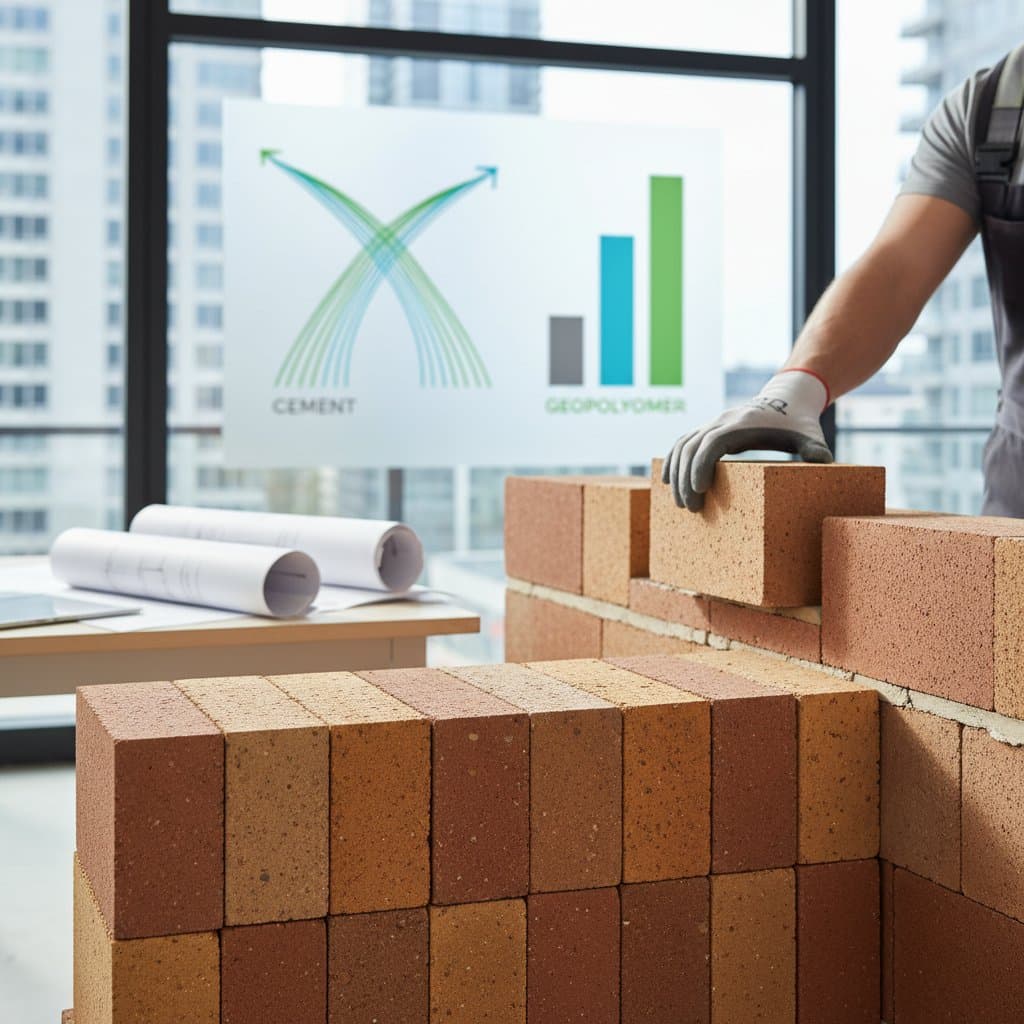
Geopolymer Bricks: The Rise of Cement-Free Masonry in 2025
Geopolymer bricks represent an innovative class of masonry units produced without Portland cement. Manufacturers combine industrial byproducts, such as fly ash or slag, with alkaline activators to create a durable, stone-like binder. This process yields a robust alternative to conventional fired clay or concrete bricks, suitable for both load-bearing structures and aesthetic applications.
These materials attract widespread interest due to their ability to significantly reduce greenhouse gas emissions associated with traditional cement manufacturing. In addition, geopolymer bricks provide superior compressive strength and resistance to environmental stressors, making them a viable option for modern construction projects focused on sustainability.
Understanding Costs and Budgeting
The material cost for geopolymer bricks generally spans from 2 to 4 dollars per square foot for basic units. When factoring in installation, expenses typically range from 8 to 14 dollars per square foot, influenced by local labor rates and project-specific conditions.
Several elements contribute to elevated costs:
- Specialized custom finishes or architectural designs.
- Availability constraints from limited regional manufacturers.
- Requirement for skilled masons experienced in geopolymer formulations.
- Intricate wall configurations or demands from heavy structural loads.
To optimize expenses, consider these strategies:
- Select standard dimensions and uncomplicated surface treatments.
- Integrate geopolymer bricks with conventional masonry in non-load-bearing sections.
- Procure raw materials from nearby sources to minimize transportation fees.
Budgeting effectively involves obtaining multiple quotes from suppliers and assessing long-term savings from reduced maintenance and energy efficiency.
Essential Specifications for Selection
Selecting the right geopolymer bricks requires attention to critical performance metrics. Verify the following attributes to ensure compliance and suitability:
- Compressive strength: At least 5,000 psi to support structural applications.
- Water absorption: No more than 10 percent, essential for exterior exposure.
- Freeze-thaw resistance: Compliance with ASTM C1262 standards or comparable tests.
- Fire resistance: Achieve Class A rating or confirm non-combustible properties.
- Dimensions and configuration: Opt for modular sizes, such as 7 5/8 by 3 5/8 by 2 1/4 inches, for ease of use.
- Dimensional accuracy: Adhere to ASTM C216 tolerances for face brick quality.
Request detailed test certificates from suppliers and cross-check against prevailing building codes. These specifications not only guarantee safety but also enhance the overall integrity of your construction.
Step-by-Step Installation Guide
Installation of geopolymer bricks mirrors procedures for concrete masonry units, with adjustments for material handling.
- Prepare the layout. Establish reference lines using chalk snaps at corners and along wall paths to guide alignment.
- Prepare mortar. Select a geopolymer-compatible or low-alkali mortar mix; standard Portland cement formulations prove incompatible.
- Establish corners. Construct corner sections first, verifying plumb and level with tools at each stage.
- Build courses. Offset vertical joints between layers to distribute loads evenly and bolster stability.
- Finish joints. Tool the joints once the mortar reaches a firm yet workable state to enhance weatherproofing.
- Facilitate curing. Protect fresh walls with covers and maintain moisture for a minimum of 24 hours.
- Perform cleanup. Remove residue promptly with water rinses before hardening; refrain from acid-based cleaners.
For applications like paving or retaining walls, incorporate a stable compacted base, perimeter restraints, and effective drainage systems, consistent with standard hardscaping practices. Proper execution prevents common issues such as settling or water infiltration.
Deciding Between DIY and Professional Installation
Individuals with foundational masonry skills and appropriate tools can manage modest projects, such as garden borders, planters, or short walkways. Preparing geopolymer mortar demands precise ratios and protective equipment due to the caustic nature of alkaline activators.
Consider DIY for scenarios where:
- The total surface area measures less than 100 square feet.
- Structural demands remain minimal.
- Conditions allow for dry storage and controlled curing environments.
Engage professionals for more demanding undertakings, including:
- Load-bearing walls or foundational elements.
- Features like staircases, retaining structures, or integrated drainage.
- Situations lacking dedicated mixing areas or curing facilities.
- Projects necessitating engineer-approved designs per local regulations.
Experienced teams possess specialized equipment, such as mixing stations and protective enclosures, along with expertise in achieving uniform joint aesthetics and structural reliability.
Adapting to Regional Climates and Conditions
In regions with harsh winters, prioritize geopolymer mixes engineered for multiple freeze-thaw cycles. The inherently low water absorption of these bricks minimizes cracking risks, yet robust behind-wall drainage proves indispensable.
Coastal environments or areas with elevated salt exposure benefit from geopolymer bricks' resilience against chloride penetration, outperforming traditional concrete. Periodic rinsing of salt accumulations helps avert cosmetic discoloration.
For arid, high-temperature zones, shield newly constructed walls to regulate evaporation rates during initial curing. Accelerated drying may lead to superficial fissures, compromising appearance and performance.
Tailoring selections to local conditions extends service life and reduces repair needs, aligning with sustainable building principles.
Integrating Geopolymer Bricks into Your Build
Geopolymer bricks signify a pivotal advancement in masonry production and application. By repurposing industrial waste into resilient components, they simultaneously lower carbon footprints and elevate construction quality.
Homeowners and builders alike gain environmental merits alongside enduring functional benefits. When contemplating walls, patios, or expansions, evaluate geopolymer options alongside conventional materials. Consult local providers for stock levels, secure cost estimates, and review performance documentation. Through meticulous preparation and adherence to curing protocols, whether executing personally or via experts, these cement-free solutions deliver lasting value to your projects.