
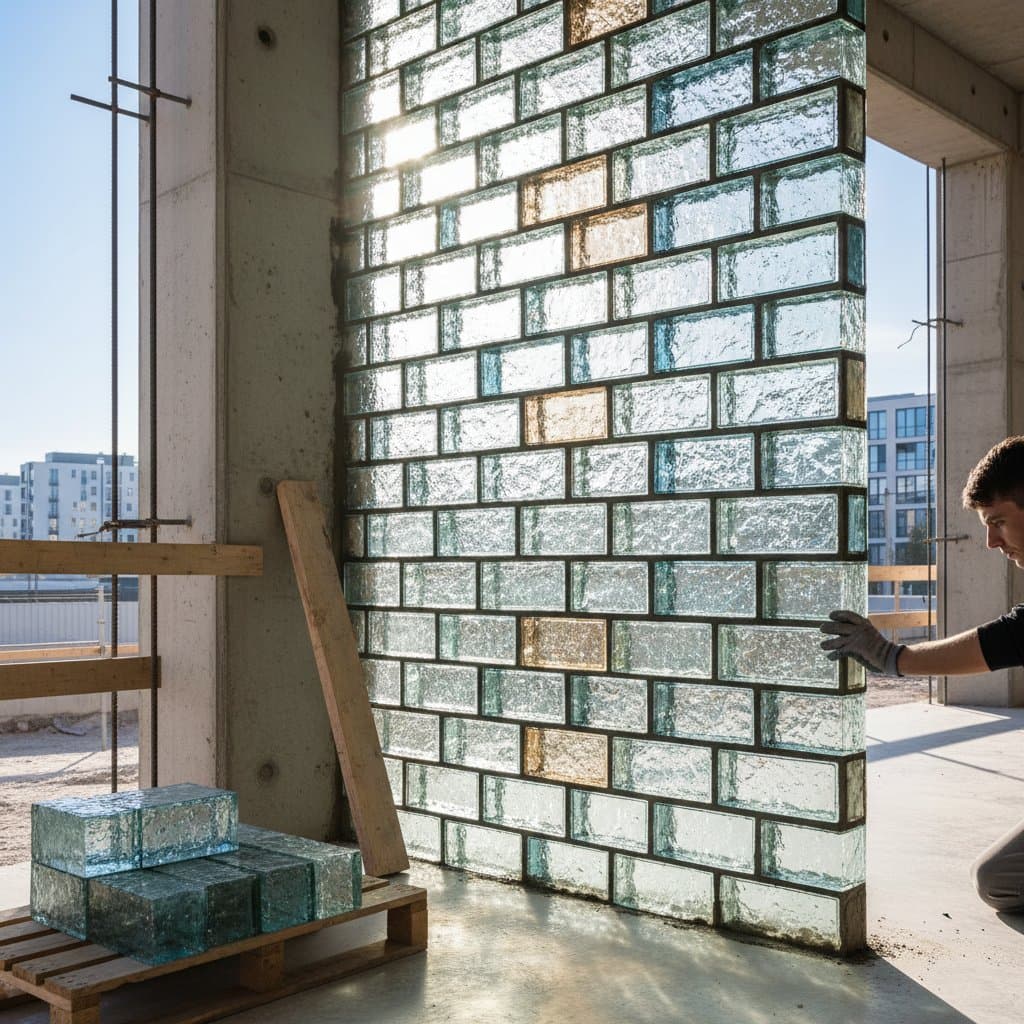
Advance Construction with Recycled Glass Bricks
Sustainable building practices evolve through materials like recycled glass bricks. These translucent blocks integrate environmental benefits with robust performance and versatile aesthetics. Manufacturers create them from waste glass, which diverts material from landfills, conserves energy in production, and expands the potential of masonry in contemporary designs. This article outlines the production of recycled glass bricks, their installation procedures, maintenance requirements, and comparisons to standard materials to assist in evaluating their suitability for upcoming projects.
Key Features of Recycled Glass Bricks
Builders form recycled glass bricks from post-consumer and industrial glass waste, processing it into solid or hollow units. Workers crush the glass, clean it thoroughly, melt it at high temperatures, and mold it into consistent shapes that mimic traditional bricks while offering distinct light-transmitting and load-supporting properties. This recycling approach establishes a circular material system that prevents glass from accumulating in waste sites.
Varieties of Recycled Glass Bricks
- Solid glass bricks: These dense blocks suit load-bearing walls or decorative elements needing both clarity and structural support.
- Hollow glass bricks: Lighter in weight, they serve partitions, exterior facades, or highlight areas where diffused light enhances ambiance.
- Hybrid glass-concrete bricks: These incorporate recycled glass particles in a cement matrix for superior heat resistance and stability.
Different varieties provide specific attributes, such as insulation values or noise reduction levels, enabling precise selection for diverse building needs.
Costs Associated with Recycled Glass Bricks
Pricing for recycled glass bricks varies based on type, size, and quantity. Solid bricks typically cost between 5 and 10 dollars per unit, while hollow versions range from 4 to 8 dollars each. Hybrid options fall in the middle at 6 to 9 dollars per brick, with bulk purchases reducing expenses by up to 20 percent.
Installation adds to the total, with labor fees averaging 15 to 25 dollars per square foot depending on complexity and location. Initial investments exceed those of basic concrete blocks by 10 to 30 percent, but long-term savings emerge from reduced energy use and minimal maintenance. Compare quotes from multiple suppliers to optimize budgets for sustainable projects.
Preparing the Site for Installation
Thorough site readiness guarantees the stability and appearance of the finished work.
Essential materials and tools:
- Recycled glass bricks: Confirm even dimensions and uniform hues across batches.
- Mortar or adhesive: Select polymer-enhanced mortar or glass-compatible epoxy for secure bonding.
- Leveling spacers: Employ these to achieve joint gaps of 1/4 inch consistently.
- Reinforcement elements: Integrate stainless steel mesh or bars in load-bearing applications for added durability.
- Protective equipment: Wear gloves, safety goggles, and dust masks to shield against fine particles.
Substrate preparation:
- Level the base surface to within 1/8 inch over every 4 feet.
- Clean all areas with water and a gentle soap solution to eliminate debris and residues.
- Allow full drying prior to mortar application to ensure adhesion.
Ensuring Quality Through Inspection
Examine installed areas for even joint spacing, straight alignment, and clear visibility. Small internal bubbles pose no issue, yet fractures or separation signal errors in curing or bonding. Conduct a translucency check by passing light through multiple bricks to verify uniform diffusion.
Assess structural integrity with on-site compression testing or by consulting supplier specifications. Verify that the overall system satisfies the designated load capacities for safety and compliance.
Ongoing Maintenance for Recycled Glass Bricks
These bricks demand little routine care due to their smooth, non-absorbent finish, which repels stains, fungi, and sun damage. Periodic checks sustain their look and function over time.
Maintenance schedule:
- Clean exteriors every three months using soapy water and soft cloths.
- Review sealants yearly for signs of wear or fading.
- Evaluate for movement or joint wear following intense storms.
- Swap out any compromised bricks immediately to avoid water entry.
Proper care extends service life beyond 50 years, often outlasting standard brickwork.
Advantages in Environment and Performance
Recycled glass bricks offer quantifiable gains in sustainability and utility.
- Energy conservation: Light-reflecting surfaces cut artificial illumination needs by up to 15 percent in sunlit spaces.
- Temperature management: Air-filled hollow designs provide better insulation than solid glass sheets.
- Sound mitigation: The material's density absorbs vibrations, benefiting noisy settings like city apartments.
- Fire safety: Incombustible composition withstands high heat, aligning with ASTM criteria.
- Design flexibility: Options in transparent, textured, or colored variants fit diverse architectural styles.
Such features position recycled glass bricks for use in home exteriors, office walls, room dividers, and outdoor structures like retaining walls.
Practical Advice for Effective Installation
- Choose adhesives containing flexible polymers to accommodate expansion from temperature changes.
- Shield bricks from direct sun during placement to avoid uneven setting or overheating.
- Stack supplies on level platforms, protected from rain and intense light.
- Construct test sections to evaluate shade variations, light patterns, and attachment strength.
- Pair with energy-efficient lighting to amplify the material's glowing effects.
Skilled application turns recycled glass bricks into elements that brighten and greenify built environments.
Applying Recycled Glass Bricks in Modern Projects
Recycled glass bricks blend form, resilience, and eco-friendliness to update building standards. They convert discarded glass into enduring components, illuminate surfaces with subtle glows, and promote responsible material choices. From focal interior features to comprehensive facades, these bricks encourage innovators in design and construction to prioritize sustainable solutions that endure.