
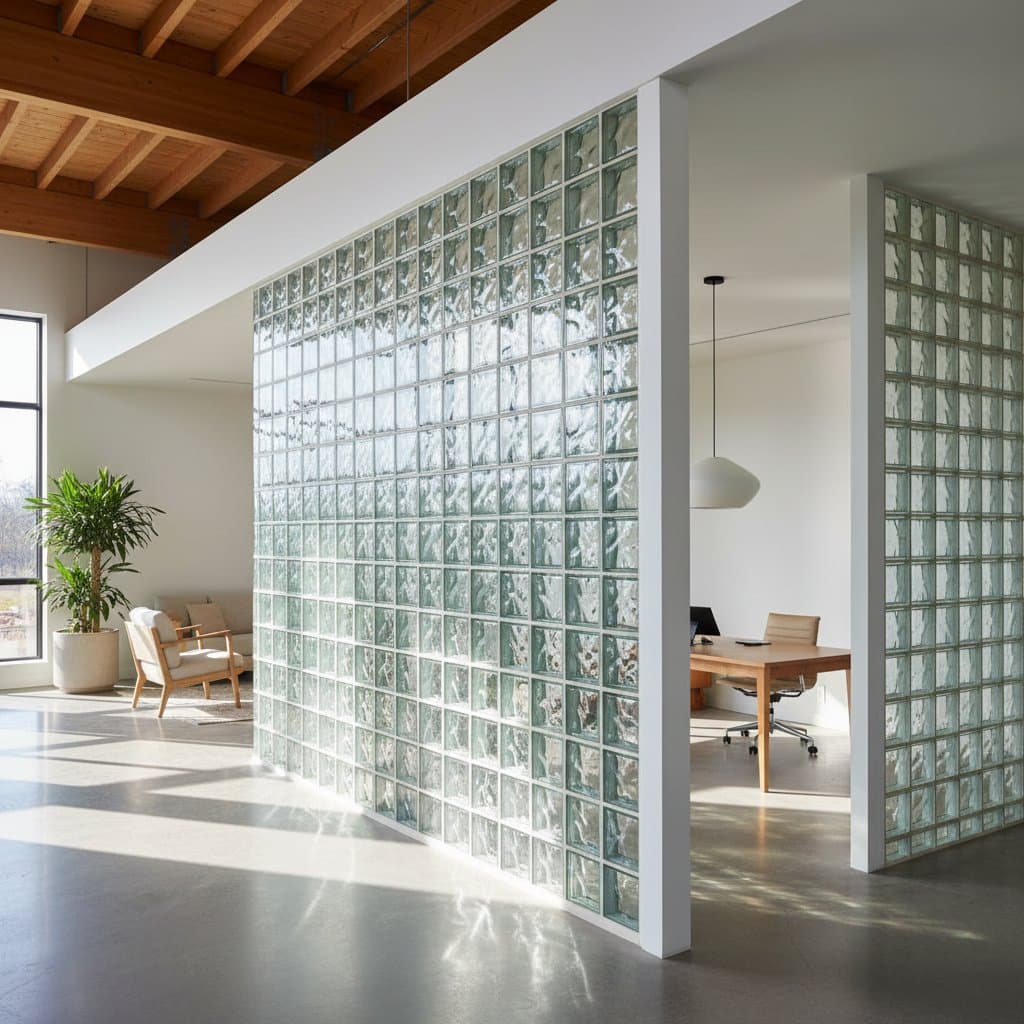
- Decision factor: Select recycled glass blocks for projects requiring privacy alongside natural light in a sustainable setup.
Understanding Recycled Glass Walls
Recycled glass walls consist of blocks or panels produced from post-consumer glass waste. Manufacturers melt this waste, shape it into translucent units, and cool them to form durable pieces available in clear, tinted, or frosted varieties. These units create a masonry system that diffuses daylight, blurs boundaries, and introduces visual depth to any space.
Such walls fulfill aesthetic and practical roles. Architects incorporate them as interior dividers, shower surrounds, outdoor features, or garden screens. They enhance energy performance by allowing light passage without the thermal transfer common in traditional windows.
Reasons Designers Favor Recycled Glass Walls
- Sustainability: Production repurposes glass waste, keeping it out of landfills and minimizing reliance on raw resources.
- Durability: Installed correctly, the blocks withstand moisture, corrosion, and ultraviolet rays over decades.
- Light Transmission: Finishes and thicknesses permit 50 to 85 percent of natural light to filter through.
- Customization Options: Mineral pigments tint the glass in hues like soft greens, blues, or ambers, while textures add variety.
- Privacy Features: Frosted or patterned options block views yet preserve illumination.
Planning a Recycled Glass Wall Project
Start by identifying the wall's location and purpose. Interior separators, bathroom enclosures, or exterior highlights demand tailored approaches to ensure success.
Navigating Permits and Building Codes
Authorities often classify glass block walls as non-structural masonry. Adhere to standards such as ASTM C1036 for glass integrity and ASTM C744 for surface treatments. Consult local rules on maximum heights; in moisture-prone areas like bathrooms, incorporate waterproof barriers to meet safety requirements.
Essential Materials and Tools
- Recycled Glass Blocks: Opt for standard 8 x 8 x 4 inch dimensions or custom sizes to achieve desired patterns.
- Mortar: Employ Type S mortar or a specialized glass block mix formulated for minimal shrinkage.
- Reinforcement Rods: Galvanized steel bars provide alignment and enhance load distribution.
- Expansion Strips: Place these foam or rubber elements along edges to accommodate expansion and contraction.
- Leveling Equipment: Gather trowels, joint spacers, and spirit levels for precise placement.
- Protective Gear: Wear gloves, safety glasses, and respirators when handling cuts or mortar mixtures.
Budgeting for Costs
An 8 x 8 foot recycled glass wall typically ranges from $1,600 to $2,800, influenced by design complexity and surface treatments. Intricate patterns or curves increase labor expenses. Opting for DIY can cut costs by 40 percent, provided you maintain accuracy to avoid compromising stability.
At $25 to $45 per square foot, factors like block quality, mortar type, and installation method drive the price. Source materials from certified suppliers to balance affordability with performance.
Site Preparation Essentials
Thorough preparation lays the groundwork for a secure and aligned installation.
-
Evaluate the Base Surface: Confirm the foundation is flat, free of debris, and strong enough to support the wall's weight. Concrete or block bases work best; for wooden floors, add a bolted sill plate for reinforcement.
-
Outline the Layout: Snap chalk lines to mark boundaries and use a framing square to ensure right angles, avoiding future tilts.
-
Secure the Base Channel: Fasten a metal U-channel or plate to anchor the initial row, verifying levelness end to end.
Detailed Installation Guide
Follow these steps methodically to construct a reliable wall.
-
Prepare the Mortar Mix: Combine ingredients to achieve a smooth, workable paste. Apply a half-inch bed inside the base channel.
-
Position the Initial Row: Align blocks using outward-facing spacers. Butter vertical edges with mortar and press into place, squeezing out air pockets.
-
Add Reinforcement Layers: Slot steel rods into every horizontal joint after completing a row to bolster strength and resist shifts.
-
Build Subsequent Rows: Proceed layer by layer, verifying plumb and level at intervals. Scrape away surplus mortar promptly.
-
Incorporate Edge Expansion: Fit compressible strips along perimeters to manage thermal fluctuations.
-
Finalize Curing Process: Let the assembly set for 48 to 72 hours, then polish with a gentle glass-safe cleaner.
Resolving Installation Issues
Address problems swiftly to preserve quality.
-
Irregular Joints: Stemming from uneven mortar application, correct by employing consistent spacers and frequent level checks.
-
Joint Cracks: Often due to weak reinforcement or fast evaporation, remedy by lightly spraying water during the setting phase.
-
Hazy Glass: Mortar residue causes this; clean with a moist cloth right away to prevent permanent marks.
-
Moisture Penetration: In damp settings, apply high-grade silicone sealant fully around borders for watertight protection.
Long-Term Care Strategies
Constructed properly, these walls endure 50 years or longer with basic upkeep. Scan mortar lines quarterly for cracks exceeding 1/16 inch and apply fresh sealant to seal them.
Wipe surfaces biweekly using soapy water and soft cloths, steering clear of scrubbers that dull finishes. For outdoor walls, refresh with a penetrating sealer every three to five years to guard against weather damage. In damp climates, keep drainage paths unobstructed to avert water buildup.
Deciding Between DIY and Professional Help
Intermediate builders with masonry background can tackle recycled glass walls, potentially saving 25 to 40 percent on labor. Focus on precision, as minor misalignments lead to aesthetic flaws or weakness.
Engage a certified mason for:
- Projects over 10 feet tall or in load-bearing positions.
- Curved, angled, or integrated designs requiring specialized tools.
- Wet-area installations needing code-compliant waterproofing.
- Situations lacking prior experience to ensure safety and warranty.
Maximizing Design and Performance
Integrate recycled glass walls to elevate space without sacrificing eco-principles. Pair with LED accents for evening glow or combine with plants for biophilic effects. Test light patterns in samples before committing to full scale. These elements not only cut energy use but also infuse environments with enduring, light-infused elegance.