
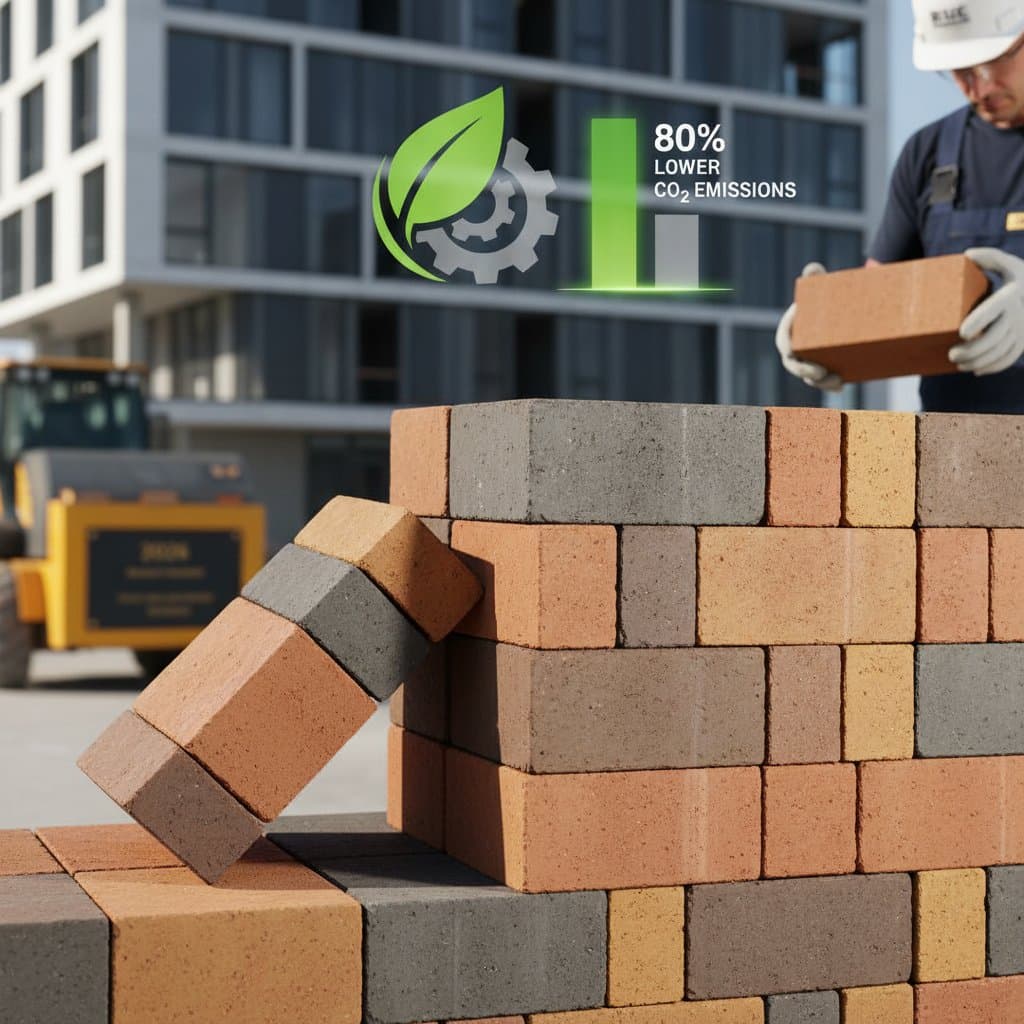
Zero-Cement Bricks: Revolutionizing Sustainable Masonry
The construction sector faces increasing pressure to address environmental concerns and resource scarcity. Zero-cement bricks, commonly referred to as geopolymer bricks, emerge as a key innovation in this evolution. By forgoing traditional Portland cement in favor of industrial by-products, these bricks deliver robust strength, lasting durability, and a substantially lower environmental impact. This article examines the nature of zero-cement bricks, their production methods, and their significance in promoting sustainable construction practices.
Key Takeaways
- Cost Range: Zero-cement bricks generally cost 10 to 20 percent more than standard clay or cement bricks, owing to the use of specialized materials. However, operational savings of up to 30 percent emerge from reduced energy consumption and quicker curing processes.
- Curing Timeframe: These bricks cure in 24 to 48 hours on average, in contrast to the 7 to 28 days required for traditional concrete, which shortens overall project timelines.
- Strength Range: Compressive strength levels span 4000 to 6000 PSI, satisfying or surpassing requirements for load-bearing walls in most building applications.
- Material Composition: The mix consists of fly ash (40 to 60 percent), ground granulated blast furnace slag (30 to 50 percent), and alkaline activators (10 to 15 percent), fully replacing cement.
- Decision Factors: Availability of local industrial by-products, regional climate conditions, and project scale influence the suitability of geopolymer bricks for specific initiatives.
Planning Essentials for Zero-Cement Brick Projects
Adopting geopolymer bricks requires careful assessment of material sourcing, curing environments, and compliance with regulations to ensure successful implementation.
Permits and Building Codes
Certain local building codes designate Portland cement as the primary binder. Builders must consult municipal authorities to verify approval of geopolymer bricks under provisions for alternative materials. In cases of non-approval, an engineer's certification demonstrating structural equivalence often suffices to proceed.
Cost and Labor Breakdown
A standard cost distribution for zero-cement masonry projects includes:
- Materials: 55 to 65 percent, primarily driven by alkaline solutions and fly ash procurement.
- Labor: 25 to 30 percent, reduced slightly by the abbreviated curing period.
- Equipment and Utilities: 10 to 15 percent.
Initial project expenses may rise by 5 to 15 percent compared to conventional methods. Yet, benefits such as minimal maintenance needs and accelerated construction timelines recoup these investments over the structure's lifespan.
Step-by-Step Guide to Producing Geopolymer Bricks
-
Measure and Mix Dry Materials
Begin by combining fly ash, slag, and aggregates in an industrial mixer to achieve uniformity. A standard proportion involves 60 percent fly ash, 30 percent slag, and 10 percent sand. -
Prepare the Alkaline Activator
Dissolve sodium hydroxide pellets in water, followed by the addition of sodium silicate. Permit the solution to cool to room temperature before integrating it with the dry components. -
Blend for Optimal Consistency
Incorporate the activator solution incrementally into the dry mix until a semi-plastic consistency emerges, akin to that of standard mortar. -
Mold and Compact the Mixture
Transfer the blended material into molds and apply vibration or mechanical pressure for compaction. This step guarantees even density and reliable strength across the bricks. -
Cure the Bricks
Encase the molded bricks with plastic sheeting or place them in a chamber that maintains controlled humidity. Optimal strength develops within 36 hours under typical ambient conditions. -
Conduct Testing and Quality Checks
Upon curing completion, evaluate selected samples for compressive strength and water absorption rates. Target water absorption falls between 5 and 10 percent for compliance.
Addressing Common Production and Use Challenges
- Excessive Efflorescence: This issue signals an imbalanced activator ratio or undue moisture during curing. Adjust by decreasing sodium silicate slightly and enforcing covered curing protocols.
- Low Compressive Strength: Inadequate compaction or incomplete mixing often causes this problem. Prolong mixing duration and confirm the fineness of raw materials.
- Inconsistent Color Variation: Fluctuations in fly ash quality from suppliers lead to this. Secure a reliable source and analyze each batch for oxide content prior to use.
- Surface Scaling: Premature drying triggers scaling. Preserve moisture levels adequately throughout the initial 24-hour period.
Guidelines for DIY Versus Professional Installation
Skilled individuals can manage geopolymer brick installation for modest applications, such as garden walls, landscape elements, or non-load-bearing partitions. Possession of basic mixing and molding equipment yields cost reductions of 20 to 30 percent relative to professional services.
For structural elements like load-bearing walls or multi-story constructions, engage certified professionals. Select contractors with proven expertise in geopolymer binders, and review their licensing, insurance coverage, and portfolio of past projects. Errors in activator proportions or curing management pose risks to overall structural integrity.
Advancing Sustainable Construction Choices
Zero-cement bricks stand out as a viable solution for resource conservation, emission reductions, and superior performance in masonry. Homeowners pursuing eco-conscious upgrades and professionals seeking innovative alternatives benefit from mastering the intricacies of geopolymer production and application. Through meticulous planning, rigorous quality assurance, and ongoing upkeep, these materials enable builders to construct with greater environmental responsibility and efficiency.