
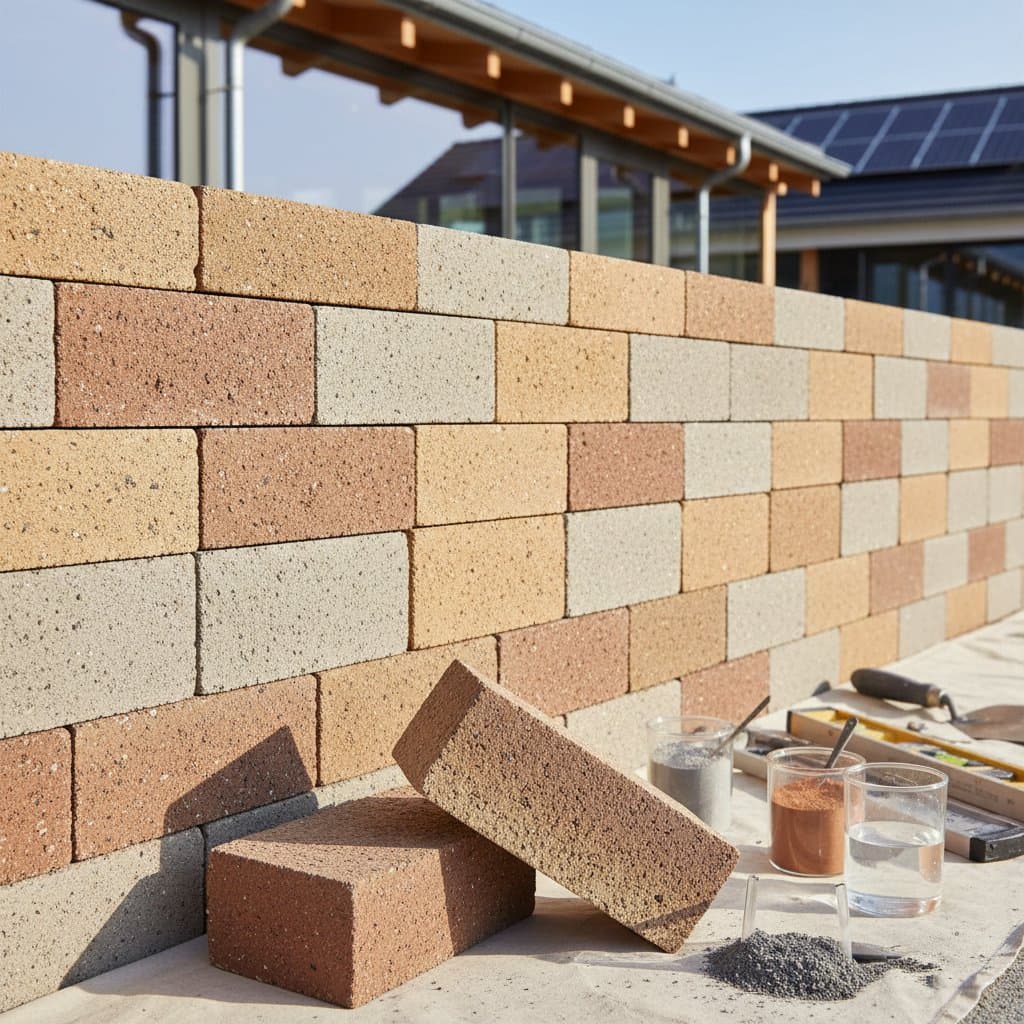
3. Build Successive Courses
Lay the next rows of bricks with even mortar application. Offset each joint by half a brick length to enhance structural integrity. Verify vertical alignment after every three to four courses using a level and plumb line. Clean away surplus mortar promptly to avoid hardened buildup.
For geopolymer-based adhesives, adhere strictly to the manufacturer's guidelines on open time and curing duration.
Purpose: This staggered pattern evenly distributes weight and minimizes the risk of linear cracks.
Quality Check: Maintain uniform joint thickness of about 10 millimeters and ensure precise vertical alignment throughout.
4. Shape and Cut Bricks as Required
Employ an angle grinder fitted with a diamond blade to customize bricks for corners, windows, or doorways. Protect yourself with safety goggles, ear defenders, and a dust mask. Apply steady, controlled pressure to prevent chipping or uneven edges.
Pro Tip: Lightly dampen the brick surface prior to cutting to suppress dust generation and improve precision.
5. Finish the Joints
As the mortar starts to set, use a jointing trowel to press and shape the joints. This action compacts the material and creates a smooth, sealed profile.
Purpose: Well-tooled joints resist moisture penetration and contribute to a professional aesthetic.
6. Cure the Brickwork Properly
Protect the assembled structure from direct sunlight and strong winds for a minimum of 48 hours. Introduce light misting if humidity levels drop below 60 percent, but refrain from heavy wetting. Geopolymer formulations develop strength via chemical processes, so consistent moderate temperatures optimize performance.
Safety Warning: Avoid accelerating drying with heat sources or flames, as rapid changes can induce cracking and weaken bonds.
7. Inspect and Clean the Installation
Following the curing period, gently brush the surfaces to eliminate any residual powder or debris. Consider applying a penetrating sealer suited to local weather conditions and exposure risks. Evaluate the overall alignment, verticality, and joint soundness for any issues.
Practical Tips for Success
- Order 10 percent more bricks than calculated to account for breakage, cuts, and minor discrepancies.
- Keep a damp sponge nearby to wipe excess mortar during placement, ensuring neat joints.
- When preparing custom mortar, measure the activator and binder precisely per the supplier's specifications.
- If cured bricks show a powdery residue, extend the curing phase before applying any sealant.
- On extensive projects, mix mortar in small batches sufficient for one hour of active laying to avoid waste from early hardening.
Extending the Project's Life
Adding Finishing Details
Zero-cement bricks accept paints or stains effectively, although their inherent earthy hues often suffice for natural appeal. On exterior walls, install coping caps made of stone or precast concrete to direct rainwater away. For paved surfaces, fill joints with fine polymeric sand to secure the bricks and permit controlled drainage.
Ongoing Maintenance Practices
Conduct yearly inspections to identify widening joints or encroaching plant roots. Clean surfaces using a solution of mild detergent and water applied with a firm-bristled brush. Reserve acidic cleaners for use only after confirming compatibility with geopolymer materials. Reapply sealant in areas subject to heavy use or moisture every three to five years.
Creative Enhancement Options
Embed low-voltage LED lights within retaining walls for illuminated features. Incorporate built-in benches or planting pockets to increase utility. Pair the bricks with wooden beams or metal railings for visual interest. In patio designs, opt for permeable joint fillers to facilitate groundwater recharge and reduce runoff.
Pitfalls to Sidestep
- Neglecting a stable gravel foundation invites uneven settling over time.
- Pairing these bricks with conventional cement-rich mortar risks poor adhesion and failure.
- Overlooking level checks during construction leads to crooked or unstable walls.
- Permitting overly rapid drying compromises the material's final strength.
- Aggressive cleaning with strong chemicals can erode the protective surface layer.
Simple Remedies for Issues
Should alignment drift in a section, carefully remove the mortar while it remains workable and reposition the bricks. Address minor cracks by filling with a geopolymer-compatible repair compound matched to the brick color. In cases of extensive flaws, halt work immediately and seek advice from a qualified masonry professional.
Zero-cement fly ash bricks represent a forward-thinking choice in construction, blending advanced geopolymer science with eco-conscious principles. Through meticulous preparation, appropriate materials, and deliberate execution, builders create enduring structures that lower environmental footprints without sacrificing the artistry of masonry.