
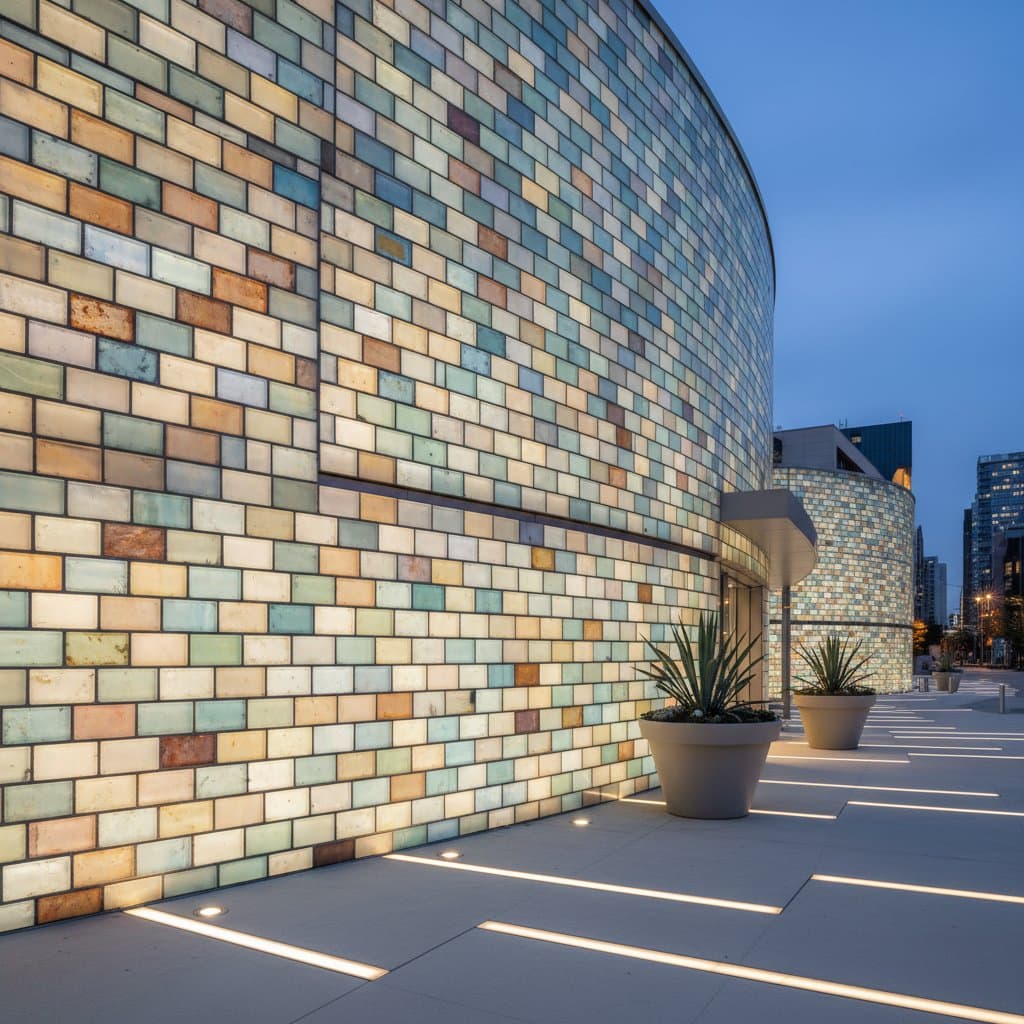
Why Recycled Glass Bricks Glow in Modern Builds
Recycled glass bricks represent an innovative masonry option crafted from post-consumer and industrial glass waste. These units capture and diffuse natural light far more effectively than traditional clay or concrete blocks. Certain formulations incorporate luminescent materials that absorb sunlight during the day and emit a soft glow after sunset, eliminating the need for electrical lighting.
Professionals in construction and design increasingly select these bricks for projects that prioritize visual appeal, structural integrity, and environmental responsibility. Beyond aesthetics, the bricks comply with building codes for both load-bearing and non-structural applications when installed correctly. Homeowners benefit from enhanced safety in low-light areas, such as pathways or perimeter walls, while architects achieve sustainable certifications more readily.
Cost Ranges
Expect material costs for recycled glass bricks to range from $20 to $45 per square foot, varying by factors like color options, surface finish, and inclusion of luminescent features. Installation expenses typically span $45 to $90 per square foot, determined by several elements:
- Layout complexity, including intricate patterns or curves
- Application type, whether structural or purely decorative
- Site accessibility and requirements for specialized handling equipment
- Selection of mortar or adhesive and precision in joint finishing
- Presence of glow-enhancing additives
Units with elevated recycled content percentages or artisanal finishes command premium pricing. Custom pigmentation or advanced luminescent compounds further increase expenses, reflecting the specialized manufacturing processes involved.
Specifications to Verify Before Purchase
Prior to acquiring recycled glass bricks, evaluate these key technical attributes to ensure suitability for your project:
- Compressive strength: Minimum 3,000 psi for non-load-bearing partitions; 5,000 psi or higher for load-bearing structures
- Thermal expansion coefficient: Must align with the chosen mortar or bedding material to prevent cracking
- Fire resistance rating: Compliant with local regulations for indoor and outdoor installations
- Slip resistance: Essential for horizontal surfaces like walkways or floors
- Luminescent performance: Measure intensity in lumens and duration in hours for glow-enabled variants
- Dimensional consistency: Uniform thickness and size to facilitate even joint spacing
Additionally, request documentation verifying recycled content levels and adherence to standards such as LEED or local green building initiatives.
Installation Process
Follow this step-by-step guide to install recycled glass bricks effectively:
- Mark the layout with chalk lines or temporary guides to establish the design pattern.
- Prepare the foundation by excavating, leveling, and compacting the base to specifications.
- Spread mortar or adhesive formulated for non-porous surfaces like glass.
- Position each brick with precision, maintaining uniform spacing between units.
- Verify alignment periodically using a spirit level and straightedge after every few rows.
- Incorporate expansion joints filled with flexible sealant at intervals of 10 to 20 feet.
- Finish joints by tooling once the mortar reaches initial set, then clean excess material.
- Shield the installation from precipitation or extreme temperatures during the curing period, which lasts 24 to 48 hours.
For projects featuring luminescent bricks, distribute them uniformly across the surface or concentrate them in high-visibility zones, such as along edges of paths or steps, to optimize nighttime illumination.
DIY Feasibility Versus Professional Installation
Experienced individuals may handle installation of recycled glass bricks in limited scenarios, but professional expertise proves essential in most cases.
Consider DIY for:
- Modest decorative features, like garden borders or accent panels
- Non-structural dividers under four feet in height
- Straightforward linear patterns without intricate detailing
- Accessible sites with flat, stable substrates
Engage a contractor for:
- Load-bearing walls or retaining structures
- Designs incorporating arches, curves, or geometric motifs
- Integrations with electrical systems for hybrid lighting
- Challenging terrains involving slopes, poor drainage, or uneven ground
- Any requirements for on-site cutting or shaping of bricks
Contractors possess diamond-tipped tools, appropriate adhesives, and protective equipment to minimize risks of breakage or injury. They also guarantee that joints accommodate thermal movement and resist moisture infiltration per code requirements.
Adapting to Regional Climates
Recycled glass bricks perform reliably across diverse environments, though adjustments enhance longevity in harsh conditions.
In colder climates, seal joints thoroughly to mitigate damage from freeze-thaw cycles; the glass withstands temperature extremes, but moisture in mortar poses the primary threat. Select UV-resistant luminescent additives for sunny, arid regions to maintain vibrancy over time. Coastal installations benefit from the material's inherent resistance to salt spray, outperforming metals or absorbent stones. High-precipitation areas demand robust drainage systems and permeable joint fillers to prevent hydrostatic pressure buildup.
Regardless of location, install expansion joints every 10 to 15 feet to manage seasonal contractions and expansions.
Safety Protocols and Regulatory Compliance
Handle and process recycled glass bricks with caution to safeguard workers and ensure structural safety.
- Don protective gloves and safety goggles to guard against cuts from edges.
- Employ wet-cutting diamond saws to suppress silica dust during any modifications.
- Scan for underground utilities prior to excavation for foundations or bases.
- Assess load capacities if constructing freestanding or retaining walls.
- Adhere to jurisdiction-specific codes regarding wall thickness, fire resistance, and tempered glass standards near entry points or traffic areas.
For elevations exceeding four feet, secure temporary supports throughout placement and initial curing phases.
Expert Recommendations for Optimal Results
Achieve superior outcomes by implementing these practical strategies:
- Construct a sample section to assess mortar adhesion and light transmission properties.
- Opt for translucent or white mortar to enhance internal light diffusion.
- Maintain consistent joint widths, typically 3/8 to 1/2 inch, for a seamless appearance.
- Cushion vulnerable corners with foam padding during assembly.
- Wipe surfaces clean after each course to eliminate residue that could cloud the glass.
When combining luminescent and standard bricks, preview the arrangement in simulated lighting to harmonize daytime transparency with evening luminescence.
Preserving Long-Term Performance
Routine upkeep ensures recycled glass bricks retain their clarity, strength, and illumination capabilities for generations. Clean surfaces quarterly with a mild detergent and soft brush to remove dirt without scratching. Inspect joints biannually for erosion, particularly in areas prone to freezing, and repoint as needed to maintain weatherproofing.
Position installations to receive ample sunlight, as shaded luminescent bricks recharge less effectively. Should glow diminish in specific units, replace them individually by carefully removing surrounding mortar. With diligent care, these bricks deliver enduring value: stable hues, secure bonds, and reliable low-level lighting that enhances safety and ambiance without ongoing energy costs.