
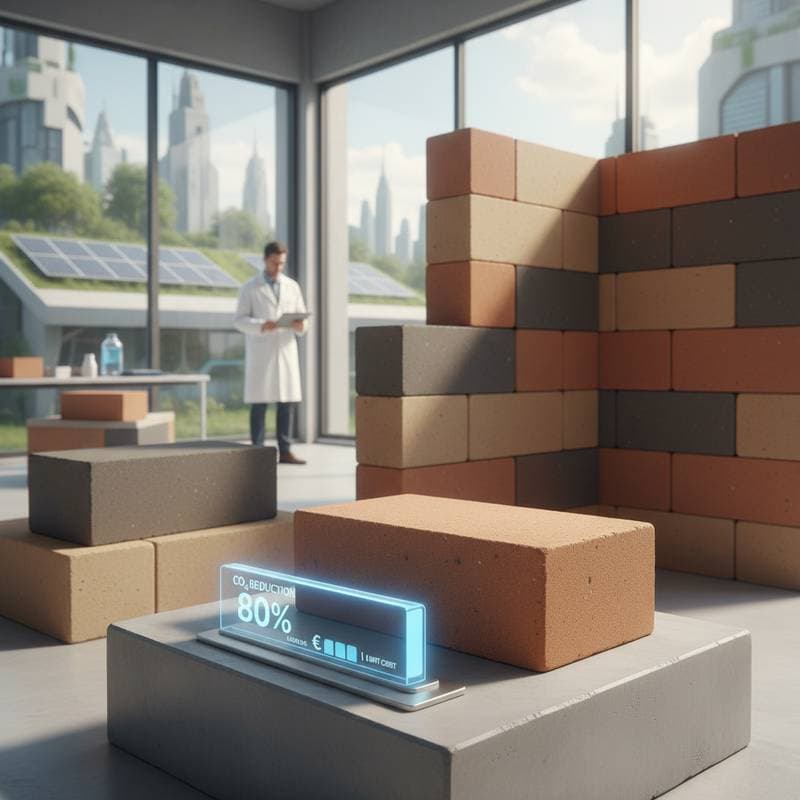
Planning Your Geopolymer Brick Project
Geopolymer bricks present a compelling option for sustainable building, but success starts with thorough preparation. Evaluate technical requirements, regulatory compliance, and site-specific conditions to ensure your project meets all standards.
Permits and Building Codes
Local regulations vary, so verify acceptance of geopolymer materials early. Many areas demand third-party testing for compressive strength, typically exceeding 6,000 PSI, and fire resistance ratings comparable to traditional masonry.
Secure a building permit that explicitly includes geopolymer units, particularly for structural elements like load-bearing walls. Consult a structural engineer for designs involving multiple stories or loads over 1,000 pounds per linear foot to confirm stability and safety.
Budget Planning
For a 1,000-square-foot single-story wall, plan for 9,000 to 10,000 bricks, factoring in standard 8x4x16-inch dimensions and 3/8-inch mortar joints. Expect material costs of $5,500 to $10,000, significantly lower than the $7,000 to $12,000 for equivalent cement blocks.
Labor costs align with conventional masonry, but allocate an extra 5% for curing oversight. Savings accumulate over time through reduced energy use in production and minimal long-term repairs.
Climate Considerations
In cold regions, select low-calcium fly ash to enhance freeze-thaw resistance and prevent cracking during winter cycles. For hot, dry areas, implement misting or damp coverings during the initial 72 hours to sustain hydration.
Humid climates require enhanced ventilation in storage and curing spaces to avoid alkali efflorescence, which appears as white deposits on surfaces. Adjust activator ratios slightly based on regional humidity levels for optimal performance.
Step-by-Step Process for Producing and Installing Geopolymer Bricks
Producing geopolymer bricks involves precise chemistry and handling to achieve uniform strength. Follow these steps to create reliable units ready for construction.
1. Measure and Mix Ingredients
Start with high-quality fly ash, ground slag, and coarse aggregates in a ratio of 70% binders to 30% fillers by weight. Introduce the alkaline activator, such as sodium silicate solution, gradually over two minutes to avoid lumps.
Incorporate water until the mix forms a cohesive paste that molds without slumping; aim for 20-25% water by binder weight. Mix for 5 to 7 minutes in a mechanical drum to ensure even distribution and activate the geopolymerization reaction.
2. Mold the Bricks
Apply a thin oil-based release agent to steel or plastic molds measuring 8x4x16 inches. Fill molds evenly, then vibrate at 60 Hz for 30 seconds to eliminate voids.
Smooth the top with a straightedge and cover immediately with wet burlap to retain moisture. Let the mixture set for 24 hours at 68-77°F before careful demolding to avoid edge damage.
3. Cure Under Controlled Conditions
Move demolded bricks to a shaded curing zone with 75-85% relative humidity. Enclose in plastic sheeting or mist periodically to mimic steam curing without equipment.
Cure for 48 to 72 hours, monitoring for uniform hardening; higher activator levels can shorten this to 36 hours in warm conditions. Full strength develops as the silicate chains form, reaching 80% capacity within the first week.
4. Test for Quality
Select 5% of each batch for compressive testing using a hydraulic press. Target 6,000 to 9,000 PSI, aligning with ASTM C90 standards for structural masonry.
Conduct additional checks for water absorption under 10% and density around 120 pounds per cubic foot. Reject and remix any batches falling short to maintain project integrity.
5. Lay the Bricks
Prepare geopolymer mortar with the same binders for compatibility, or use Type S cement mortar if approved. Butter each brick with 3/8-inch joints, staggering seams by half a unit.
Use a level every three courses to maintain plumb and alignment; tool joints concave for weather resistance. Fully fill head joints to create a monolithic wall that resists shear forces.
Maintenance and Long-Term Durability
Geopolymer bricks excel in endurance, resisting chemical degradation better than Portland cement products. Regular upkeep preserves their performance in diverse environments.
Routine Inspections
Examine walls yearly for cracks exceeding 1/16 inch, which may indicate settling. Probe mortar joints for softening or discoloration from pollutants.
Clean with a neutral pH soap solution and soft brush; rinse thoroughly to remove residues without etching the surface.
Preventive Measures
Seal exposed walls with silane-based repellents every five years to block water ingress while allowing vapor escape. Repoint deteriorating joints with matching geopolymer mix every 10 to 15 years.
Install French drains or grading slopes around foundations to divert runoff and minimize moisture wicking.
Projected Lifespan
Well-installed geopolymer masonry endures 75 to 100 years, shrugging off sulfates, thermal cycling, and efflorescence. This longevity suits homes, warehouses, and infrastructure demanding reliability.
Assessing DIY Potential and Seeking Expert Help
When DIY Makes Sense
DIY suits small projects like garden walls or sheds under 500 square feet, where you control mixing and curing. Beginners should start with pre-formulated kits to master ratios without full-scale risks.
Ensure access to testing equipment or local labs for quality checks. This hands-on approach builds skills while keeping costs low.
When to Hire Professionals
Opt for experts on larger or structural builds to navigate codes and ensure precision. Professionals handle complex curing setups and integrate with other materials seamlessly.
When choosing a contractor, confirm state licensing, bonding, and insurance coverage. Demand certifications for sourced fly ash from power plants and activators meeting ISO standards.
Request a detailed warranty, typically 10 years on materials and 5 years on labor, outlining remedies for defects.
Essential Techniques for Optimal Results
- Monitor moisture precisely during mixing and curing; deviations beyond 5% alter reaction kinetics and reduce strength by up to 20%.
- Standardize material sourcing; fly ash Class F from coal combustion yields consistent geopolymerization compared to variable Class C.
- Run pilot batches of 50 bricks to fine-tune activator dosage for your ambient conditions before full production.
- Shield fresh bricks from winds and sun using enclosures; rapid evaporation induces micro-cracks that compromise integrity.
- Record all formulations, including exact weights and environmental data, in a project log for troubleshooting and scalability.
Advancing Sustainable Masonry Practices
Geopolymer bricks empower builders to prioritize environmental impact without sacrificing performance. Integrate these techniques into your workflow for walls that endure while minimizing carbon footprints.
From initial planning to ongoing care, attention to detail yields structures that stand strong for generations. Embrace this innovation to lead in green construction.