
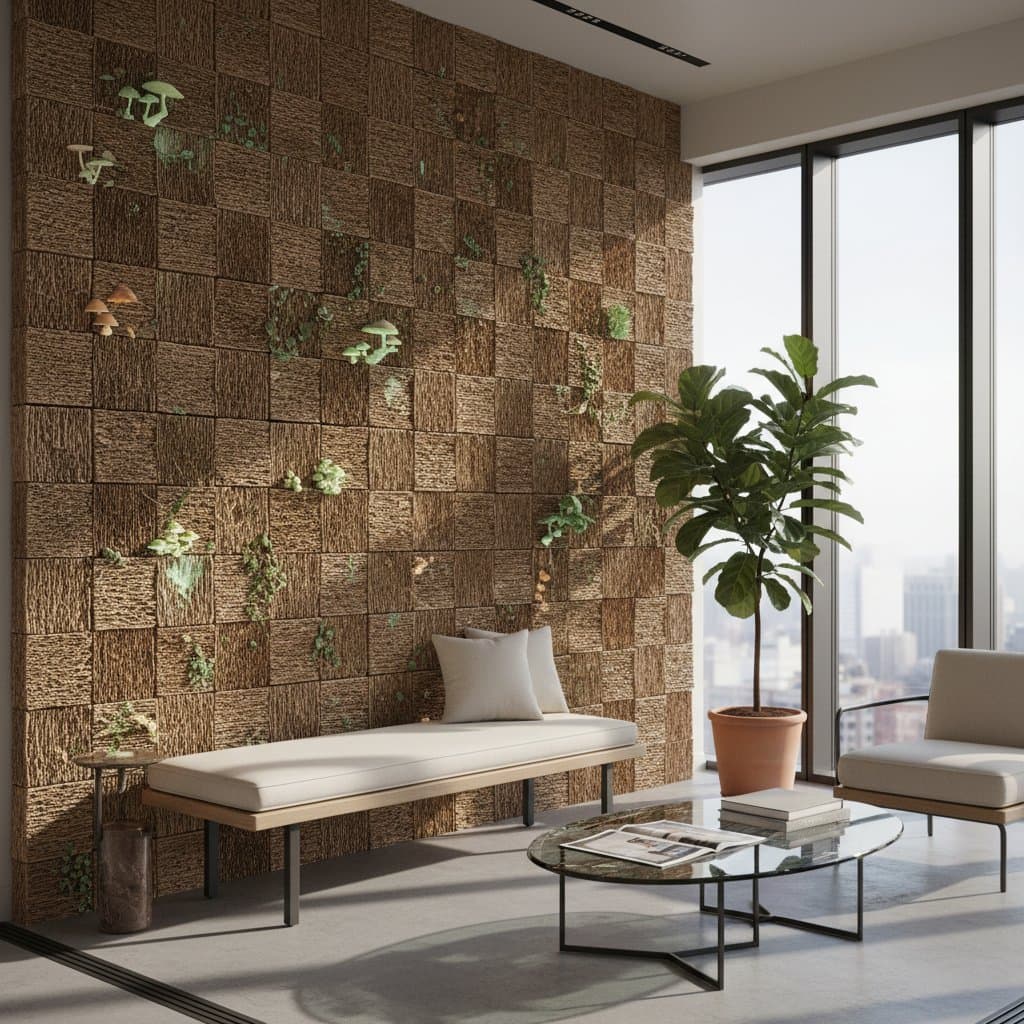
Living Bricks: Mycelium's Eco Revolution in Masonry
Building with living materials has moved beyond science fiction into practical application. Mycelium bricks, known as living bricks, are transforming approaches to masonry and sustainability. These biological components merge natural growth processes with structural functionality, resulting in materials that prove lightweight, durable, and fully biodegradable. Designers pursuing sustainable construction options and homeowners seeking eco-friendly alternatives will find that grasping the mechanics of mycelium bricks broadens perspectives on wall construction possibilities.
Skill Level and Project Considerations
This subject appeals to builders at an intermediate to advanced level, particularly those familiar with foundational masonry techniques, curing processes, and moisture management. Home-based experimentation with mycelium remains feasible on a limited scale, yet expansive structural projects demand controlled laboratory environments and expert oversight. The cultivation process calls for patience, a sterile workspace, and consistent humidity levels. Managing molds and preparing sterilized substrates requires accuracy rather than physical exertion. For comprehensive construction endeavors, collaboration with architects, materials specialists, or contractors versed in bio-based solutions proves essential.
Key Choice: DIY Exploration or Professional Expertise
Cultivating modest quantities of mycelium bricks suits committed DIY enthusiasts aiming to test sustainable options or craft ornamental wall elements. Projects bearing load on primary structural walls, foundations, or substantial weights necessitate professional engineering and official approvals. Mycelium currently serves as a supplement to traditional concrete or fired masonry rather than a direct substitute in load-bearing capacities. It excels in lowering environmental footprints for non-structural uses.
Small-scale endeavors like garden dividers, sound-absorbing panels, or room partitions allow safe personal trials. Plans encompassing roof support, flooring, or soil retention demand consultation with a structural engineer prior to initiation.
Selecting Substrates
Mycelium bricks develop on organic substrates that provide both nourishment and structural reinforcement.
Straw and Sawdust Blend
- Description: This combination of chopped straw and finely milled sawdust creates a porous foundation ideal for mycelium penetration.
- Advantages: Offers reduced weight, economical pricing, and straightforward procurement.
- Drawbacks: Delivers average durability and restricted resistance to moisture.
- Expense: Minimal compared to alternatives.
- Required Expertise: Accessible to novices.
- Ideal Applications: Internal partitions, ornamental blocks, compact artistic forms.
Hemp Hurd and Paper Fiber Mix
- Description: Integrates hemp core fragments with pulp from recycled paper.
- Advantages: Provides superior robustness, refined surface quality, and enhanced thermal insulation.
- Drawbacks: Involves higher costs and extended colonization periods.
- Expense: Reasonable midpoint.
- Required Expertise: Suitable for those with moderate experience.
- Ideal Applications: Noise-reduction panels, slim wall segments, cabinetry surfaces.
Agricultural Husk Composite
- Description: Incorporates rice husks or corn stalks to yield a textured, robust base.
- Advantages: Boasts an outstanding ecological profile and imparts a distinctive, earthy look.
- Drawbacks: Exhibits variable compactness and often needs pressed forming tools.
- Expense: Exceptionally budget-friendly.
- Required Expertise: Demands advanced skills in mold fabrication.
- Ideal Applications: Exterior installations, innovative prototypes, showcase barriers.
Detailed Cultivation Guide
-
Substrate Preparation: Combine the selected organic material with water until it achieves a moist, loose consistency. Sterilize through boiling or pressure methods, then allow complete cooling to eliminate risks of microbial interference.
-
Mycelium Inoculation: Introduce spawn throughout the substrate, blending thoroughly to ensure even distribution of the fine white filaments. Perform this under sterile conditions to maximize efficiency.
-
Mold Filling: Transfer the inoculated mix into forms using light compaction. Preserve some openness to facilitate air circulation during growth. Enclose with permeable coverings to sustain moisture while permitting ventilation.
-
Incubation Phase: Position the filled molds in a shaded, temperate location for durations ranging from days to weeks, scaled to material depth. Monitor for consistent pale coverage; discard if discoloration signals impurities.
-
Gentle Demolding: Upon achieving solidity and full colonization, extract the bricks from forms with care to prevent fractures.
-
Stabilization Drying: Arrange in an airy environment or use minimal oven heat until moisture evaporates entirely. This process stops biological activity and solidifies the form, steering clear of excessive warmth that might damage fibers.
-
Quality Assessment: Examine for even pigmentation, solid integrity, and precise dimensions. Eliminate pieces showing inconsistencies or flaws.
-
Protective Finishing: Coat with organic barriers like beeswax, linseed treatments, or sustainable resins to guard against humidity. Such applications prolong utility and enhance visual appeal.
-
Integration and Placement: Secure using mild adhesives or fittings appropriate for low-density items. Refrain from dense mortars that risk deformation.
Quality Benchmark: Finished bricks must present as arid, buoyant, and resilient, free from any musty scents. Inadequate drying invites future distortion or fungal issues.
Enhancing and Sustaining Installations
Aesthetic Refinements
In indoor settings, mycelium bricks benefit from transparent, non-glossy protectors that accentuate their innate patterns. Pair with timber or cane accents to foster an organic vibe. For accent pieces or fixtures, subtle illumination from behind reveals the intricate voids within.
Ongoing Upkeep
Conduct yearly reviews for signs of dampness or fading. Clean surfaces with soft, dry fabrics. Refresh protective layers upon noticing wear or vulnerability. In humid regions, prioritize airflow to avert fungal growth.
Pitfalls to Sidestep
Overpacking molds during filling can trap moisture and hinder growth, leading to weak structures. Neglecting sterilization invites contaminants that ruin batches. Rushing the drying stage risks incomplete stabilization and subsequent breakdown. Skipping professional input for load-bearing uses endangers safety and compliance. Finally, exposing untreated bricks to direct water contact accelerates degradation; always apply sealants proactively.
Mycelium bricks not only minimize waste but also invite structures that evolve with their surroundings, paving the way for construction that harmonizes with nature.