
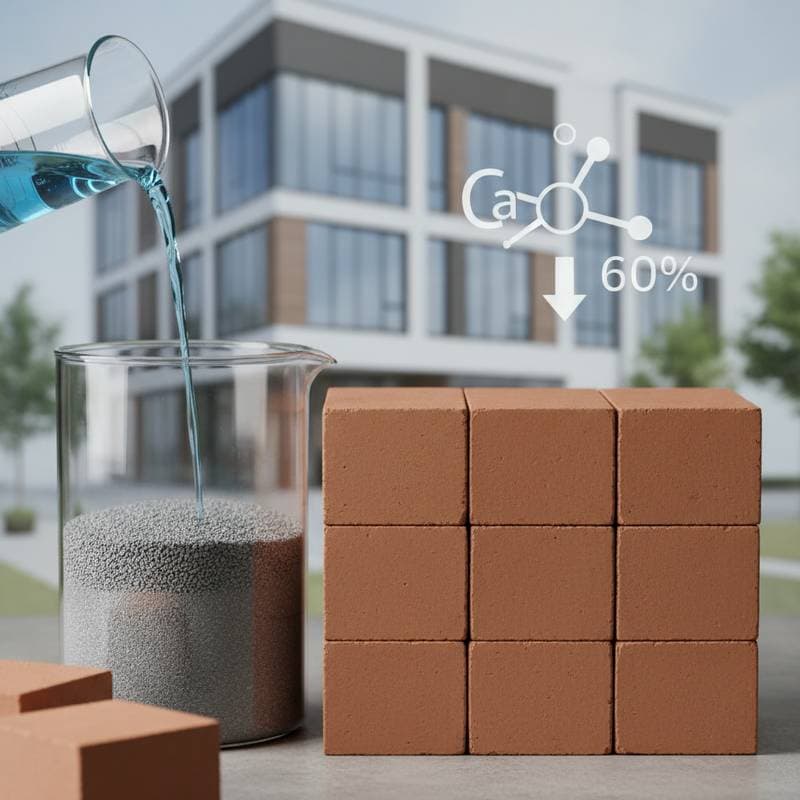
The Zero-Cement Bricks Disrupting Masonry in 2026
The masonry industry faces a significant transformation with the rise of zero-cement bricks produced through geopolymer technology. These innovative units replace traditional Portland cement with industrial by-products, which lowers carbon emissions and delivers durable, high-performance results. Builders, architects, and homeowners benefit from this guide, which covers the essentials of geopolymer bricks, their production methods, and practical considerations for integrating them into construction or renovation efforts.
Key Takeaways
- Cost Breakdown: Geopolymer bricks range from $0.70 to $1.10 each, with materials accounting for 55 percent, labor for 30 percent, and curing or processing for 15 percent of the total.
- Compressive Strength: These bricks achieve 6,000 to 9,000 PSI, surpassing the strength of standard clay or cement blocks.
- Curing Time: They cure in 24 to 48 hours at moderate temperatures, far quicker than the several days required for cement-based alternatives.
- Environmental Impact: They reduce carbon emissions by 60 to 80 percent compared to traditional cement masonry.
- Feasibility Factors: Availability of local fly ash or slag, ambient curing conditions, and project scale determine their suitability.
Understanding Geopolymer Bricks
Geopolymer bricks form through an alkali-activated reaction involving silica- and alumina-rich materials like fly ash, slag, or calcined clay. An alkaline activator, typically a blend of sodium hydroxide and sodium silicate, hardens these components into a binder without relying on limestone-based cement. The outcome yields a dense material resembling stone, which offers superior compressive strength and resistance to moisture and fire.
This process avoids the high-energy demands of cement production. Industrial by-products serve as primary inputs, which reduces waste and conserves resources. In areas with abundant fly ash from power plants or slag from steel mills, these bricks become a practical choice for sustainable building.
The Importance of Zero-Cement Construction
Cement manufacturing emits substantial carbon dioxide through calcination of limestone and fuel burning in kilns. Geopolymer bricks sidestep these issues by repurposing waste materials, thereby cutting emissions and landfill contributions. This approach aligns with global environmental goals while lowering costs in regions with accessible raw materials. Builders report fewer long-term repairs, enhancing overall project value.
Planning a Geopolymer Masonry Project
Successful projects start with thorough preparation. Evaluate site conditions, material sources, and regulatory requirements to ensure seamless integration.
Navigating Permits and Standards
Building codes in many areas now accommodate geopolymer materials under provisions for innovative alternatives. Confirm adherence to key standards, including ASTM C67 for sampling and testing bricks and ASTM C109 for measuring compressive strength. Certain regions mandate third-party lab certification prior to structural approval. Consult local authorities early to identify any unique stipulations.
Selecting Appropriate Materials
Tailor choices to local resources and project needs:
- Fly Ash: Produces lightweight bricks with a fine texture, suitable for non-structural applications like partitions.
- Ground Granulated Blast-Furnace Slag: Yields dense, robust bricks ideal for load-bearing walls in commercial structures.
- Calcined Clay or Metakaolin: Provides uniform color and texture when fly ash supplies are limited, ensuring aesthetic consistency.
Test samples from suppliers to match desired properties, such as density or thermal insulation.
Budgeting for Costs
Geopolymer bricks often result in 10 to 20 percent savings on total project expenses, thanks to quicker curing and reduced upkeep. Initial outlays focus on mixing and curing setups, but these pay off in scaled operations. Factor in transportation of by-products, which may add 5 to 10 percent if sourcing from distant facilities. Long-term benefits include energy-efficient buildings that lower operational costs.
Preparing the Site and Materials
Site readiness ensures optimal performance. Level foundations to within 1/4 inch tolerance and select mortar compatible with geopolymer chemistry, such as low-cement or alkali-activated types. Store bricks in shaded, dry areas to preserve surface integrity. Prepare activators in acid-resistant vessels, and equip workers with gloves, goggles, and respirators to handle chemicals safely.
Conduct a small-scale trial mix on-site to calibrate ratios based on local humidity and temperature. This step prevents surprises during full production and confirms material reactivity.
Step-by-Step Production Process
Follow these precise steps to fabricate high-quality geopolymer bricks.
-
Measure Raw Materials Accurately: Combine approximately 70 percent fly ash or slag, 25 percent fine aggregates, and 5 percent activator solution by weight. Use digital scales for precision to avoid inconsistencies.
-
Mix Components Thoroughly: Start with dry ingredients in a mechanical mixer, then incorporate the activator slowly. Continue blending for 5 to 10 minutes until the mixture achieves a workable, homogeneous paste.
-
Mold and Compact the Mixture: Pour into steel or polymer molds and apply vibration or hydraulic pressure to eliminate voids. Aim for uniform density across each unit.
-
Cure in Controlled Conditions: Place molds in an environment of 100°F to 140°F for 24 to 48 hours. Monitor humidity to stay below 80 percent, preventing defects from uneven drying.
-
Inspect and Test Finished Bricks: Check for cracks narrower than 1/16 inch and perform drop tests for integrity. Conduct lab assays on a sample batch to verify strength and absorption rates below 10 percent.
Addressing Common Production Challenges
Issues arise occasionally, but targeted solutions maintain quality.
- Inconsistent Strength: Often stems from inadequate mixing or low curing temperatures. Increase activator by 0.5 percent and use insulated enclosures for even heating.
- Efflorescence Deposits: Excess moisture or surplus alkali causes white scaling. Enhance ventilation during curing and dilute activators slightly for balanced reactions.
- Cracking on Surfaces: Rapid evaporation or excessive compaction leads to fissures. Prolong initial curing by 12 hours and moderate pressure to 50 PSI during molding.
Document adjustments for future batches to refine processes over time.
Ensuring Long-Term Durability
Geopolymer bricks demand little ongoing care. Schedule biannual inspections of walls for minor cracks or deteriorating joints. Apply compatible mortar to fill gaps wider than 1/8 inch, restoring weather resistance. Clean surfaces with a neutral detergent solution and soft brush, steering clear of harsh acids that could compromise the binder.
With proper installation, these structures endure beyond 75 years, resisting freeze-thaw cycles and chemical exposure better than cement counterparts. Regular upkeep preserves both functionality and visual appeal.
Choosing Between DIY and Professional Approaches
For minor projects like retaining walls or decorative features, skilled DIY enthusiasts can use factory-cured geopolymer bricks with basic tools. Measure alignments meticulously and follow curing guidelines to achieve stability.
Larger or structural endeavors require expert involvement. Certified masons handle complex layouts, ensure code adherence, and provide warranties. While labor costs increase by 25 to 40 percent, professionals minimize risks and extend the lifespan of the build.
Advancing Sustainable Construction Practices
Geopolymer bricks represent a pivotal advancement in eco-friendly masonry. Mastery of their formulation, production, and application empowers informed decisions for future projects. Embrace this technology to construct resilient, low-impact structures that meet modern demands.