
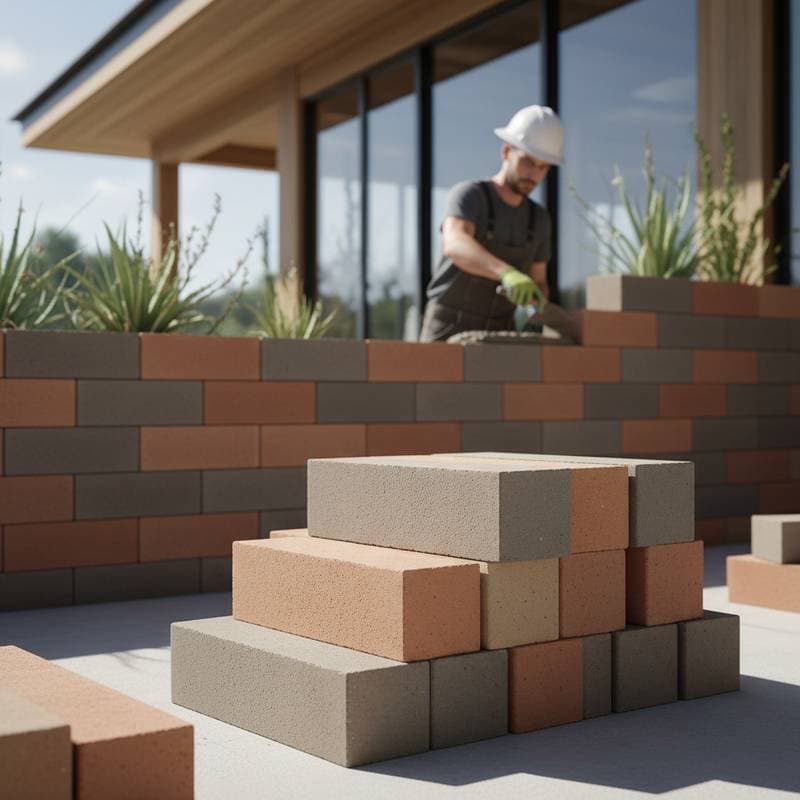
Zero-Cement Bricks: Revolutionizing Masonry by 2026
Zero-cement bricks represent an innovative category of masonry units that substitute traditional Portland cement with geopolymer binders. These binders incorporate industrial byproducts like fly ash, slag, or calcined clay to form a robust and enduring brick, eliminating the need for limestone-based cement. The outcome is a material that matches the performance of conventional bricks while significantly reducing the carbon footprint.
Homeowners, builders, and architects observe this development with keen interest. As demand for sustainable construction materials rises, zero-cement bricks hold the potential to emerge as a standard option for walls, pavers, and structural applications in masonry projects.
Pros and Cons
Pros
- Low carbon footprint: These bricks generate 70 to 90 percent fewer carbon emissions than cement-based alternatives, supporting global efforts to combat climate change.
- Durable and strong: They exhibit high compressive strength, frequently surpassing that of standard concrete bricks, which ensures reliability in load-bearing structures.
- Fast curing: Strength develops rapidly, which shortens production timelines and accelerates project completion.
- Good thermal stability: The material maintains integrity across diverse climates, from extreme heat to freezing temperatures.
- Uses waste materials: By repurposing industrial byproducts, these bricks contribute to waste reduction and resource efficiency in manufacturing.
Cons
- Limited availability: Production remains in regional pilot phases, so widespread stocking in building supply markets is not yet common.
- Higher initial cost: Specialized additives and precise curing processes result in a modestly elevated price compared to traditional options.
- Variable mix quality: Consistent performance relies on reliable sourcing of raw materials, which can introduce variability.
- Training needed: Builders require instruction on handling and curing techniques to achieve optimal results.
- Regulatory lag: Certain building codes have yet to fully incorporate and approve geopolymer-based materials for standard use.
Lifespan and Maintenance
When produced correctly, a geopolymer brick endures for fifty years or longer with minimal degradation. Its dense microstructure effectively resists water ingress, freeze-thaw cycles, and erosive forces on the surface. In regions with high humidity or coastal exposure, the material's low permeability minimizes damage from salts and moisture.
To maintain these bricks, follow these steps:
- Examine mortar joints periodically, every two to five years, for signs of cracking or separation.
- Remove surface dirt with a mild detergent solution and a low-pressure water rinse to preserve appearance.
- Refrain from acid-based cleaning methods, as they may compromise the surface finish.
- Repoint joints using compatible low-cement or geopolymer mortar as deterioration occurs.
Sealing remains optional for most applications. Select a breathable silane or siloxane sealer if desired; this treatment reduces staining risks while permitting moisture vapor to escape, preventing internal buildup.
Planning and Preparation
Prior to installation, evaluate the site thoroughly to ensure suitability. Geopolymer bricks demand a dry and stable foundation, similar to other masonry types, to prevent settling issues.
Consider these essential planning elements:
- Base preparation: Install a compacted granular fill or concrete footing that extends below the local frost line for stability.
- Drainage management: Design a gentle slope away from walls to direct water runoff and avoid pooling.
- Access considerations: Reserve adequate space for staging materials and operating mixing equipment on site.
- Climate factors: Schedule installation when temperatures range from 50 to 90 degrees Fahrenheit to facilitate uniform strength development.
- Mortar selection: Pair with low-cement or geopolymer mortar to maintain chemical compatibility and prevent bonding failures.
For paving or landscaping projects, incorporate edge restraints and a minimum 4-inch layer of compacted crushed stone as the base to support traffic loads.
Patterns and Design Options
Zero-cement bricks offer versatility in standard and custom formats to suit various aesthetic and functional needs:
- Running bond: This traditional overlap pattern provides strength and visual continuity for walls and facades.
- Stack bond: A sleek, linear arrangement ideal for veneers or non-structural walls in contemporary designs.
- Herringbone: A zigzag layout that enhances traction and style for pathways or patios.
- Basket weave: An interwoven pattern that adds decorative appeal to garden walls or borders.
- Modular dimensions: Standard units measure 2 1/4 by 3 3/4 by 7 5/8 inches, with complementary half and corner pieces for seamless integration.
Surface textures vary from smooth planes to subtle grains for tactile interest. Available colors encompass natural gray, tan, red, charcoal, and earth tones, influenced by the binder composition and aggregate selection.
Common Failures and Remedies
Despite inherent durability, improper installation can lead to issues. Identify and address these common problems promptly:
- Efflorescence: Appears as white, powdery salt deposits on the surface. Brush away the residue and enhance site drainage to inhibit future occurrences.
- Cracked joints: Results from structural movement or inadequate adhesion. Remove loose mortar, then repoint with fresh, compatible material.
- Spalling: Involves surface flaking due to repeated freeze-thaw action. Replace affected units and apply sealant to vulnerable areas.
- Uneven color: Stems from irregular curing conditions. Restore uniformity with a breathable stain or limewash application.
- Soft spots in paving: Typically arises from insufficient base compaction. Excavate the section, recompact the subbase, and reinstall the bricks securely.
Regular inspections and interventions keep minor defects from escalating into major repairs.
Alternatives to Zero-Cement Bricks
In areas where geopolymer bricks are scarce, consider these eco-friendly substitutes:
- Fly ash concrete blocks: Incorporate partial cement replacement to decrease emissions while retaining familiar handling.
- Compressed earth blocks: Formed from stabilized soil, these suit arid environments and emphasize local sourcing.
- Recycled aggregate concrete units: Integrate crushed waste from demolitions as aggregate to promote circular economy principles.
- Lime-based masonry: Delivers a reduced carbon profile and excellent vapor permeability for breathable structures.
- Autoclaved aerated concrete (AAC): Provides lightweight insulation benefits, although it offers lower resistance to physical impacts.
Evaluate each option based on project-specific requirements for strength, cost, availability, and sustainability goals to select the best fit.
Implementing Zero-Cement Bricks in Your Project
Zero-cement bricks arrive at a pivotal moment when sustainable materials define forward-thinking construction. They diminish emissions, repurpose industrial waste, and deliver performance equal to or superior to cement alternatives. Homeowners gain access to resilient walls and outdoor features that align with environmental responsibility.
For upcoming projects such as walls, garages, or landscape elements, inquire with local suppliers about geopolymer or zero-cement brick options. Review technical specifications, assess pricing structures, and confirm the expertise of your installation team. Through meticulous planning and expert execution, these bricks create enduring, visually appealing structures that benefit both your property and the environment for generations.