
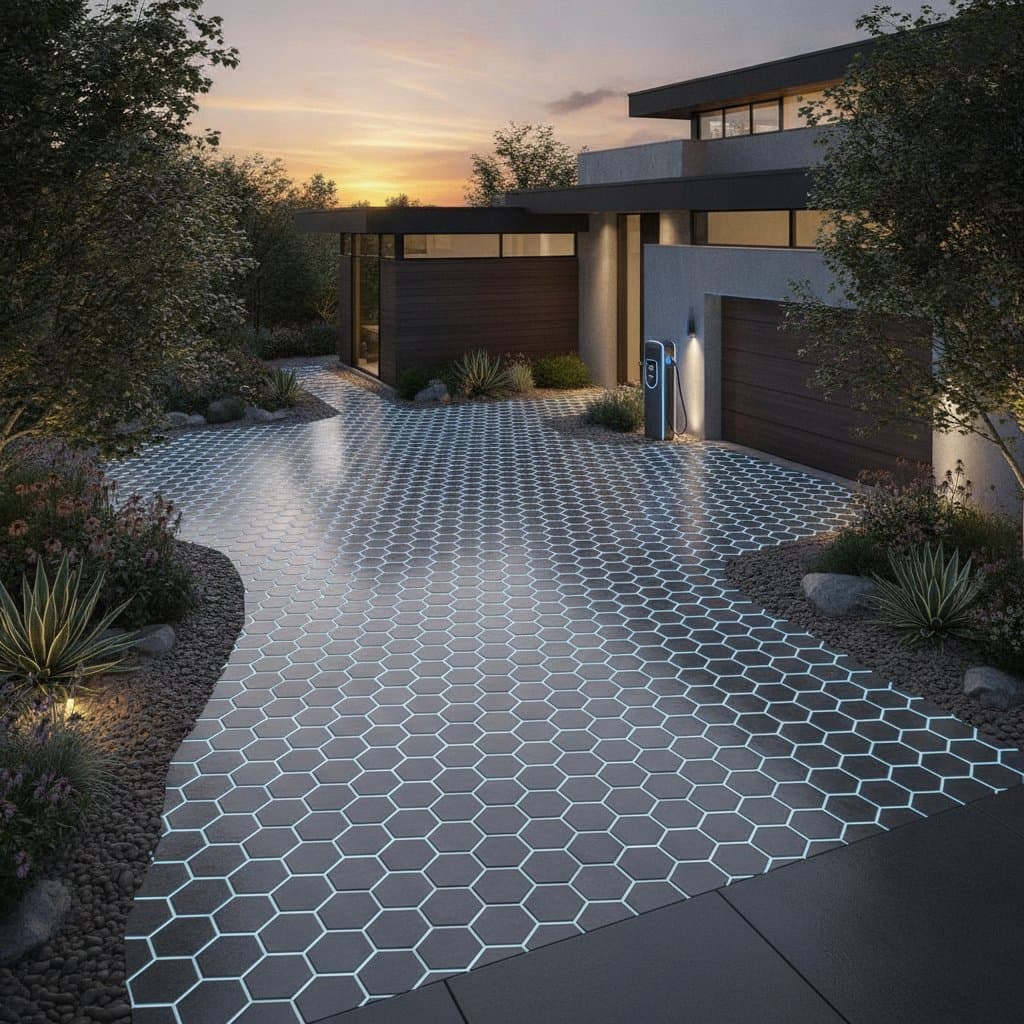
How Solar Pavers Integrate Energy Collection and Lighting
Solar pavers combine photovoltaic cells with durable surface materials to capture sunlight throughout the day. These cells charge internal batteries that power embedded LEDs once darkness falls. The design eliminates the need for external wiring by routing power through each unit directly.
Homeowners gain a surface that withstands vehicle traffic while producing consistent nighttime illumination. The system activates automatically through built-in sensors that detect ambient light levels.
Core Components and Daily Operation
Each paver contains a tempered glass or polymer layer over solar cells, a lithium-based storage battery, and low-voltage LED modules. During daylight hours the cells convert solar energy into electricity and store it for later use. At night the stored charge flows to the LEDs without any connection to household circuits.
Maintenance remains minimal because the sealed units resist moisture and temperature extremes. Occasional surface cleaning restores full light output when dust accumulates.
Practical Advantages for Residential Properties
Driveways and walkways become safer through steady pathway lighting that requires no separate electrical trenching. Property owners reduce long-term energy costs since the pavers draw power solely from sunlight. The glowing surfaces also increase nighttime visibility for visitors and deter unauthorized access.
Aesthetic options include neutral white, warm amber, or color-changing LEDs that match landscape designs. The uniform glow avoids the harsh spots common with overhead fixtures.
Site Assessment Before Purchase
Measure the total square footage of the intended area and confirm southern exposure for maximum daily charge. Verify that the subsurface remains stable and free of large tree roots that could shift the pavers over time. Local building codes may require permits when the installation covers more than a set percentage of permeable surface.
Consult soil reports if the project involves heavy clay or frequent freeze-thaw cycles. These conditions influence the required base depth and drainage details.
Step-by-Step Installation Process
- Excavate the area to a depth that accommodates the paver thickness plus a compacted gravel base.
- Install edging restraints to keep the grid aligned under repeated vehicle loads.
- Lay the pavers in the chosen pattern, ensuring each unit sits level with its neighbors.
- Connect adjacent pavers through factory-supplied tabs that transfer both power and data signals.
- Test the full array at dusk to confirm uniform LED activation before final backfilling.
Professional installers complete most residential projects within two to four days depending on square footage.
Selection Criteria for Long-Term Performance
Compare warranty length on both the solar cells and the battery pack. Look for impact ratings that exceed expected vehicle weights and slip-resistance values suitable for wet climates. Request photometric data showing lumen output after one year of service to judge degradation rates.
Choose modular systems that allow individual paver replacement without disturbing surrounding units. This feature reduces future repair costs and downtime.
Planning Your Solar Paver Project
Begin with accurate measurements and a simple layout sketch that accounts for turns and transitions to existing pavement. Contact two or three certified installers for site visits and written estimates. Review product specifications side by side to match battery capacity with local sunlight hours. Once installed, the system delivers reliable lighting and visual interest for many seasons while lowering overall energy demand.