
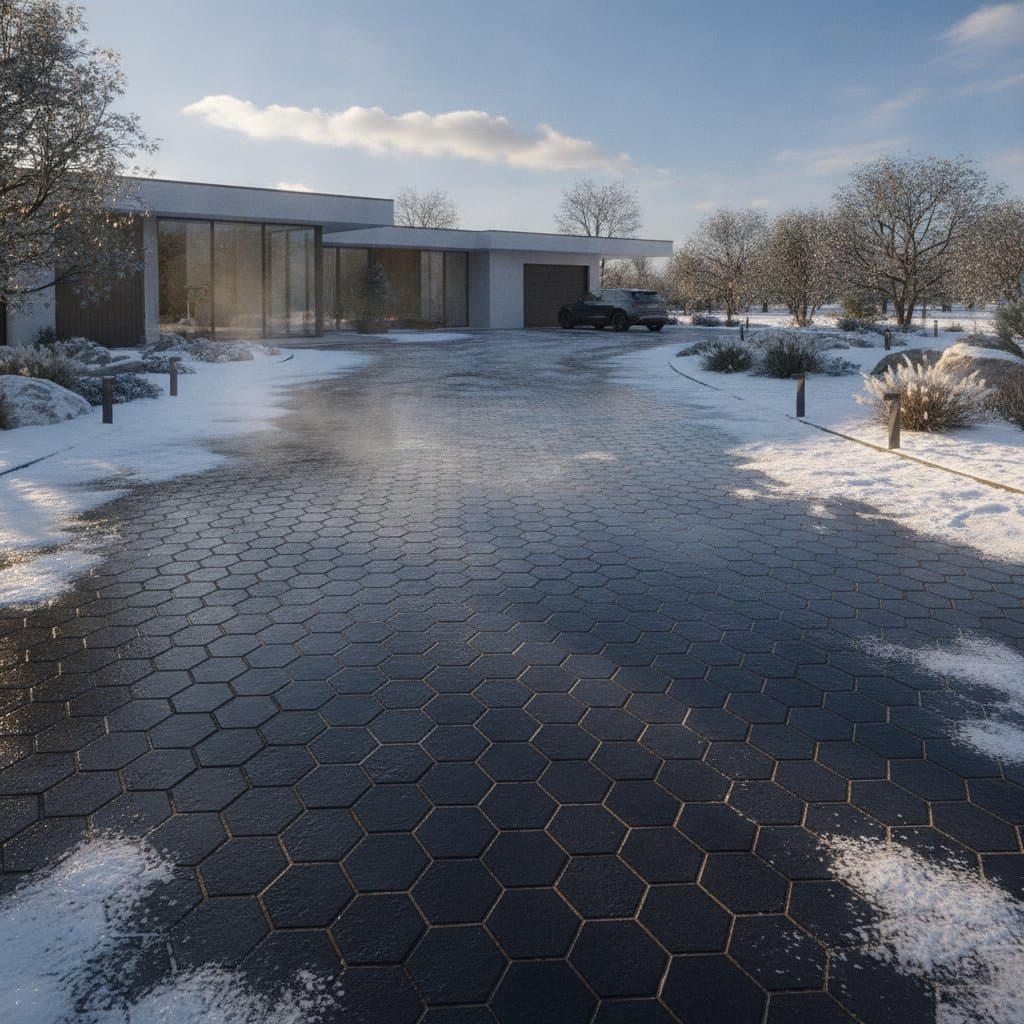
Decision Factors for Solar Paver Systems
Homeowners evaluating solar pavers must consider local climate conditions, available solar exposure, total driveway area, and the balance between initial investment and ongoing operational savings. These elements determine system sizing and expected performance in any given location.
Planning Requirements and Cost Considerations
Site evaluation and compliance with local building codes come first. Most areas mandate electrical permits along with inspection of all heating components prior to paving completion.
Site Assessment
A qualified installer evaluates several critical items during the initial visit.
- Solar exposure. South facing surfaces with limited shade produce the best energy yields.
- Drainage patterns. Adequate slope and a stable sub base reduce risks from repeated freeze thaw cycles.
- Soil conditions. Compacted subgrade containing less than two percent organic material supports long term structural loads.
- Electrical service. The main panel must accommodate an added thirty to fifty amps for system operation.
Cost Breakdown
National averages for residential projects appear in the following table.
| Component | Share of Total | Typical Cost per Square Foot |
|---|---|---|
| Pavers and heating elements | 45 percent | 10 to 15 dollars |
| Labor and installation | 40 percent | 9 to 14 dollars |
| Electrical work and solar integration | 15 percent | 3 to 6 dollars |
Most households recover the full investment through lower energy bills, eliminated snow removal expenses, and higher property resale value.
Preparing the Site
Careful ground preparation directly affects both lifespan and heating efficiency. Begin by clearing vegetation and establishing correct grading for drainage.
- Excavate to a depth of eight to ten inches to accommodate base layers and paver thickness.
- Install the sub base by spreading and compacting crushed stone in successive two inch lifts.
- Position conduit or tubing channels according to the design layout and add insulation boards where required.
- Verify final elevation to maintain a minimum slope of one inch per ten feet.
Quality Assurance and Performance Checks
Complete inspection occurs after paving but before final sealing.
- Verify electrical current draw against design specifications.
- Capture thermal images to confirm uniform heat across the entire surface.
- Conduct a load test by driving a vehicle over the finished driveway.
- Confirm drainage direction with a controlled water flow test.
Allow twenty four hours for system stabilization before regular use.
Maintenance and Long Term Care
Once installed, these systems need only routine attention to sustain reliable performance.
Seasonal Inspection Checklist
- Confirm controller and sensor function before winter arrives.
- Clean photovoltaic surfaces monthly to preserve output.
- Inspect joints and replenish polymeric sand as gaps develop.
- Seal any cracks wider than one eighth inch with compatible material.
- Assess battery condition twice each year and replace units showing diminished capacity.
Expected Service Life
Quality pavers typically remain serviceable for twenty five to thirty years. Heating elements operate effectively for fifteen to twenty years, while solar panels continue producing power for decades with only gradual output decline.
Comparing DIY and Professional Installation
Solar heated driveways combine masonry skills with electrical requirements, so project scope guides the best approach.
Conditions Favoring DIY
Experienced homeowners can install small systems that use preassembled electric mats on dedicated circuits. Savings may reach twenty five percent, although tool rental and additional time partially offset that figure.
Conditions Requiring Professional Help
Licensed electrical and mechanical contractors provide necessary credentials, insurance documentation, and warranty support. Their experience with radiant systems and solar integration reduces risk of future issues.
Practical Recommendations
Light colored pavers improve solar reflection and limit heat loss. Integrate controls with a smart home platform for remote monitoring. Install perimeter edging to stabilize pavers and protect cables. Arrange annual professional inspections to keep warranties active. Connect the driveway system to a broader home solar array that can also serve lighting or vehicle charging.
Protecting Your Investment Over Time
A solar heated driveway delivers consistent safety and convenience without seasonal labor. Advanced paver construction paired with renewable heating prevents surface damage from freeze thaw cycles and supports sustainable energy goals for years to come.