
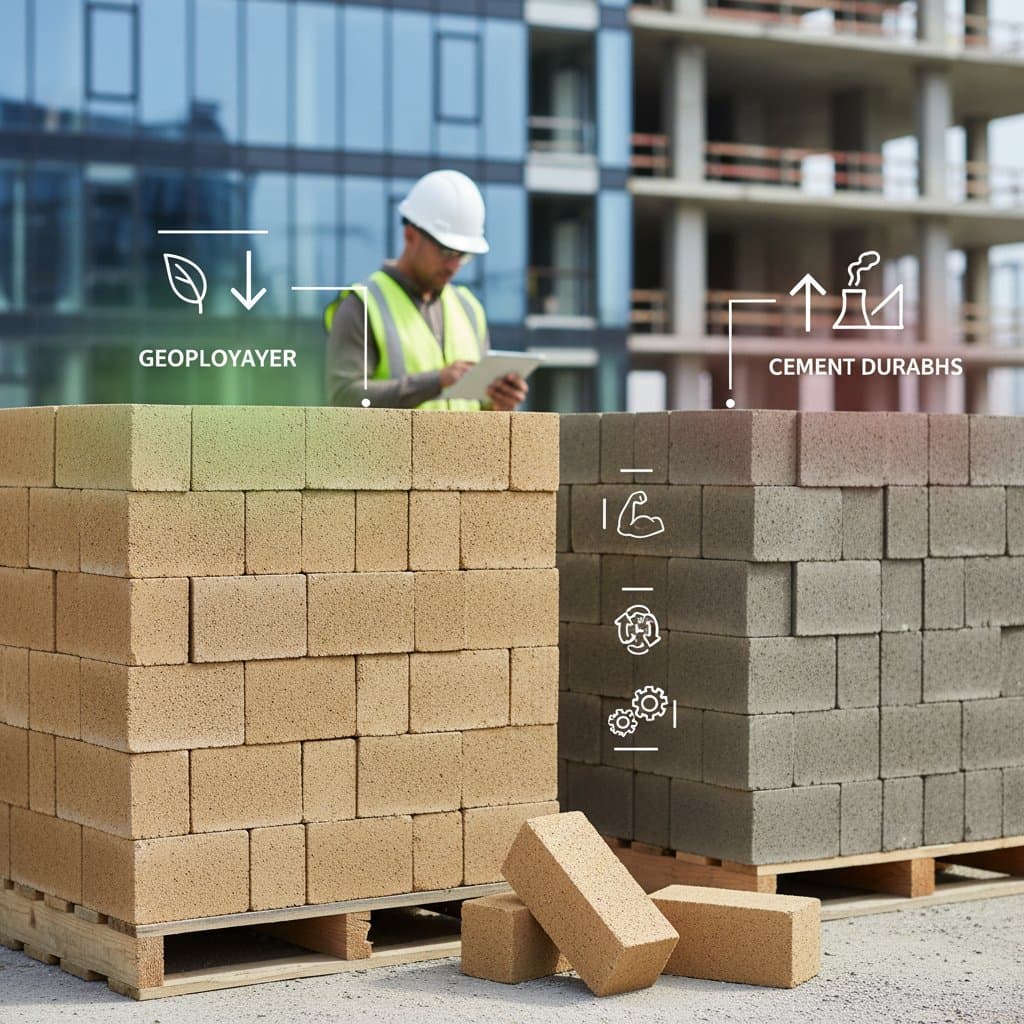
How Geopolymer Bricks Are Replacing Cement in Modern Construction
The construction industry experiences a significant transition toward sustainable materials, with geopolymer bricks at the forefront. These advanced masonry units exceed traditional cement bricks in strength and longevity while substantially lowering carbon emissions in production. This guide details the nature of geopolymer bricks, the reasons for their adoption over cement, their performance characteristics, and essential considerations for homeowners, contractors, and designers contemplating the change.
Key Takeaways
- Average Cost Range: Geopolymer bricks generally range from $0.70 to $1.10 per unit, with materials accounting for approximately 60 percent of expenses, labor for 30 percent, and production energy for 10 percent.
- Strength and Density: Geopolymer bricks typically reach compressive strengths between 7,000 and 9,000 PSI, surpassing the 3,000 to 5,000 PSI of cement bricks.
- Curing Time: Initial setting occurs within 24 to 48 hours, with full strength attained in seven days, accelerating timelines compared to cement alternatives.
- Environmental Impact: Manufacturing processes emit up to 80 percent less CO₂ than those for cement bricks.
- Lifespan and Durability: When installed correctly, geopolymer bricks endure over 75 years with limited upkeep.
Planning Requirements for Geopolymer Construction
Prior to adopting geopolymer bricks, consult local building codes to confirm compliance. Certain areas mandate testing or certification to verify that innovative materials satisfy structural integrity requirements. Ensure suppliers furnish documentation on compressive strength, density, and thermal properties.
Permits and Compliance
- Contact the local building authority to identify approved masonry options.
- Obtain certificates of compliance aligned with national masonry guidelines.
- For extensive projects, provide a structural evaluation proving performance equal to or better than cement bricks.
Cost Considerations
Although initial costs for geopolymer bricks may exceed those of cement slightly, enduring advantages frequently compensate. Reduced maintenance needs, quicker curing periods, and potential avoidance of environmental fees result in lifecycle savings of up to 15 percent. On-site production utilizing nearby fly ash or slag minimizes expenses, as these inputs derive from industrial waste streams.
Step-by-Step Execution Process
1. Mix and Prepare the Mortar
Blend the geopolymer binder with fine aggregates at a standard ratio of one part activator to three parts aggregate. Limit water addition to preserve the integrity of chemical bonds.
2. Lay the First Course
Begin at the corner using a level line for precision. Spread a 3/8-inch mortar bed and press bricks into place to avoid air pockets.
3. Continue Laying Courses
Offset vertical joints by at least half a brick to enhance stability. Keep mortar layers uniform. Regularly verify alignment with plumb and level tools.
4. Curing and Protection
Shield the structure with damp burlap or plastic sheeting for a minimum of 24 hours to sustain moisture levels. Geopolymer cures through chemical reactions independent of evaporation, yet consistent humidity promotes even development.
5. Finishing Work
After curing, remove any efflorescence with a brush and apply sealants in moisture-prone settings. Initiate painting or plastering once the surface achieves full hardness at seven days.
Troubleshooting Common Challenges
Uneven Color: This issue often stems from irregular mixing or fluctuating curing temperatures. Thoroughly blend batches and control environmental conditions consistently.
Soft or Crumbly Bricks: Such defects signal an improper activator ratio. Verify solution strength through testing prior to application.
Excessive Efflorescence: Lower sodium levels in the mix or rinse surfaces shortly after curing to mitigate buildup.
Cracking at Joints: Match the chemical profiles of mortar and bricks to prevent differential expansion. Avoid pairing cement mortar with geopolymer units, as incompatibility arises.
DIY Versus Professional Installation
Experienced DIY enthusiasts manage modest undertakings like garden walls or outbuildings. Key difficulties involve safe management of alkaline activators and precise proportioning of mixes.
DIY Advantages:
- Labor costs decrease by up to 20 percent.
- Accelerated curing shortens overall project durations.
- The approach minimizes environmental impact through localized production.
Professional Installation Recommended When:
- Constructing load-bearing or multi-level walls.
- Regulations demand oversight by certified personnel.
- Individuals possess limited knowledge of chemical binders.
Select professionals versed in geopolymer applications. Seek project references and affirm adherence to safety and mixing procedures.
Advancing Sustainable Masonry Practices
Transitioning to geopolymer bricks yields environmental gains alongside operational efficiencies. Projects emit fewer greenhouse gases, proceed more swiftly, and exhibit enhanced resilience in varied conditions. Homeowners enjoy diminished upkeep expenses, and contractors secure dependable outcomes across climates and terrains. Through meticulous preparation and standard compliance, geopolymer solutions fortify constructions while fostering planetary health.