
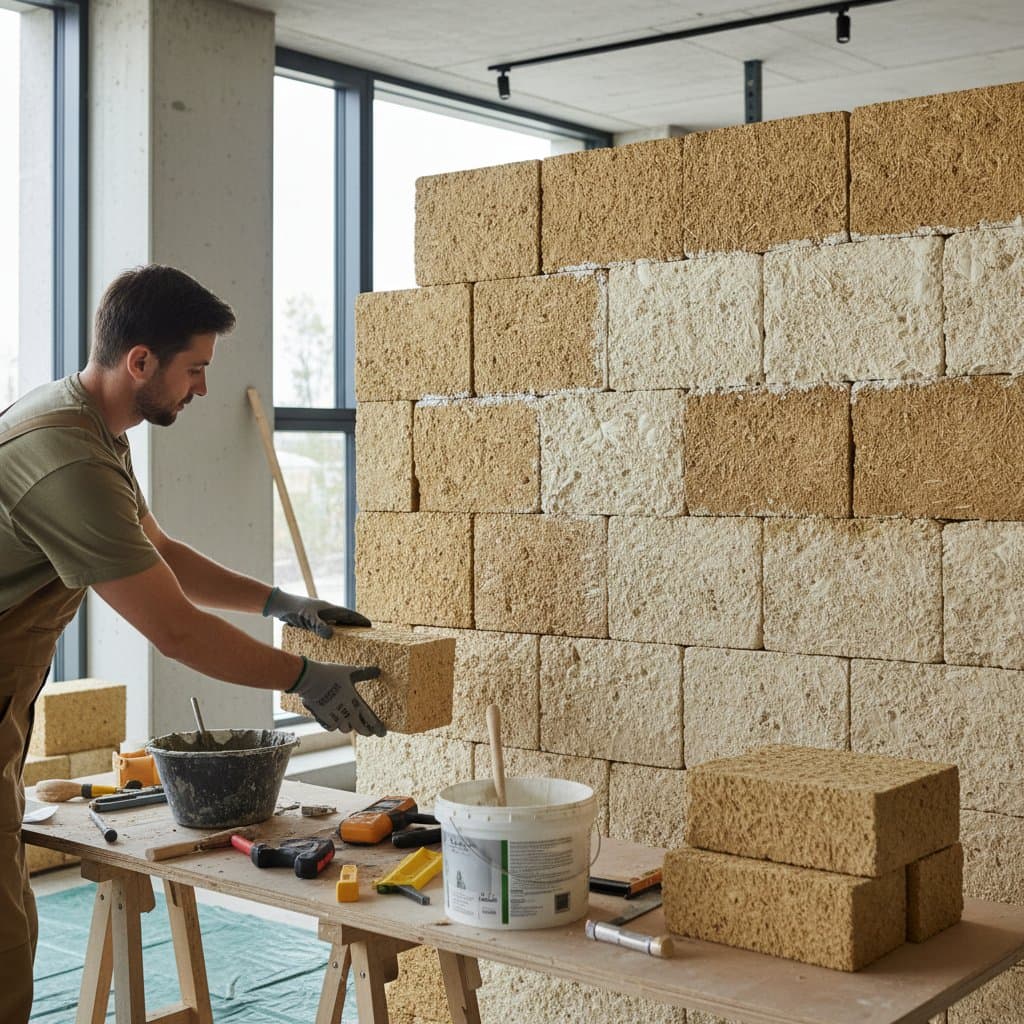
Mycelium Bricks: Transforming Sustainable Construction
Mycelium bricks represent a breakthrough in eco-friendly building materials. Derived from fungal networks grown on agricultural waste, these bricks offer renewable, lightweight options that surpass traditional clay in environmental impact. Builders adopt them to create structures with lower carbon emissions and reduced energy demands during production.
Key Advantages Over Clay Bricks
Mycelium bricks excel in sustainability because their production avoids high-temperature kilns that consume vast amounts of fossil fuels. Clay bricks require energy-intensive firing processes, which release significant carbon dioxide. In contrast, mycelium grows at ambient temperatures, using waste substrates like sawdust or straw, and binds into solid forms through natural colonization.
These bricks weigh approximately 50 percent less than clay equivalents, easing transportation and installation. Lighter loads mean smaller foundations and less structural steel or concrete, further cutting material use. At the end of their life, mycelium bricks compost naturally, returning nutrients to the soil, unlike clay, which often ends in landfills.
Essential Checks for Quality
Before integrating mycelium bricks into a project, perform thorough inspections to ensure reliability. Start by examining sample bricks for even density and complete dryness. A soft or moist interior indicates inadequate curing, which compromises strength.
Verify the uniformity of surface coatings, as inconsistencies permit water ingress and degradation. Sniff the material for any sour or musty smells, which suggest residual moisture or incomplete processing. Assess weight and firmness; mature bricks feel solid yet notably lighter than clay.
Finally, review stored samples for signs of mold or discoloration, indicators of poor moisture control during handling or transit. These steps confirm the batch achieves necessary stability for safe use.
Identifying Potential Issues
Production challenges can undermine mycelium bricks if not addressed. Incomplete substrate sterilization invites contaminating fungi or bacteria, weakening the structure. Post-drying moisture levels exceeding 12 percent heighten rot risks.
Uneven dehydration causes cracks, particularly at edges. Absence of fire-retardant treatments or irregular application leaves bricks vulnerable. Lack of verified data on compressive strength or insulation value raises doubts about performance.
Overstated claims for load-bearing applications without engineering support introduce liabilities. Such flaws not only inflate costs but also negate environmental benefits through premature failures and rework.
Solutions and Associated Costs
Reliable producers mitigate issues by precisely managing growth conditions, including substrate quality, humidity, and temperature. Well-processed mycelium bricks typically cost between $5 and $9 each, varying by dimensions and treatments. This positions them competitively against clay or concrete blocks as production scales.
Protective sealants add $1 to $2 per square foot, while fireproofing incurs a small additional expense. Reduced shipping costs stem from lower weight. Untrained handling may generate 10 percent waste, but proper training minimizes this.
Opt for proven coatings over makeshift solutions like basic paint, which fail to block moisture through fine fissures. Account for extended curing and coating timelines in project schedules to avoid delays.
Repair Strategies Versus Replacement
For mycelium panels or blocks, address minor surface mold by sanding and resealing if the core stays dry. Replace units with damage penetrating beyond one-quarter inch. Repairs suit superficial, isolated issues.
In framing integrations with wood or metal, inspect joint moisture levels. Limit replacements to affected sections unless widespread dampness demands full wall removal.
Recoat finishes at early signs of fading or flaking. Reserve replacement for cases where water has infiltrated beneath the surface.
Follow this principle: retain and protect intact, dry elements; discard compromised ones to maintain structural integrity.
Building Team and Workflow Essentials
Engage a bio-materials specialist or experienced architect from the outset to align mycelium properties with project needs, such as partitions or insulation. General contractors must adapt site protocols for humidity control and installation sequencing, diverging from conventional concrete methods.
Consult coating experts prior to assembly to optimize timing for adhesion and durability. If local regulations or insurers lack familiarity with these materials, initiate approvals promptly to prevent permit hurdles.
Coordinate among suppliers, manufacturers, and installers to synchronize processes. This approach, though adding about 15 percent to initial expenses, averts larger overruns from mishandling or inconsistencies.
Optimal Applications
Target mycelium bricks for high-value uses that maximize benefits relative to investment.
- Interior Partitions: Provide superior sound and heat insulation without bearing heavy loads.
- Non-Load-Bearing Exteriors: Pair with weather barriers or ventilated systems for longevity.
- Composite Panels: Embed mycelium cores in layered assemblies for robust, low-weight solutions.
- Modular or Temporary Structures: Facilitate easy disassembly and composting at lifecycle end.
Steer clear of persistently wet areas or ground-contact zones. Postpone load-bearing roles pending more extensive performance studies. Interior, controlled environments yield the strongest returns.
Project Phasing for Success
Sequence tasks meticulously to safeguard performance and budget.
- Prepare the Site Envelope: Secure drainage, seal leaks, and tighten air barriers prior to material arrival.
- Control Indoor Climate: Sustain consistent humidity levels throughout installation and initial curing.
- Handle Materials Properly: Store in airy, dry spaces, avoiding vapor-trapping coverings.
- Assemble Securely: Employ bio-compatible adhesives or fasteners.
- Finish Thoughtfully: Seal surfaces once moisture equilibrates.
- Verify Thoroughly: Test moisture in surfaces and cores before enclosing.
Adhering to this order prevents moisture-related failures. Rushed steps often conceal developing decay, necessitating costly interventions later.
Ongoing Care Practices
Treat mycelium bricks differently from inert clay; they demand vigilance against moisture. Maintain indoor humidity in standard living ranges. Conduct monthly visual checks on seals during the initial year, addressing minor chips promptly.
Clean with soft brushing or vacuuming, eschewing high-pressure water. In case of unintended wetting, dismantle adjacent elements and promote airflow until dryness restores.
Schedule coating refreshes every few years, depending on exposure and type. These routines, at minimal cost, sustain both aesthetics and functionality.
Enduring Advantages
Successful mycelium implementations yield tangible environmental and practical gains. Manufacturing repurposes farm and forestry byproducts, sidestepping resource extraction. Low-energy curing slashes emissions compared to clay firing.
Disposal through composting closes the loop, avoiding waste. Lifecycle analyses reveal substantially reduced carbon impacts.
Builders benefit from simplified logistics due to reduced weight, while designers appreciate moldable forms that minimize waste. As moisture controls and regulatory familiarity advance, adoption accelerates, paving the way for broader green building practices.
Implementing Mycelium in Your Next Project
To integrate mycelium bricks effectively, begin with pilot applications in low-risk areas. Gather supplier data on recent tests and case studies. Collaborate with experts to customize protections for your climate.
Monitor early installations closely, documenting performance to refine future uses. This methodical approach unlocks the full potential of mycelium, advancing sustainable construction one build at a time.