
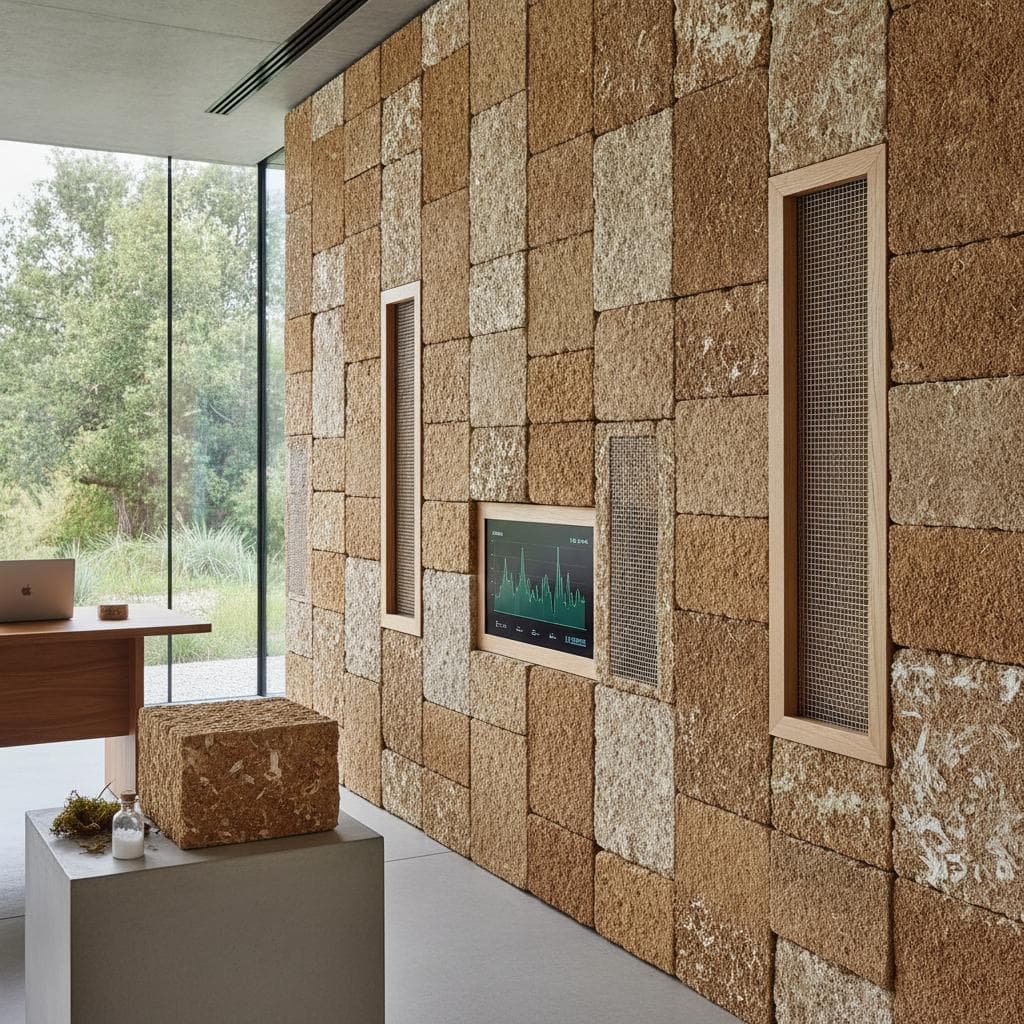
Quick Take
Mycelium bricks replace fired clay with a living fiber grown from fungal roots. Builders gain lower carbon impact and lighter handling. The main risks involve moisture, long term stability, and code acceptance. Controlled growth and curing drive most costs rather than raw materials.
Quality Checks Before Use
Inspect each brick by sight, touch, and smell to judge suitability.
- Even color without dark wet spots confirms proper drying.
- A firm surface that resists light pressure shows complete curing.
- A faint earthy smell is acceptable while a strong musty odor signals trapped moisture.
- Straight edges and consistent shape indicate full density was reached.
- Uniform light weight across a batch reflects even mold packing.
- Corners that hold under a light tap demonstrate adequate compression.
- A water drop that soaks in slowly rather than instantly reveals controlled porosity.
Warning Signs of Trouble
Black or green patches, visible cracks, strong rot odors, or surfaces that crumble under finger pressure all indicate high risk. Bricks that sag in storage, show irregular sizes, or leave damp mortar joints after rain point to future repair needs. Each condition raises long term costs and shortens service life.
Stabilization Steps and Typical Expenses
Early moisture issues respond to controlled drying under airflow at low cost before installation. Breathable silicate sealers or limewash limit absorption at modest material expense per square foot. Failed units require replacement with costs similar to standard masonry repair. Improved flashing and drip edges often deliver the highest return by redirecting water at mid range expense. Ventilated rain screens add framing cost yet prevent widespread damage in exposed locations. Avoid dense paints that trap moisture and accelerate hidden decay.
Repair Decisions by Building Element
Keep surface worn bricks that stay dry and firm. Patch them with lime render. Replace units that have lost shape or show renewed fungal activity. Choose lime or bio based mortars over cement to preserve breathability. Apply thin mineral coatings that allow vapor movement. Replace entire structural sections when compression tests fall below rated values. Use mycelium units in sheltered facades and pair them with clay facing in wet zones. Retain only material that remains dry and firm.
Project Team Coordination
Early involvement of an inspector experienced with bio based masonry helps map moisture pathways. An architect confirms wall sections and venting details. A general contractor plans handling logistics for the light yet fragile units. Direct contact with the supplier supplies curing data and approved finishes. An engineer reviews any structural applications. Joint review by architect and contractor prevents mismatched expectations.
Spending Priorities
Address moisture control first through proper grading, clear gutters, and adequate overhangs. Confirm structural loads next. Match insulation and air sealing to the brick vapor profile. Apply limewash or mineral sealers only after stability is verified. Add aesthetic layers last. Skip decorative overlays that trap moisture or anchors that pierce the assembly.
Work Sequence
Verify roof drainage and ground slope before wall work begins. Dry the structure with fans and mild heat. Test bricks with a moisture meter and mark weak areas. Replace or patch as needed. Apply breathable finish once surfaces are stable. Recheck moisture after the first heavy rain. Each step depends on the prior one.
Material Performance and Limits
Mycelium bricks form a rigid foam like matrix from agricultural fiber and fungal culture after heat killing. The result offers insulation and low weight yet lower strength than fired clay. Primary risks include moisture uptake, UV exposure, and density variation. Fire performance varies by binder so confirm certification. Freezing moisture and insect burrowing remain manageable with design details and coatings.
Environmental Profile
Avoiding kiln firing reduces embodied carbon while waste straw or sawdust feedstocks further lower impact. Light weight cuts transport energy. Material cost per square foot approaches mid range clay once curing and sealing are included. Labor rises due to careful handling. Payback appears through reduced manufacturing energy and better insulation values. Service life is shorter than fired clay under direct exposure so recoating occurs more often.
Integration With Existing Masonry
Mycelium panels serve as non structural infill when separated by capillary breaks such as lime mortar or cork. Maintain an air gap behind cladding. Never enclose units in plastic or dense gypsum. Match thermal and vapor properties across the wall to avoid decay from unbalanced moisture.
Field Performance Expectations
Well detailed walls resist moderate weather when protected by overhangs and breathable coatings. Service life depends primarily on design quality. Sheltered locations may last decades while exposed walls without proper flashing can fail within seasons. Routine inspection sustains performance.
Contractor Selection Criteria
Require three recent bio based projects with owner references. Demand a scope narrative covering curing and sealing. Request line item pricing and a dry storage plan. Confirm insurance coverage for experimental materials. Schedule weekly checks with a single contact point.
When to Halt Work
Stop if interior dampness persists after drainage fixes, mold returns, or base course movement appears. Pause also for unverified strength data or conflicting test results. Early investigation costs less than later reconstruction.
Ongoing Care Practices
Clear gutters regularly. Inspect coatings yearly. Maintain soil clearance at the foundation. Ventilate interiors. Patch minor chips promptly with matching mortar. Track seasonal moisture readings to catch trends. Treat the material like wood or lime plaster that must continue to breathe.
Sustaining Long Term Value
Mycelium masonry delivers carbon savings and insulation benefits when moisture remains controlled through design and maintenance. Consistent verification and timely small repairs preserve both performance and investment return.