
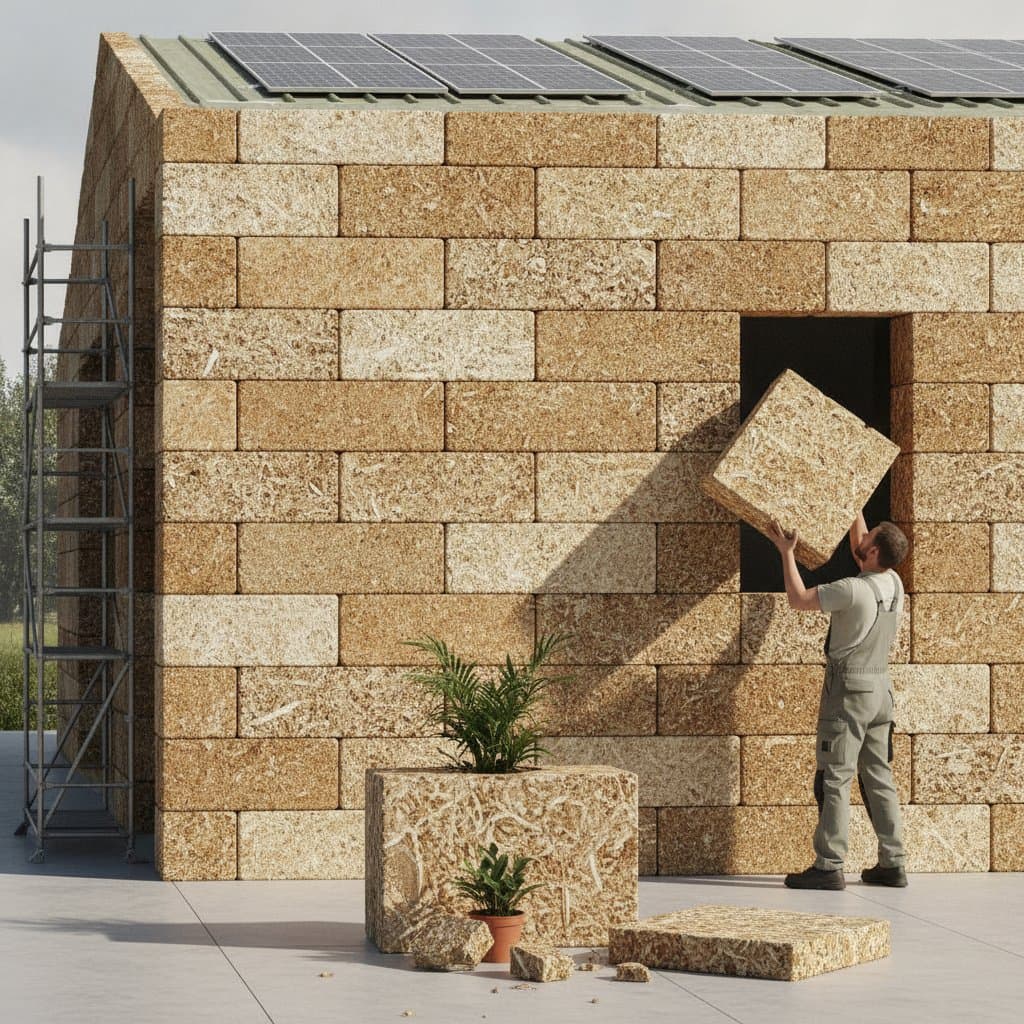
Mycelium Bricks: A Turning Point for Sustainable Masonry
Mycelium bricks are a new class of bio-based building materials made from the root-like structure of fungi. When combined with agricultural waste such as straw or sawdust, mycelium grows through the mix and binds it into a solid block. Once dried or heat-treated, the result is a lightweight, strong, and compostable brick. Builders and researchers see it as a clean alternative to fired clay or concrete masonry, both of which demand large amounts of energy and emit carbon during production.
Pros and Cons
Pros
- Low carbon footprint: Mycelium bricks grow with minimal energy input and no high-temperature firing.
- Lightweight: Easier to handle and reduces foundation loads.
- Renewable and compostable: Fully biodegradable at end of life.
- Good insulation: Traps air pockets that help regulate indoor temperature.
- Sound absorbing: Natural texture dampens noise.
Cons
- Lower compressive strength: Not yet suitable for high-load structural walls.
- Moisture sensitivity: Needs protective coatings or cladding in wet climates.
- Limited long-term data: Service life still being tested.
- Special handling: Growth process must stay sterile and controlled.
- Variable appearance: Natural patterns can differ between batches.
Costs
Raw mycelium and substrate materials are inexpensive, often under 1 to 2 dollars per cubic foot for the mix. The main cost comes from controlled growth and drying facilities. Finished mycelium bricks typically run about 4 to 8 dollars per square foot of wall area for materials only, and 10 to 18 dollars installed depending on labor, surface finish, and project scale. Costs drop for local production or when the grow process is done on-site. Prices rise when bricks are custom-shaped, coated for moisture resistance, or transported long distances.
Lifespan and Maintenance
Expect a service life of roughly 20 to 30 years when protected from direct water exposure. Inspect for cracking, mold, or spongy texture once a year, especially around joints and flashing. Clean surfaces with a soft brush and mild soap, never pressure wash. If sealed, plan to reapply a breathable water repellent every five to seven years. Keep vegetation trimmed back to allow airflow.
Specs to Check
Before buying, confirm these basic specifications:
- Density: Typically 12 to 25 pounds per cubic foot depending on substrate.
- Compressive strength: Around 100 to 350 psi, suitable for non-load-bearing walls.
- Thermal resistance: R-value about 2 to 3 per inch.
- Fire rating: Class B or better after mineral or bio-based fire treatment.
- Moisture absorption: Below 15 percent when sealed.
- Dimensional tolerance: Within 1/8 inch to ensure clean stacking.
Always ask for test data from an accredited lab and documentation of fungal species used.
Planning and Prep
Check local codes for acceptance of alternative materials. Some regions require third-party certification for structural use. Pick a dry, well-drained site with good air circulation. Plan for an overhang or rain screen to shed water. Provide a raised base course at least six inches above grade to prevent splash. For interior walls, confirm humidity stays below 70 percent.
Installation Overview
- Plan layout and pattern. Dry-stack a few units to confirm fit and alignment.
- Prepare base. For exterior walls, use compacted gravel and a moisture barrier under the first course.
- Apply bonding agent. Use a low-VOC bio-based adhesive or mechanical interlocks.
- Stack bricks. Keep joints tight and level, staggered like traditional masonry.
- Install edge restraint. Anchor corners or ends with wood or composite framing.
- Seal surface. Apply breathable coating to repel water while allowing vapor to escape.
- Finish joints. Fill gaps with lime-based or bio-resin mortar for strength and appearance.
Drying time for adhesives or surface coatings can vary with humidity. Avoid loading the structure until the binder has cured.
Patterns and Options
Popular layouts include running bond, stacked bond, and open-joint patterns that highlight the natural texture. Some builders press logos or textures into the surface during growth. Mycelium panels can also be cut into curved or beveled shapes for decorative facades. Choose a pattern that matches the wall load and visual goal.
DIY vs Pro
DIY-friendly when:
- The wall is small and non-structural.
- You have a covered workspace to control moisture and temperature.
- The design is simple, such as a garden wall, planter, or shed interior.
Hire a pro when:
- The wall carries load or connects to a structural frame.
- The project requires fire rating or code compliance.
- You need large uniform panels or factory-grown bricks.
- Complex shapes or finishes are involved.
Professional installers have controlled curing environments and can test compressive strength before delivery.
Common Failures and Fixes
Soft or sagging areas: Usually caused by retained moisture. Improve drainage, reseal, or replace affected bricks. Surface mold: Clean with vinegar solution and increase ventilation. Cracking or shrinkage: Too-rapid drying during manufacture. Replace units or fill cracks with flexible sealant. Color fading: UV exposure can bleach untreated surfaces. Apply mineral pigment or UV-protective seal. Loose joints: Rebond with low-VOC adhesive and reapply seal coat.
Address small issues early. Mycelium materials respond well to patching if handled before water damage spreads.
Regional and Climate Notes
In wet or coastal areas, use a ventilated rain screen and overhangs to keep moisture off the surface. In freeze-thaw zones, combine mycelium units with a rigid backing to reduce stress from expansion. Dry climates help longevity but can cause surface cracking if growth moisture was uneven during production. Salt exposure from de-icing or sea spray can degrade coatings, so rinse surfaces yearly.
Alternatives
If mycelium bricks are not available locally, consider these substitutes:
- Compressed earth blocks: Stronger under load, but heavier and less insulating.
- Hempcrete blocks: Good insulation and vapor control, needs formwork and curing time.
- Recycled papercrete: Lightweight and workable, but less moisture resistant.
- Foamed glass blocks: Durable and fireproof, though more energy-intensive to make.
Each has different trade-offs in cost, strength, and environmental impact.
Exploring Mycelium in Your Next Project
Mycelium bricks mark a shift toward living materials that grow to fit design needs rather than being fired or cast. They use waste as feedstock, cut carbon emissions, and reduce construction waste at the end of a building life. For now, they work best in non-structural walls, interior partitions, acoustic panels, and decorative facades. As testing expands and codes adapt, structural-grade versions may follow.
For homeowners, the next step is to ask local suppliers or green builders about pilot projects and certification status. If your goal is a low-carbon renovation or garden wall with a natural look, mycelium masonry offers a promising path. Keep moisture control and surface protection in mind, and you can build with a material that literally grows from the ground up.