
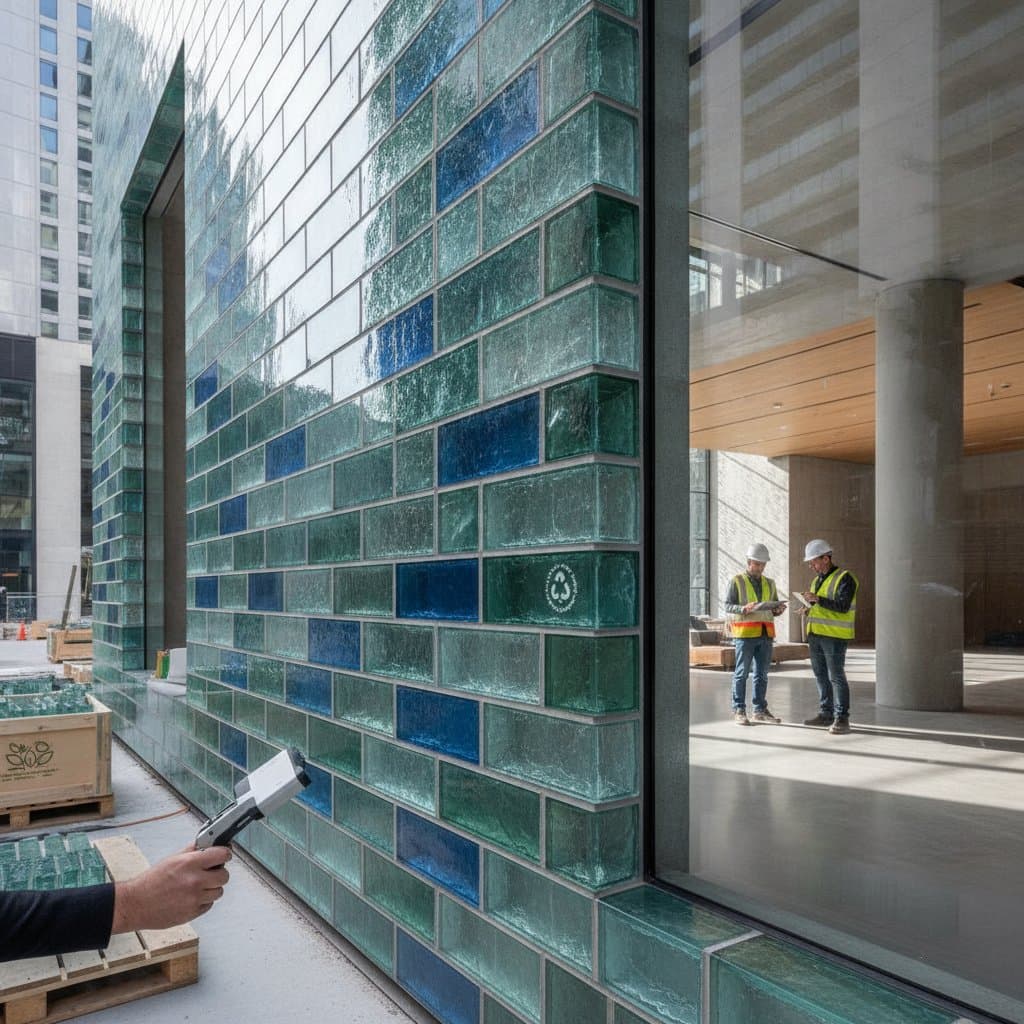
Why Recycled Glass Bricks Stand Out in 2026
Recycled glass bricks move from niche applications to standard use in contemporary construction. They divert material from landfills, limit mining for virgin resources, and supply a clean texture suitable for both historic restorations and new builds. Quality control, installer expertise, and consistent supply represent the primary variables that determine performance.
Cost factors center on the energy required for melting, the weight during transport, and any custom dimensions needed for specific designs.
Quality Verification Steps
Confirm the recycled content definition with each supplier. Some incorporate post-consumer glass while others rely on factory scrap. Request the exact ratio. Products that qualify as truly recycled contain at least fifty percent post-consumer material.
Examine sample units for uniform clarity, controlled bubble distribution, and straight edges. A consistent green or amber hue indicates blended glass and remains acceptable when the tone stays even. Noticeable color shifts often point to uneven heating or contaminants that reduce strength.
Lift sample bricks to assess density. Solid units with smooth faces provide strength comparable to fired clay. Hollow versions weigh less and work well for nonstructural partitions or decorative screens.
Place a sample beside existing masonry when matching older buildings. Glass reflects light differently and can emphasize joint irregularities. Decide early whether the goal is contrast or integration.
Inspect every pallet on delivery for corner chips. Minor edge damage can propagate during placement. Decline any shipment that shows fractures or distortion.
Warning Signs
- Color bands that vary or debris trapped inside the units
- Surfaces that craze or shed particles under light tapping
- Documentation that omits the recycled content percentage
- Delivery schedules that exceed typical production windows
- Mortar instructions limited to epoxy without allowance for standard lime or cement mixes
- Missing test results for compressive strength and thermal expansion
Cost Expectations and Adjustments
Recycled glass bricks exceed the price of standard clay units yet remain below hand-cut stone. Small orders typically run twice the cost of midrange fired brick. Larger commercial quantities can reduce that premium by roughly one third.
Decorative walls or partitions require reinforced frames because glass units rarely carry structural loads alone. Steel or aluminum channels increase the budget by ten to fifteen percent while adding necessary rigidity.
Mortar selection influences both expense and longevity. A flexible polymer-modified mix accommodates minor movement. Stiffer traditional mortar risks edge cracking. Bagged polymer mixes cost about the same as conventional masonry mortar yet demand cleaner joints and extended curing time.
Spot replacement after installation proves time consuming. Each damaged unit must be removed without affecting adjacent bricks. This repair often exceeds the original installation cost per unit. Experienced installers reduce this risk.
Surface sealers or films conceal problems without addressing moisture or stress. Internal haze requires full replacement for a permanent solution.
Custom sizes or colors increase scope risk because each variation needs dedicated molds and firing cycles. Finalize these specifications before pricing to prevent later change orders.
Suitable Applications
Recycled glass bricks serve effectively as small window replacements that balance privacy with daylight. Retain sound original frames and replace only when rot or corrosion blocks proper anchoring.
Skylights appeal visually yet introduce condensation risks in cold or wet climates. Verify drainage and flashing capacity before proceeding.
Avoid placement below grade. Moisture pressure and freeze cycles can fracture the units. Address site drainage first.
Interior partitions allow early repair of cracked mortar joints. Replace bricks only when they fracture completely. Patching kits seldom match the appearance or strength of the original material.
Project Team Requirements
Engage an architect at the outset to confirm code compliance for fire ratings, load paths, and safety glass standards. Include the general contractor during selection to identify weight and handling impacts on framing.
Add a structural engineer when walls carry loads or connect to concrete. Expansion joints must accommodate the different thermal response of glass compared with common masonry.
Select installers who have completed prior glass masonry projects. Request project photographs and references that address cleanliness and placement accuracy.
Professional project management adds ten to twenty percent to total cost yet prevents overruns through coordinated scheduling.
Priority and Sequencing Guidance
High-return uses include interior daylight walls, stairwell partitions, and entry features that reduce electric lighting demand. Defer full exterior cladding unless design priorities justify the added anchoring and maintenance expenses.
Apply the material only where light diffusion and privacy provide functional benefit. It performs less effectively in freeze-prone zones or heavy structural walls.
Retain sound period materials and pair glass bricks with original wood or plaster to maintain visual balance.
Sequence work to minimize handling. Confirm supply and lead times before demolition. Install support channels first, route utilities early, and set bricks only after the structure is watertight. Complete grouting before flooring or trim work.
Execution and Long-Term Value
Gather samples from multiple suppliers and compare clarity, dimensions, and weight. Balance recycled content claims against transportation distance. Local production frequently offsets minor differences in material composition.
Test glare and heat gain on sun-exposed walls with a light meter before committing to large surfaces. Track expenses across materials, framing plus installation, and finishing. Materials typically represent half the total while labor accounts for the balance due to precision requirements.
Durability and minimal upkeep deliver the primary return. Glass resists fading, rot, and mold. Mild detergent cleaning maintains clarity over decades.
Retain extra units for future repairs because production tones can shift. Store them dry and protected from scratches.
One Portland builder noted that glass brick projects succeed when treated like windows rather than tile. Every joint functions as a weather seal.
Contact local suppliers and installers experienced with recycled glass. Review strength data, content verification, and warranty terms. Discuss expansion joints and maintenance procedures before finalizing any agreement.