
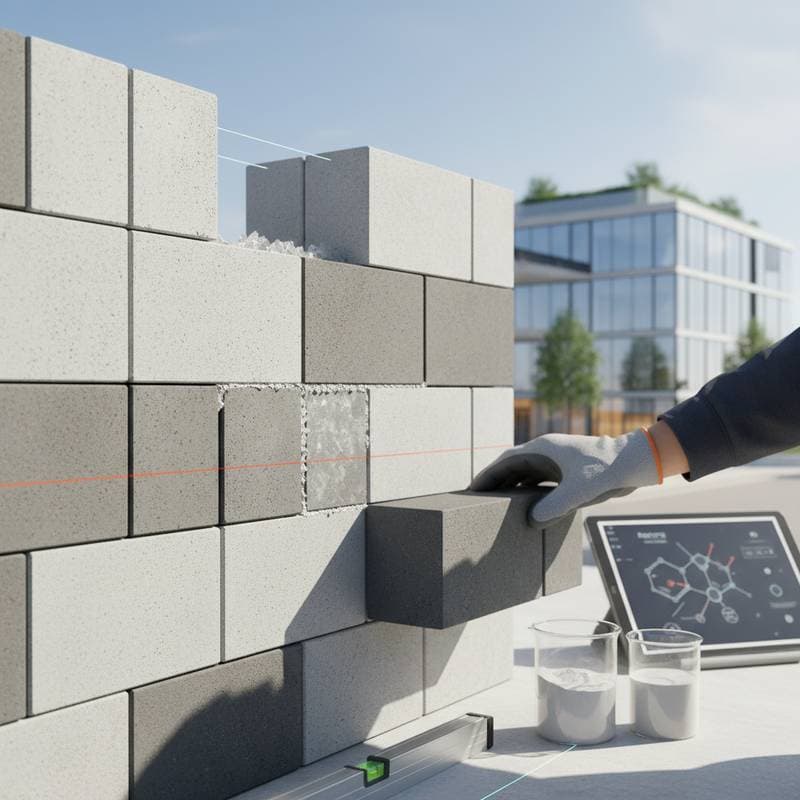
Introduction to Zero-Cement Bricks
Zero-cement bricks represent a significant advancement in sustainable building materials. Crafted through geopolymer chemistry, they utilize fly ash—a byproduct of coal combustion—along with other industrial wastes to form strong, cement-free blocks. This approach eliminates the high carbon dioxide emissions associated with traditional cement production, which relies on energy-intensive heating of limestone.
These bricks maintain the aesthetic and structural qualities of conventional masonry while promoting resource conservation. Builders appreciate their resistance to cracking and weathering, making them ideal for residential walls, garden features, and commercial facades. As environmental regulations tighten, adopting such innovations becomes essential for forward-thinking projects.
Understanding Geopolymer Technology
Geopolymer technology binds materials at the molecular level without Portland cement. Fly ash, rich in silica and alumina, reacts with alkaline activators to create a rigid matrix. This process mimics natural rock formation but occurs at ambient temperatures, reducing energy use by up to 80 percent compared to cement manufacturing.
The resulting bricks exhibit compressive strengths exceeding 5,000 psi, often surpassing standard clay bricks. They also demonstrate excellent fire resistance and thermal insulation properties. For regions prone to seismic activity, their flexibility absorbs shocks better than brittle alternatives.
Selecting the Right Zero-Cement Bricks
Choose bricks based on project requirements and local availability. Standard sizes measure 8 by 4 by 2 inches, but modular options allow for custom designs. Verify certifications for low emissions and structural integrity from reputable testing bodies.
Consider color and texture variations: smooth finishes suit modern aesthetics, while textured surfaces add rustic charm. For load-bearing applications, opt for high-density variants reinforced with fibers. Always source from suppliers who prioritize recycled content to maximize sustainability benefits.
Planning Your Masonry Project
Assess site conditions before starting. Evaluate soil stability, drainage patterns, and exposure to elements. Sketch detailed plans, including wall heights, dimensions, and integration with existing structures.
Calculate material needs: estimate bricks per square foot, factoring in mortar coverage. Consult local building codes for foundation depths and reinforcement mandates. Budget for tools like levels, trowels, and mixing equipment to ensure smooth execution.
Step-by-Step Installation Guide
1. Prepare the foundation
Excavate a trench to the required depth, typically 12 to 18 inches for non-structural walls. Compact the base soil and add a 4-inch gravel layer for drainage. Pour a concrete footing or use a dry-stack base if codes permit, ensuring it levels perfectly across the entire span.
What goes wrong if done poorly: An unstable foundation causes settling, leading to cracks and costly repairs over time.
2. Lay the first course
Dry-lay bricks to check alignment and fit. Mix geopolymer-compatible mortar to a workable consistency, similar to thick peanut butter. Spread a full bed of mortar on the footing, then place bricks with 3/8-inch joints, tapping gently for even contact.
Use a string line to maintain straight runs. Butter the ends of bricks for vertical joints. Check for level every few bricks to prevent cumulative errors.
Pro tip: Dampen bricks slightly before laying to improve mortar adhesion without excess water.
3. Build subsequent courses
Stagger vertical joints by half a brick length to distribute loads evenly and enhance stability. Apply mortar consistently at 3/8-inch thickness across beds and heads. After every third course, verify plumb with a spirit level and adjust as necessary.
What goes wrong if done poorly: Misaligned joints compromise structural integrity and create an unsightly finish that detracts from the project's appeal.
4. Reinforce as needed
For walls exceeding 3 feet in height, embed horizontal rebar or wire mesh every fourth course. Comply with local codes on spacing, typically 16 to 24 inches, and ensure proper embedment into the mortar.
Pro tip: Select galvanized or epoxy-coated rebar to resist corrosion in humid or coastal environments.
5. Finish joints
Allow mortar to firm up for 30 to 60 minutes, then tool the joints with a concave or struck finish. This compresses the mortar, expelling air pockets and promoting water runoff. Work in sections to maintain uniformity.
6. Clean the surface
Once mortar begins to thumbprint hard, brush away debris with a soft-bristle brush. Steer clear of acidic cleaners, as they can etch the geopolymer surface and weaken the bond.
7. Apply sealant
Select penetrating sealers formulated for porous masonry to protect against moisture without trapping vapor. Apply two thin coats using a low-pressure sprayer or roller, allowing 24 hours between applications for absorption.
Pro Tips and Quality Checkpoints
- Pro tip: Order 10 percent more bricks than calculated to account for breakage, cuts, and unexpected waste.
- Pro tip: In cooler temperatures below 50 degrees Fahrenheit, cover the work area with tarps and warm mixing water to accelerate setting without freezing risks.
- Pro tip: Adhere strictly to manufacturer guidelines on mortar ratios and curing durations to optimize performance.
Quality checks:
- Confirm all courses remain level and plumb throughout construction.
- Ensure mortar joints measure uniformly at 3/8 inch wide.
- Inspect for gaps or hairline cracks post-curing; address immediately with patching compound.
Achieving a Polished Finish
After full curing, which takes 24 to 48 hours, sweep the surface thoroughly to eliminate residue. Install capstones or coping for topped edges to prevent water infiltration. Experiment with mortar colors for subtle contrast or sealers with UV inhibitors for enduring vibrancy.
Long-Term Maintenance Strategies
Conduct yearly inspections for joint erosion or efflorescence. Reapply sealant every three to five years, guided by exposure levels. For cleaning, use a solution of water and mild soap with gentle scrubbing; reserve pressure washing for rare, low-intensity applications.
Creative Enhancements for Your Project
Incorporate built-in benches or vertical gardens to blend functionality with greenery. Embed solar-powered lights along pathways to accentuate brick patterns at night. Pair with rain gardens or eco-paving to foster water-permeable landscapes.
Avoiding Pitfalls in Construction
- Inadequate site prep: Uneven bases invite shifting; always verify flatness before proceeding.
- Wrong mortar selection: Stick to formulations tested for geopolymer compatibility to avoid adhesion failures.
- Rushing the cure: Premature handling diminishes strength; allow full time as specified.
- Poor water management: Install weep holes and slopes to direct runoff away from bases.
If cracks wider than 1/8 inch appear or walls lean, halt operations and engage a structural expert for assessment.
The Impact of Sustainable Choices
Zero-cement bricks align with global efforts to decarbonize the built environment. By repurposing fly ash, they divert millions of tons from landfills annually and cut construction emissions by 70 percent or more. This shift not only preserves natural resources but also yields buildings that endure longer with less upkeep.
Professionals and homeowners alike benefit from materials that deliver reliable performance alongside ecological gains. Through informed planning and skilled execution, these bricks enable creations that honor both tradition and innovation. Embrace this technology to construct legacies of resilience and responsibility.