
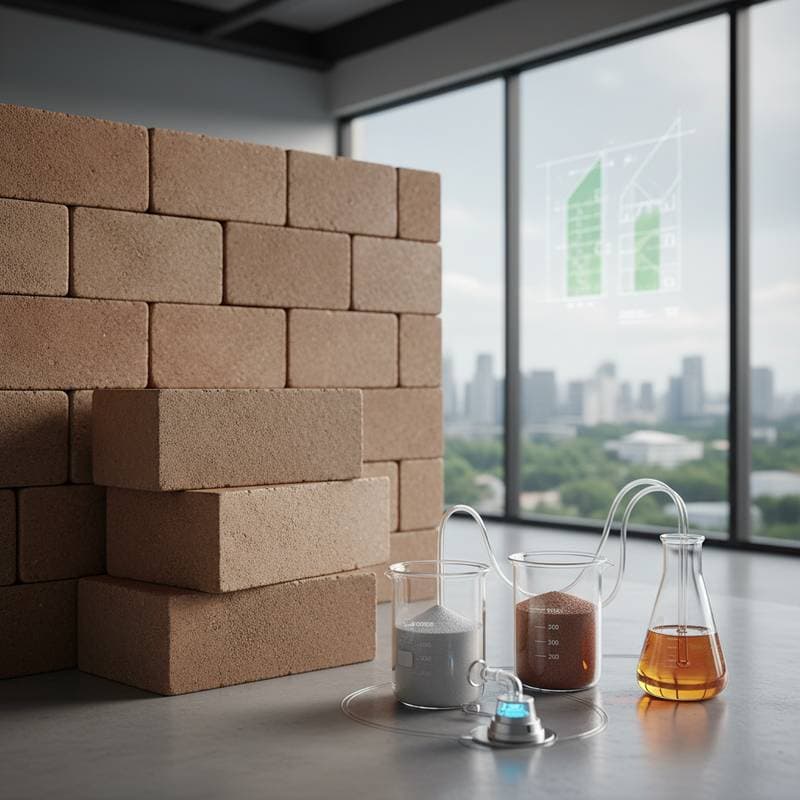
Understanding Zero-Cement Bricks
Zero-cement bricks redefine masonry by substituting traditional Portland cement with geopolymer binders. These binders incorporate industrial byproducts such as fly ash, slag, or calcined clays, which react with alkaline activators to create a robust, stone-like matrix. The outcome yields bricks that exhibit durability, lower carbon emissions, and reduced consumption of natural resources.
In standard bricks or concrete blocks, cement serves as the binding agent for aggregates. Cement production involves heating limestone to extreme temperatures, which releases substantial carbon dioxide. Zero-cement bricks eliminate this process entirely, thereby decreasing both embodied energy and the overall carbon footprint of building materials.
This innovation holds significance because masonry constitutes a primary construction method. Walls, pavements, and retaining structures rely on brick or block units. Reducing the environmental impact of these units, while upholding strength and longevity, alters the sustainability profile of constructed environments.
Project Overview
Projects using zero-cement bricks deliver structural and aesthetic advantages akin to traditional masonry, yet with diminished environmental consequences. These bricks frequently achieve or surpass the compressive strength of conventional options, demonstrate resistance to chemical degradation, and withstand elevated temperatures. Applications include load-bearing walls, pavements, and landscaping elements.
Skill level: Intermediate to advanced.
Physical demands: Moderate to high, based on wall height and brick weight.
Helpers: Recommended for tasks involving lifting, alignment, and mortar preparation.
Although the technology appears advanced, the building process aligns closely with familiar methods. Key variations occur in binder chemistry and curing procedures. Builders experienced with standard mortar applications can adapt through deliberate practice and thorough preparation.
Critical Decision Point: DIY or Professional
Individuals may lay zero-cement bricks for minor projects like garden walls, edging, or non-structural partitions. For load-bearing structures, multi-story walls, or retaining systems subjected to soil pressure, professional involvement proves essential. Geopolymer materials demand accurate proportioning and controlled curing. Engineers versed in these systems must verify all structural designs.
Professionals must review any modifications to structural masonry or foundations.
Planning Your Zero-Cement Brick Project
Thorough planning forms the foundation of success in sustainable masonry projects. Consistent preparation and material knowledge ensure reliable outcomes.
Assessing the Site
Examine soil stability, drainage patterns, and site grading. Geopolymer bricks exhibit strong moisture resistance, yet a solid base remains indispensable. Inadequate drainage risks settlement or efflorescence.
Locate underground utilities prior to excavation. Contact 811 or the local service to identify and mark gas, water, and electrical lines.
Measurements to Take
- Wall length, height, and thickness
- Brick dimensions and joint spacing
- Foundation width and depth, generally one and a half times the wall thickness
- Mortar joint thickness, typically 3/8 inch for modular bricks
Determine total brick quantity by calculating wall area and multiplying by bricks per square foot, then include a 10 percent allowance for cuts and waste.
Environmental Factors to Consider
Local temperature and humidity affect curing rates. Freeze-thaw conditions necessitate bricks with minimal water absorption. Environments with high salt or acidity benefit from low-calcium formulations.
Obstacles to Expect
Anticipate minor variations in brick texture or color from batch differences. Recycled materials in production may introduce slight inconsistencies. Blend bricks from multiple pallets to achieve uniform appearance.
Choosing Materials
Option 1: Fly Ash-Based Geopolymer Bricks
Description: Produced from fly ash, a coal combustion byproduct, activated by alkali solutions.
Pros:
- Superior compressive strength
- Strong resistance to heat and chemicals
- Repurposes waste that requires disposal
Cons:
- Availability tied to regional industrial activity
- Alkaline activators demand cautious handling
Cost: Moderate, generally above clay bricks but below premium concrete blocks.
Skill level: Intermediate. Mixing requires focus on safety and ratios.
Maintenance: Low. Routine cleaning and joint checks suffice.
Best use cases: Structural walls, pavements, and heat- or chemical-exposed areas.
Option 2: Slag-Based Geopolymer Bricks
Description: Derived from granulated blast furnace slag of steel production.
Pros:
- Rapid early strength development
- Dense, low-porosity surface
- Reliable supply from industry
Cons:
- Greater weight compared to fly ash variants
- Optimal performance needs temperature-controlled curing
Cost: Similar to concrete blocks.
Skill level: Intermediate to advanced.
Maintenance: Minimal. Preserve joint integrity and apply surface sealant periodically.
Best use cases: Load-bearing walls and pavements in coastal or humid settings.
Option 3: Calcined Clay Geopolymer Bricks
Description: Formed from calcined clay combined with aluminosilicates and alkaline activators.
Pros:
- Viable in areas lacking industrial byproducts
- Provides natural, clay-like coloration
- Allows on-site production with portable equipment
Cons:
- Involves precise calcination
- Strength slightly below slag-based options
Cost: Economical for local production.
Skill level: Moderate for installation, advanced for manufacturing.
Maintenance: Seal surfaces periodically in wet areas.
Best use cases: Non-structural walls, landscape edging, and decorative facades.
Gathering Tools and Materials
Hand Tools
- Brick trowel: Spreads mortar and applies it to brick edges.
- Jointing tool: Shapes mortar joints for enhanced weatherproofing.
- Masonry brush: Cleans joints prior to setting.
- Level and plumb line: Ensures straight and vertical alignment.
- Rubber mallet: Taps bricks gently for positioning without damage.
Power Tools
- Masonry saw or angle grinder: Cuts bricks for openings; diamond blade required.
- Mixing drill with paddle attachment: Achieves uniform mortar texture.
- Wet saw (optional): Minimizes dust and yields precise cuts.
Rental Equipment
- Mortar mixer: Ideal for large projects to blend geopolymer evenly.
- Scaffolding: Essential for walls exceeding shoulder height.
- Plate compactor: Levels and densifies foundation bases.
Materials List
- Zero-cement bricks (include 10 percent excess)
- Geopolymer mortar or suitable binder
- Gravel base for foundation
- Rebar or wire reinforcement (per design needs)
- Curing covers or plastic sheets for moisture retention
Pro tip: Acquire 10 percent additional bricks and mortar to account for waste, cuts, and repairs.
Step-by-Step Instructions
1. Prepare the Foundation
Excavate to 8 to 12 inches below grade. Install compacted gravel for drainage. For structural walls, pour reinforced concrete footings according to specifications. Confirm surface levelness and alignment.
2. Mix Geopolymer Mortar
Adhere strictly to manufacturer ratios. Blend to a smooth, workable consistency that avoids runniness. Use gloves and eye protection with alkaline components. Prepare smaller batches, as setting occurs more rapidly than with cement.
3. Lay the First Course
Mark layout with a chalk line. Apply a full mortar bed, position the initial brick at one end, and tap lightly to secure it. Proceed along the line, checking level frequently. Verify plumb at corners.
Quality checkpoint: The initial course establishes wall precision. Reassess level and alignment before mortar sets.
4. Build Subsequent Courses
Offset vertical joints by half a brick to enhance stability. Distribute mortar evenly in bed and head joints. Remove excess prior to hardening. Sustain consistent joint thickness.
5. Reinforce When Required
Place rebar or wire mesh between courses as specified. Surround steel completely with mortar to inhibit corrosion.
6. Finish Joints
At thumbprint firmness, tool joints to the preferred profile. This action seals surfaces and refines aesthetics.
7. Cure the Wall
Enclose with plastic sheeting for a minimum of two days to preserve moisture. Shield from direct sun and swift drying. Adequate curing develops full strength and prevents cracks.
Pro tip: Consult manufacturer guidelines for temperature and moisture management.
Finishing Touches
Clean surfaces with a brush post-curing. Apply breathable sealer if suited to local conditions; it limits water uptake while permitting vapor passage.
For ornamental projects, introduce mortar tinting or varied brick colors for patterns. Structural walls benefit from lime-based plaster for weather resistance.
Maintenance and Care
These bricks demand minimal attention. Annually inspect joints for cracks or voids, repointing with matching geopolymer mortar as necessary. Clean with mild detergent and water; steer clear of acids.
In freeze-thaw zones, monitor for scaling and reseal every few years. Trim adjacent vegetation to avoid moisture accumulation.
Enhancements and Integration
Incorporate lighting or planter boxes within the masonry for added appeal and utility. Install seating ledges or capstones on exterior walls. Pair with permeable pavers to optimize site drainage.
Advancing Sustainable Construction Practices
Adopting zero-cement bricks supports broader environmental goals in building. These materials enable projects that balance performance with reduced ecological harm, paving the way for innovative, resilient structures.