
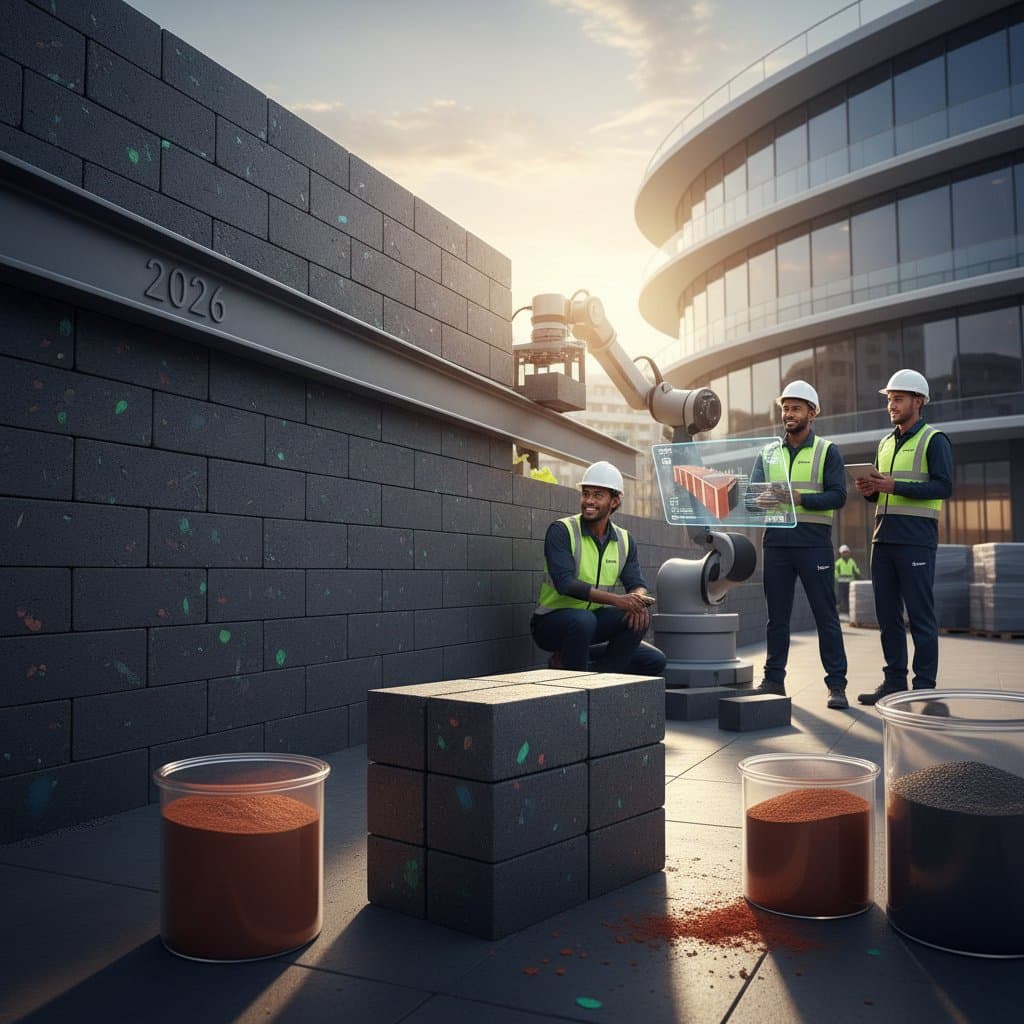
Introduction to Zero-Cement Bricks
Traditional Portland cement production contributes significantly to global carbon emissions, accounting for approximately eight percent of the world's total. Zero-cement bricks address this challenge through geopolymer technology, which binds materials without relying on cement. This innovation not only cuts emissions by up to 80 percent but also delivers bricks that are stronger, more affordable, and quicker to produce.
Geopolymers form through the reaction of aluminosilicate materials, such as fly ash or slag from industrial processes, with alkaline activators. The result is a durable matrix that mimics concrete's properties while minimizing environmental impact. By 2026, widespread adoption of these bricks could reshape construction standards, promoting circular economy principles where waste becomes a valuable resource.
These bricks cure in just 24 to 48 hours, compared to the weeks required for traditional cement-based products. They exhibit compressive strengths exceeding 5,000 psi, resist chemical degradation, and maintain integrity in harsh conditions. Cost savings arise from lower material expenses and faster production cycles, making them attractive for residential, commercial, and infrastructure projects.
Key Benefits for Sustainable Building
The primary advantage lies in emissions reduction. Portland cement kilns operate at high temperatures, releasing substantial CO2. Geopolymer processes occur at ambient or moderately elevated temperatures, avoiding such energy-intensive steps. Studies indicate potential savings of 80 percent in lifecycle emissions, from raw material sourcing to final installation.
Strength and longevity further enhance their appeal. Zero-cement bricks withstand heavy loads and environmental stresses better than conventional options. Their low permeability reduces water ingress, preventing issues like spalling or efflorescence over time.
Economic factors include utilizing abundant waste materials, which lowers procurement costs by 20 to 30 percent. Production scalability supports mass manufacturing, positioning these bricks as a viable alternative in developing and developed markets alike.
Production Process
Creating zero-cement bricks involves precise steps to ensure quality and consistency. Begin with sourcing high-quality precursors like class F fly ash, ground granulated blast-furnace slag, or metakaolin. These materials provide the aluminosilicate base for the geopolymer reaction.
1. Preparing the Mix
Combine dry ingredients in a mechanical mixer. Typical ratios include 70 to 80 percent aluminosilicates, 10 to 15 percent alkaline activator (such as sodium silicate and sodium hydroxide solution), and fine aggregates like sand for volume.
Add water gradually to achieve a workable consistency, targeting 8 to 10 percent by weight of the total mix. Mixing time ranges from 5 to 10 minutes to ensure even distribution of activators and eliminate clumps. Overmixing can introduce excess air, weakening the final product.
2. Molding the Bricks
Pour the homogeneous mix into steel or polymer molds shaped to standard brick dimensions, such as 8 by 4 by 2.25 inches. Apply a light vibration, using a table vibrator at 50 to 100 Hz for 30 seconds, to remove air pockets and promote uniform density.
Overfill molds slightly to account for settling, then level the surface with a trowel. This step prevents voids that could compromise structural integrity.
3. Curing
Transfer molded bricks to a controlled curing chamber set at 120 to 160 degrees Fahrenheit. Maintain humidity above 80 percent to facilitate the geopolymerization reaction, where molecular bonds form rapidly.
Curing duration spans 24 to 48 hours, depending on ambient conditions and mix composition. Gradual temperature increases, at a rate of 20 degrees per hour, avoid thermal shock and cracking. Post-curing, allow bricks to cool slowly to room temperature.
4. Quality Inspection
Examine random samples for defects. Conduct compressive strength tests using a hydraulic press, aiming for values above 4,000 psi after 28 days of ambient curing simulation. Measure water absorption, which should remain below 10 percent for optimal durability.
Reject units showing visible fissures, uneven color, or dimensional deviations exceeding 1 percent. Document results to refine future batches and ensure compliance with building codes.
Troubleshooting Common Challenges
Production issues often stem from material inconsistencies or process errors. For uneven surface finishes, verify mixing uniformity by adjusting water and activator ratios; aim for a slump test value of 100 to 150 mm.
Low strength typically results from inadequate chemical activation. Test activator concentration with pH meters, targeting 12 to 13, and confirm curing temperatures with calibrated thermometers. Insufficient alkali hinders bonding, so source fresh solutions.
Efflorescence, or white salt deposits, arises from excess moisture during curing. Limit exposure by sealing the chamber and using dehumidifiers if necessary.
Cracking occurs from rapid heat changes. Implement a controlled ramp-up protocol and monitor expansion joints in larger molds to mitigate thermal stress.
Maintenance and Long-Term Care
Installed zero-cement bricks demand little upkeep due to their inherent resilience. Schedule inspections every two to three years to assess mortar joints for erosion or separation. Repoint affected areas with compatible geopolymer-based mortars to restore seals.
Clean surfaces using mild detergent solutions and low-pressure water jets, not exceeding 1,500 psi. Harsh chemicals, particularly acids, may react with residual alkalis, causing discoloration or weakening.
With proper installation, these bricks achieve a service life over 75 years. Their minimal porosity shields against freeze-thaw damage, rendering them ideal for diverse climates from arctic winters to tropical humidity.
DIY or Professional Installation
For small-scale projects, such as garden walls or repairs, experienced DIY enthusiasts can fabricate batches with safety gear, including gloves, goggles, and respirators to handle alkaline activators. Follow local regulations and conduct trial mixes to perfect ratios.
Large-scale applications, like home foundations or commercial facades, benefit from professional oversight. Certified masons ensure adherence to structural standards, optimizing load distribution and integration with other materials.
Training programs, often available through industry associations, equip builders with essential knowledge on handling and safety.
Advancing Sustainable Construction Practices
Zero-cement bricks transcend mere replacement of traditional materials; they embody a paradigm shift toward resource-efficient building. Mastering their formulation empowers creators to build enduring structures that minimize environmental footprints.
As adoption grows, these innovations promise reduced operational costs and enhanced resilience against climate challenges. Embrace this technology to contribute to a greener built environment, where waste fuels progress and sustainability drives design.