
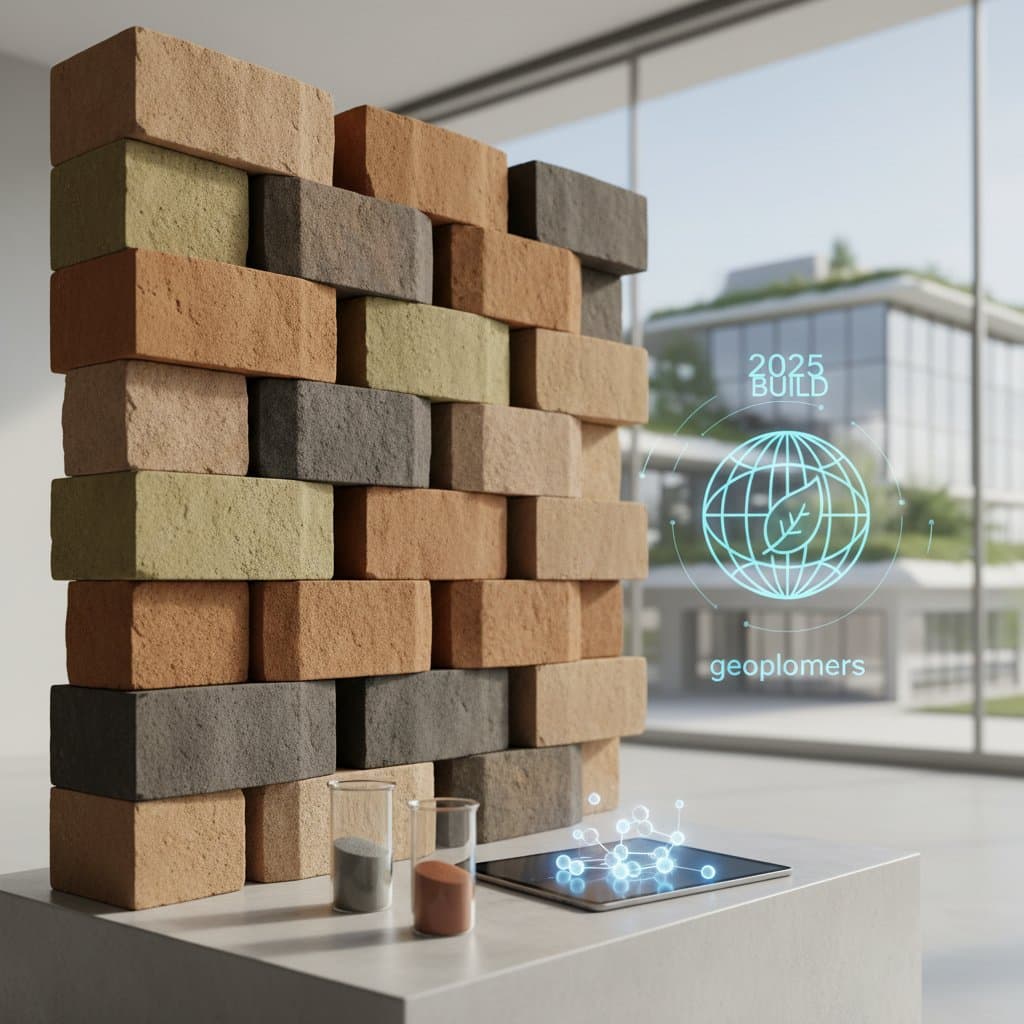
Zero-Cement Geopolymer Bricks: Transforming Construction in 2025
Zero-cement bricks, known as geopolymer bricks, represent a significant shift in masonry practices. These bricks form through the chemical reaction of industrial byproducts such as fly ash, slag, or metakaolin with alkaline activators, creating a robust binder without Portland cement. The outcome delivers strength comparable to traditional concrete while reducing the environmental impact substantially.
Production scales continue to grow among manufacturers, making these bricks accessible for residential and commercial projects. Builders now incorporate them into walls, pavements, and outdoor features, driven by demands for sustainable materials.
Advantages and Challenges
Advantages
- Reduced Carbon Emissions. Geopolymer bricks utilize waste materials, eliminating the energy-intensive process of cement manufacturing that releases large amounts of CO2.
- Superior Strength. Certain formulations achieve compressive strengths exceeding 5,000 psi, surpassing standard concrete blocks.
- Enhanced Durability. These bricks withstand extreme temperatures, corrosive salts, and chemical exposure more effectively than conventional options.
- Rapid Setting Time. Formulations cure to functional strength in as little as four hours with controlled ambient heat.
- Consistent Appearance. Integrated mineral pigments maintain color integrity, resisting fading from UV exposure or weathering.
Challenges
- Developing Supply Networks. Limited manufacturers and a shortage of trained installers hinder widespread adoption.
- Elevated Initial Expenses. Specialized activators and nascent production scales increase costs by 20 to 30 percent per unit.
- Formulation Precision. Deviations in activator proportions can compromise structural integrity, requiring exact measurements.
- Handling Precautions. Alkaline components demand protective equipment, including gloves and goggles, during mixing and placement.
- Regulatory Hurdles. Building inspectors may require additional testing, as many codes lack specific provisions for geopolymer materials.
Longevity and Care
Geopolymer brick structures endure for 50 years or longer when properly constructed, showing resistance to water ingress, salt efflorescence, and cyclic freezing. Their dense matrix minimizes cracking and degradation over time.
Care Recommendations
- Examine mortar joints biennially for signs of separation or displacement.
- Clean surfaces using a solution of mild detergent and warm water; steer clear of acidic substances that could etch the material.
- Repair deteriorated joints with geopolymer-compatible mortar, ensuring a flush finish to block moisture.
- Apply a penetrating silicate sealer sparingly in harsh environments like coastal zones to bolster surface resistance without trapping vapor.
Project Preparation Steps
Evaluate site specifics prior to procurement to ensure compatibility and compliance.
- Prepare the Foundation. Excavate and remove vegetation, then compact the subgrade to 95 percent density using a plate compactor.
- Incorporate Drainage. Grade the site to direct water away from foundations at a minimum of one inch per eight feet.
- Install Base Layer. Layer and compact crushed stone or gravel in four-inch increments for stable support under load.
- Plan Logistics. Account for the increased weight of geopolymer bricks, often 10 to 15 percent heavier than clay equivalents, when arranging delivery and staging.
- Secure Permissions. Verify local building regulations; petition for approval under existing masonry standards if geopolymer provisions are absent.
Design Patterns and Variations
Geopolymer bricks adhere to standard dimensions, allowing versatile layouts in both structural and aesthetic applications.
Popular Layouts
- Running Bond. This offset pattern enhances shear strength, ideal for load-bearing walls and exterior facades.
- Stack Bond. Aligned courses create a sleek, contemporary aesthetic, but demand thorough mortar bedding for lateral stability.
- Herringbone. Angled placements suit flooring or walkways, providing traction and visual dynamism.
- Basket Weave. Alternating pairs form textured surfaces, enhancing patios or boundary features.
Advanced options include tongue-and-groove interlocking designs that minimize mortar joints and accelerate assembly by up to 25 percent.
Troubleshooting Common Issues
Surface Cracking or Efflorescence
Inadequate activator ratios or accelerated evaporation often lead to fissures or powdery residues. Maintain consistent moisture during the initial 24-hour cure and adhere strictly to manufacturer guidelines for mixing.
Salt Deposits
Incompatible rinsing or sealers cause white efflorescence. Remove deposits with a nylon brush and distilled water; test sealers on a small area first.
Unit Displacement
Poor base preparation results in settling. Excavate, recompact the substrate to proper depth, and reinstall affected units with fresh bedding.
Mortar Degradation
Erosion stems from water infiltration in gaps. Extract loose material, apply a geopolymer slurry, and tool joints to form a watertight seal.
Comparable Materials
When geopolymer bricks prove unavailable or uneconomical, explore these substitutes, each balancing sustainability with performance trade-offs.
- Fly Ash-Enhanced Blocks. These reduce cement by 30 to 50 percent while retaining solid load-bearing capacity, though emissions persist.
- Stabilized Soil Blocks. Compressed earth with minimal binders fits non-structural, earth-sheltered designs in arid climates.
- Recycled Concrete Units. Incorporating demolition waste cuts resource use, but cement dependency limits eco-gains.
- Lime Mortar Systems. Flexible and vapor-permeable, these excel in heritage renovations or moisture-prone settings.
Essential Installation Guidance
Procure 5 to 10 percent surplus bricks to accommodate cuts and defects. Employ wet suppression methods during sawing to mitigate respirable silica particles. Don personal protective equipment consistently when engaging activators. Verify batch uniformity in color and consistency upon receipt. Test compatibility if blending products from multiple sources.
Sustaining Geopolymer Installations
Routine upkeep preserves the integrity of geopolymer masonry. Clear accumulated debris weekly and eradicate vegetation from joints to prevent root intrusion. Post-rainfall, survey for subsidence and address promptly with minor adjustments.
For upright applications, maintain functional drainage systems to avert staining. Annual gentle rinsing with low-pressure water restores vibrancy without joint compromise.
Embracing Sustainable Masonry
Geopolymer bricks provide a viable route to decarbonized building practices, matching traditional durability with reduced ecological strain. Their adaptability suits diverse projects, from urban developments to rural retreats.
With expanding production and evolving standards, these materials gain traction rapidly. Consult suppliers early in your planning to integrate zero-cement solutions effectively.