
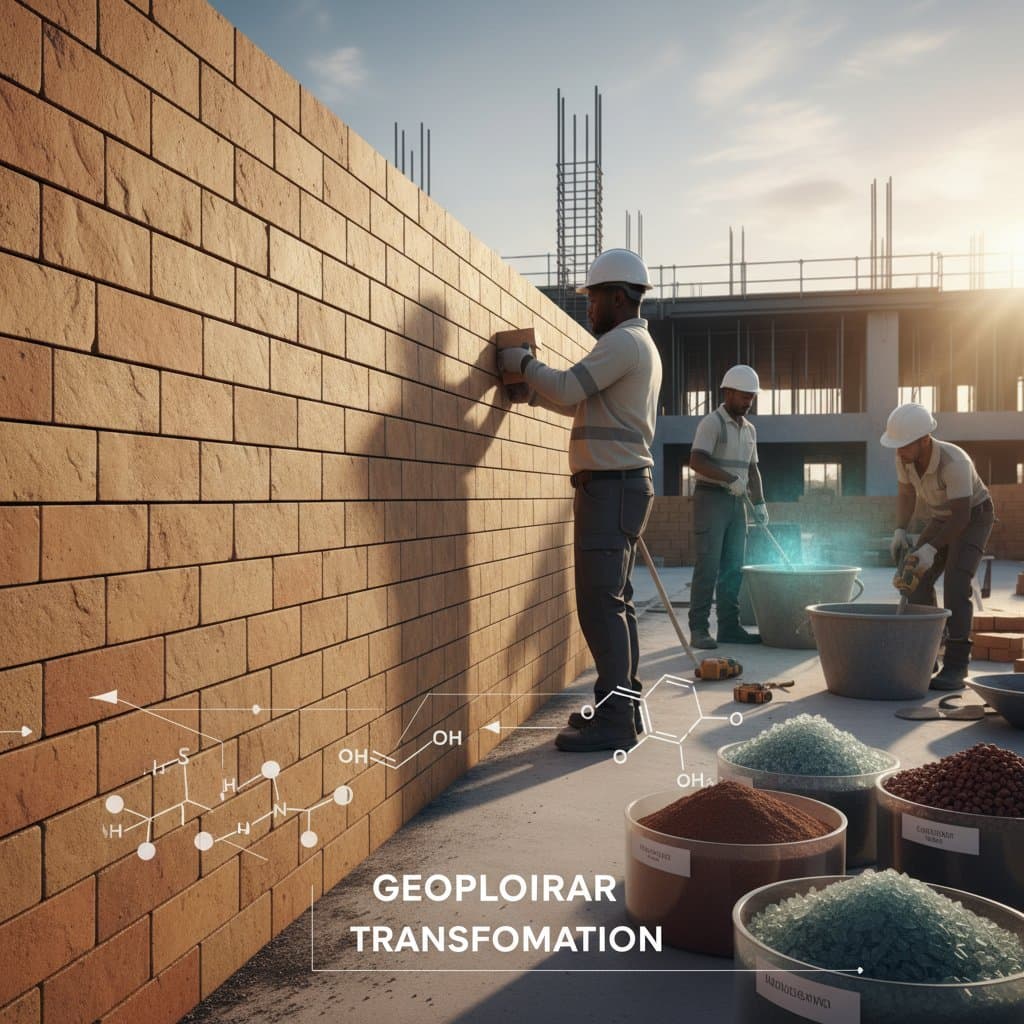
Introduction to Zero-Cement Bricks
Traditional cement production relies on limestone, a process that generates substantial carbon emissions and depletes natural resources. Zero-cement bricks emerge as a compelling alternative, utilizing geopolymer technology to convert industrial waste into strong building materials. This innovation not only addresses environmental concerns but also promotes resource efficiency in construction projects.
In 2025, the construction industry faces increasing pressure to adopt sustainable practices. Zero-cement bricks respond to this demand by offering performance comparable to standard bricks without the environmental footprint. Builders and architects now have access to materials that align with global sustainability goals while maintaining structural integrity.
The Science Behind Geopolymer Technology
Geopolymers form through the reaction of aluminosilicate materials with alkaline activators, creating a binder that hardens without the need for cement. Common precursors include fly ash from coal power plants, slag from steel production, and other industrial residues. This process binds particles into a solid matrix, resulting in bricks that exhibit high compressive strength.
Unlike Portland cement, which requires high-temperature kilns, geopolymer synthesis occurs at ambient temperatures, significantly lowering energy use. The resulting material demonstrates excellent resistance to chemicals and fire, making it suitable for demanding environments. Researchers have refined these formulations over decades to ensure consistency and reliability in real-world applications.
The technology draws from abundant waste streams, reducing landfill contributions. For instance, fly ash, often discarded as a pollutant, finds new purpose as a primary component. This shift transforms potential environmental hazards into valuable construction assets.
Key Benefits of Zero-Cement Bricks
One primary advantage lies in their reduced carbon footprint. Traditional cement accounts for about eight percent of global emissions, whereas geopolymer bricks cut this by up to 80 percent through avoided limestone processing. This reduction supports compliance with stringent environmental regulations and appeals to eco-conscious clients.
Durability represents another strength. These bricks withstand extreme weather conditions, including freeze-thaw cycles, better than many conventional options. Their low permeability resists water ingress, minimizing cracking and extending structure lifespan.
Cost savings emerge over time due to lower material and energy expenses during production. Initial investments in specialized mixing equipment pay off through decreased waste disposal fees and enhanced project efficiencies. Additionally, the bricks contribute to green building certifications, potentially unlocking incentives and higher property values.
Selecting Materials for Zero-Cement Bricks
Choosing the right precursors forms the foundation of successful geopolymer production. Fly ash provides silica and alumina essential for the reaction, with Class F varieties offering optimal performance due to their low calcium content. Slag complements this by improving workability and strength, particularly in blends that require faster setting times.
Alkaline activators, such as sodium hydroxide and sodium silicate, initiate the polymerization process. Balance their ratios carefully to avoid excessive heat generation or weak bonds; a typical mix uses 10 to 15 percent activator by weight. Source these from reputable suppliers to ensure purity and consistent reactivity.
Incorporate aggregates like sand or recycled glass for volume and texture. Test small batches to verify compatibility, as regional waste variations influence outcomes. Consult material safety data sheets to handle activators properly, prioritizing protective gear during mixing.
Planning Your Installation
Effective planning begins with site assessment to determine load requirements and environmental exposures. Zero-cement bricks suit load-bearing walls, facades, and non-structural elements, but verify compatibility with existing designs through engineering calculations. Coordinate with suppliers early to secure consistent batches and avoid delays.
Prepare the mixing process meticulously. Use mechanical mixers for uniform distribution, adding dry components first followed by activators in a controlled manner. Allow the mixture to cure for 24 to 48 hours in a humid environment to achieve full strength, monitoring temperature to prevent rapid drying.
During installation, apply mortar compatible with geopolymers, often a similar geopolymer-based paste. Lay bricks with standard techniques, ensuring even joints of 10 millimeters. Implement quality checks at each stage, such as compressive testing on sample bricks, to confirm adherence to standards.
Overcoming Common Challenges
One frequent issue involves variability in waste materials, which can affect consistency. Standardize sourcing by partnering with certified providers and conduct regular lab tests on incoming batches. This approach ensures predictable performance across projects.
Curing conditions pose another hurdle, especially in varying climates. Enclose fresh bricks in plastic sheeting to retain moisture, or use misting systems for larger installations. Adjust activator concentrations for colder weather to maintain reaction rates without compromising safety.
Scalability concerns arise for large-scale adoption. Start with pilot projects to build expertise, then expand by investing in automated production lines. Collaborate with industry associations for training resources that address these practical barriers.
Real-World Applications and Success Stories
Architects have integrated zero-cement bricks into residential developments, creating energy-efficient homes with insulated walls. In one urban project, builders replaced traditional masonry, reducing embodied carbon by 60 percent while meeting seismic codes. The structures now serve as models for neighborhood revitalization.
Commercial applications include office buildings where fire-resistant properties enhance safety. A mid-rise facility constructed with these bricks achieved LEED Platinum certification, drawing tenants focused on sustainability. Maintenance costs dropped due to the material's resilience against urban pollutants.
Infrastructure projects benefit from the bricks' longevity. Bridges and retaining walls made from geopolymers endure harsh exposures, with minimal repairs needed over decades. These examples illustrate how the technology scales from small renovations to major public works.
Advancing Sustainable Construction Practices
Adopting zero-cement bricks positions builders at the forefront of green innovation. This choice not only mitigates climate impacts but also fosters circular economies by valorizing waste. Projects incorporating these materials often yield faster approvals and community support.
Future developments promise even greater efficiencies, with ongoing research into bio-based activators and recycled aggregates. Stay informed through industry updates to integrate emerging advancements. Ultimately, zero-cement bricks empower a built environment that harmonizes with planetary limits, ensuring enduring value for generations.