
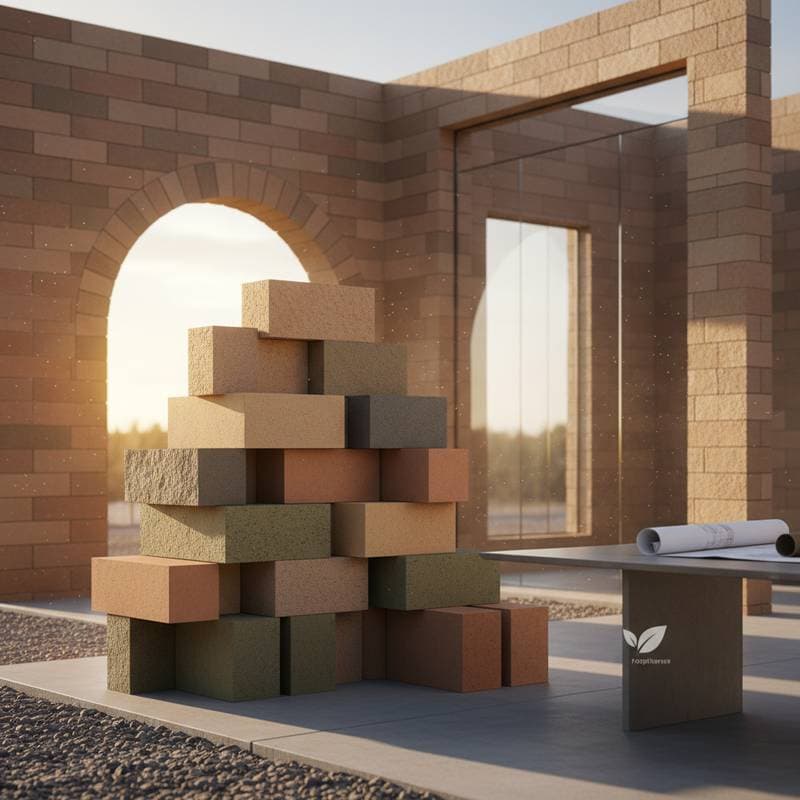
Geopolymer Blocks: Revolutionizing Cement-Free Builds
Geopolymer blocks serve as masonry units produced without Portland cement. Manufacturers combine industrial byproducts like fly ash, slag, or metakaolin with alkaline activators to create a hardened binder. This approach yields a robust, long-lasting, and low-carbon substitute for conventional concrete blocks.
Pros and Cons
Pros
- Substantially reduced carbon emissions relative to cement-based blocks
- Elevated compressive strength and resistance to chemicals
- Superior resistance to fire and heat
- Incorporation of recycled industrial materials
- Minimal shrinkage and cracking during curing
Cons
- Restricted availability in certain regional markets
- Elevated costs for specialized binding agents
- Necessity for precise mixture control to ensure uniformity
- Limited availability of long-term field performance data compared to concrete
- Requirement for installers with specific training in some applications
Costs
Material expenses for geopolymer blocks generally fall between $4 and $8 per square foot of wall surface. Installation costs range from $10 to $18 per square foot, influenced by local labor rates, block dimensions, and site conditions.
Expenses increase with custom shapes, colored surfaces, or limited production quantities. Prices decrease when production utilizes locally sourced byproducts such as fly ash. Factors like transportation distances and curing processes also affect final pricing.
Lifespan and Maintenance
A properly constructed geopolymer block wall endures for 50 years or longer with routine care. Perform annual inspections for joint deterioration, surface discoloration, or erosion. Clean surfaces using mild detergent and water, steering clear of harsh acids that may harm the binder. Sealing proves unnecessary for most blocks, though a breathable silicate sealer benefits installations in humid environments.
Select mortar joints or thin-bed adhesives compatible with the block's composition to avoid cracking or efflorescence.
Specs to Check
Prior to purchasing geopolymer blocks, verify the following specifications:
- Compressive strength of at least 3,000 psi for typical wall applications
- Water absorption rate below 10 percent for outdoor exposure
- Freeze-thaw durability rating or ASTM compliance for regions with cold winters
- Fire resistance rating, typically ranging from two to four hours
- Dimensional accuracy adhering to industry standards
- Manufacturer-recommended joint or bonding system
Order an additional 5 to 10 percent of blocks to account for cutting and breakage.
Planning and Prep
Establish a stable, well-compacted foundation as the cornerstone of any project. Confirm that the subgrade facilitates proper drainage and directs water away from buildings. Position geopolymer blocks on a gravel or concrete footing that reaches below the local frost line, never directly on soil.
Assess access for materials and equipment. Heavier blocks often require mechanical aids for handling. Review local building codes regarding wall heights, setbacks, and fire ratings. Certain jurisdictions mandate structural evaluations or engineering certifications for innovative materials.
Installation Overview
- Layout and dry fit. Delineate the wall alignment and validate measurements.
- Prepare footing. Level and compact the foundation, then apply a bed of mortar or adhesive.
- Set the first course. Begin at the corners, ensuring plumb and level placement.
- Stack and bond. Position thin-bed adhesive or geopolymer mortar between layers.
- Reinforce if needed. Incorporate rebar or mesh for load-bearing structures as required.
- Tool joints and clean. Finish the joints smoothly and eliminate excess material.
- Cure properly. Maintain consistent moisture levels during initial curing to prevent defects.
Prevent rapid drying or freezing exposure in the early stages.
Patterns and Options
Geopolymer blocks appear in various configurations:
- Hollow structural blocks suited for reinforced walls
- Solid units ideal for garden features or partitions
- Interlocking blocks that minimize mortar requirements
- Textured or pigmented finishes for aesthetic applications
Opt for interlocking or adhesive systems to accelerate do-it-yourself endeavors. Employ standard units where structural approvals or engineering oversight applies.
DIY vs Pro
Individuals with foundational masonry experience can manage small-scale projects like retaining walls, garden edging, or shed foundations, provided the site offers level ground.
Engage professionals for scenarios involving:
- Load-bearing elements supporting roofs or floors
- Designs featuring curves, openings, or reinforcements
- Sites prone to drainage challenges or frost heave
- Projects necessitating permits or inspections
Trained installers possess the tools to cut, position, and cure blocks effectively, mitigating future complications.
Common Failures and Fixes
Surface cracking: This issue arises from inadequate curing or moisture inconsistencies. Remedy by misting the surface and shielding it from direct sunlight.
Efflorescence: Remove white salt deposits with a stiff brush and warm water. Enhance site drainage to limit future occurrences.
Joint failure: Repair damaged joints using matching geopolymer mortar. Refrain from combining with cement-based materials.
Color fading: Outdoor exposure causes gradual lightening. Restore vibrancy with mineral stains or silicate sealers.
Regional and Climate Notes
In areas subject to freeze-thaw cycles, select low-absorption blocks and ensure thorough backfill drainage. Lighter hues in warm climates help mitigate heat absorption. Coastal installations benefit from salt-resistant sealers. In dry regions, provide shade during curing to avert cracks.
The chemical-resistant nature of geopolymer binders suits proximity to industrial sites or acidic groundwater.
Alternatives
When supply or budget constraints arise, evaluate these options:
- High-slag concrete blocks, which lower cement usage while retaining familiar methods
- Compressed earth blocks, energy-efficient yet vulnerable to moisture
- Autoclaved aerated concrete, lightweight but with reduced strength and fire performance
- Recycled aggregate concrete, which conserves resources though reliant on cement
These alternatives balance environmental gains against durability and accessibility. Geopolymer blocks excel by merging eco-friendliness with reliable performance.
Making It Happen
Identify a local supplier or contractor versed in geopolymer applications. Request performance test results, material origins, and installation protocols. Verify compliance with regional building codes prior to procurement.
Commence with a modest project to master material handling and curing techniques. As familiarity grows, progress to expansive or structural undertakings. Through meticulous preparation and curing, geopolymer blocks enable resilient, eco-friendly masonry free from cement dependency.