
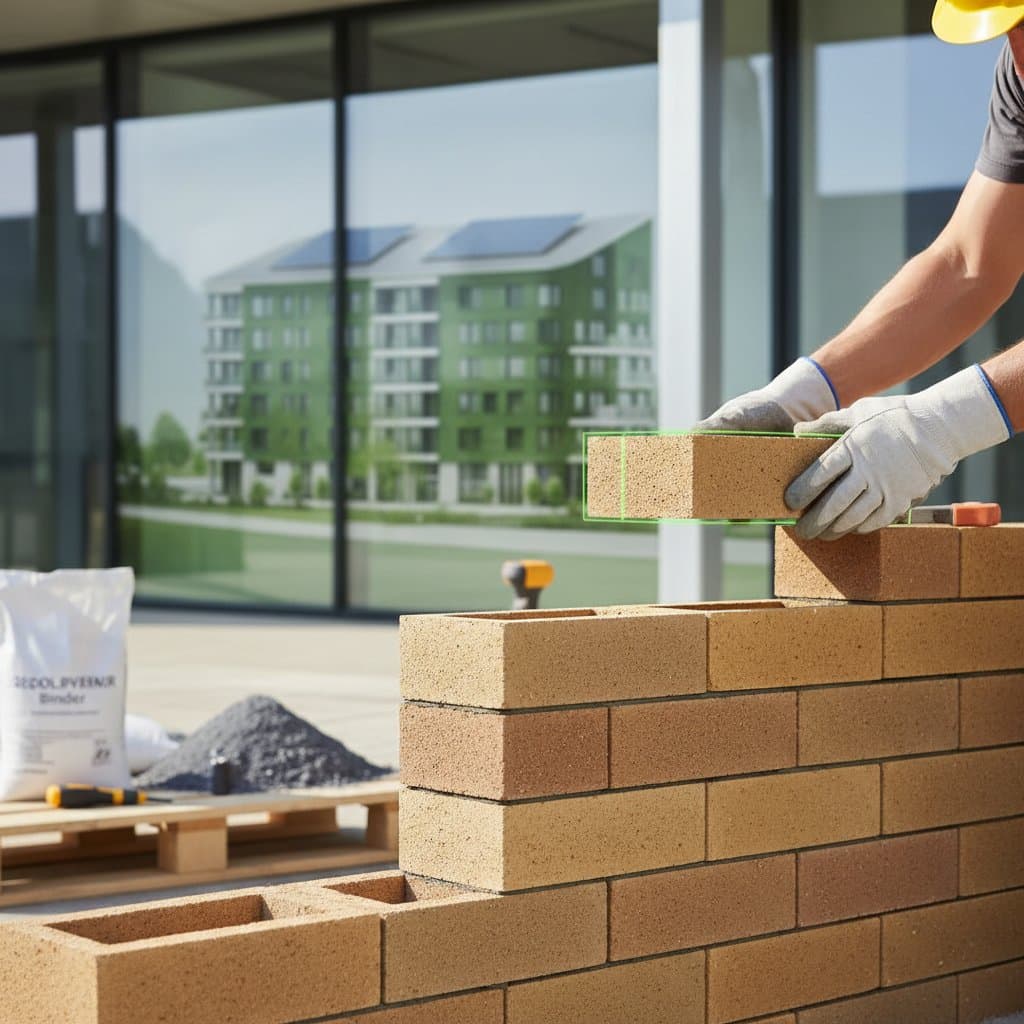
Zero-Cement Bricks Revolutionizing Sustainable Masonry
The construction industry faces increasing pressure to adopt materials that minimize environmental impact without sacrificing performance. Zero-cement bricks address this challenge by substituting traditional Portland cement with geopolymer binders derived from industrial by-products such as fly ash and slag. These bricks provide equivalent structural strength, accelerate curing times, and reduce carbon dioxide emissions by up to 80 percent. This article details the mechanics of zero-cement bricks, outlines essential planning steps, and offers practical guidance for implementation to help builders achieve durable, eco-conscious results.
Key Takeaways
- Cost Range: Installation typically costs $5 to $12 per square foot, with materials comprising 60 percent, labor 35 percent, and equipment 5 percent.
- Strength and Density: Compressive strength measures 4,000 to 7,000 pounds per square inch, matching that of premium concrete blocks.
- Curing Timeframe: Geopolymer bricks reach full strength in 7 to 14 days, far quicker than the 28 days required for cement-based options.
- Environmental Benefits: These bricks lower CO₂ emissions by up to 80 percent through cement elimination and waste material reuse.
- Decision Factors: Consider local material availability, regional climate conditions, and adherence to prevailing building codes.
Planning Requirements and Regulatory Considerations
Successful integration of zero-cement bricks begins with thorough assessment of regulatory frameworks. Local building codes often categorize geopolymer materials as alternatives, requiring proof of compliance through certified test results. Builders should consult municipal authorities early to identify any special permits or inspections needed for these innovative products.
Planning Checklist
- Verify Building Codes: Confirm that geopolymer materials qualify under provisions for masonry or alternative construction methods.
- Secure Technical Data Sheets: Review specifications for compressive strength, water absorption rates, and fire resistance to ensure suitability.
- Evaluate Local Material Availability: Locate suppliers of fly ash or slag nearby to minimize transport expenses and further reduce emissions.
- Calculate Structural Needs: Determine load-bearing requirements for specific applications like walls or foundations, referencing standards such as ASTM C90.
This structured approach prevents delays and guarantees that materials align with project demands and legal standards.
Step-by-Step Guide to Producing and Laying Zero-Cement Bricks
Producing zero-cement bricks involves precise mixing and handling to maximize their benefits. Follow these steps to create high-quality units ready for installation.
1. Preparing the Mix
Start by blending dry ingredients, including fly ash, slag, and aggregates, in a mechanical mixer for one to two minutes. Gradually incorporate the alkaline activator solution while continuing to mix until the blend achieves a homogeneous texture. Aim for a moisture level that supports compaction without allowing water to separate from the mixture.
2. Molding and Compaction
Transfer the prepared mix into designated brick molds. Apply compaction through manual tamping or hydraulic pressing to eliminate air pockets and ensure even density. This process directly influences the final bricks' strength and uniformity.
3. Curing
Allow initial curing at room temperature for a minimum of 24 hours prior to removing bricks from molds. For peak performance, control environmental conditions with steady humidity and temperature over 7 to 14 days. Industrial settings may employ gentle heat, between 120°F and 160°F, to expedite the process without compromising quality.
4. Masonry Installation
Position bricks using a matching geopolymer mortar or low-cement variant. Standardize joint thickness at 3/8 inch and monitor alignment with levels throughout the process. Note that geopolymer mortar hardens more rapidly than traditional types, so work in manageable sections.
5. Finishing and Inspection
Examine completed work for cracks, uneven surfaces, or discoloration. In moist environments, apply permeable sealants to protect against water ingress while preserving breathability.
Common Challenges and Troubleshooting
Zero-cement bricks offer significant advantages, yet they demand attention to specific production and application hurdles. Understanding these issues equips builders to maintain project quality.
Frequent Issues
- Uneven Curing: Fluctuating temperatures or humidity can cause inconsistencies; stabilize conditions with enclosed curing areas or monitoring devices.
- Surface Whitening: Excess alkali in the mix leads to efflorescence; adjust activator levels downward or wash affected areas post-curing.
- Low Early Strength: Incorrect ratios or insufficient compaction result in weakness; double-check proportions and apply adequate pressure during molding.
- Poor Bonding with Mortar: Incompatibility arises from mismatched chemistries; select geopolymer or polymer-enhanced mortars designed for these bricks.
Quick resolution of these problems preserves both structural reliability and aesthetic appeal.
Evaluating Cost and Sustainability
Initial expenses for zero-cement bricks exceed those of standard blocks in some cases, but lifecycle benefits in savings and ecology justify the investment. Builders often recoup costs through reduced energy use and minimal waste.
Cost Comparison
| Material Type | Average Cost per Sq. Ft. | Labor % | Material % | Equipment % |
|---|---|---|---|---|
| Cement Block | $4–$8 | 40 | 55 | 5 |
| Zero-Cement Brick | $5–$12 | 35 | 60 | 5 |
Environmental Performance
Portland cement production releases approximately one ton of CO₂ per ton manufactured. Zero-cement bricks circumvent this by repurposing by-products, achieving up to 80 percent emission reductions. Additional gains include landfill diversion and lower production energy needs, positioning these materials ideally for LEED certification and similar green benchmarks.
Pro Tips for Success
Measure activator solutions with precision using calibrated digital scales to avoid variations. Conduct trial batches on a small scale to refine techniques before committing to larger volumes. Source raw materials from reliable, consistent providers to ensure predictable outcomes. Shield curing bricks from extreme weather elements like intense sun or precipitation. Document all mix formulas, curing parameters, and test results meticulously for ongoing reference and compliance.
Advancing Construction with Eco-Friendly Innovation
Zero-cement bricks mark a pivotal step forward in balancing durability with environmental stewardship. Their use of waste-derived binders not only enhances strength but also curtails the industry's carbon footprint significantly.
Builders who master the planning, production, and installation processes unlock the full potential of this technology. Such adoption fosters resilient structures that contribute to broader sustainability goals, paving the way for responsible development practices.