
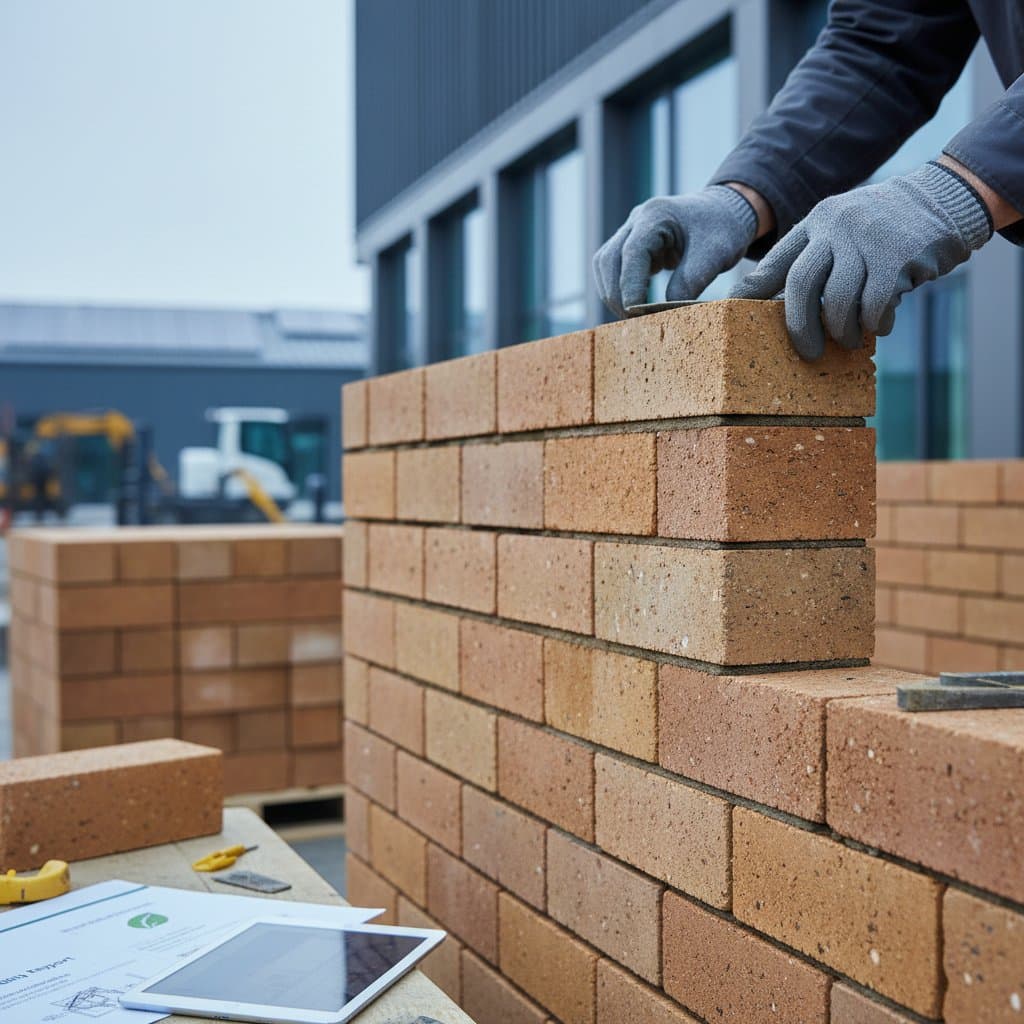
Geopolymer Bricks Transform Modern Masonry
Essential Overview
Traditional cement production demands high energy inputs and remains susceptible to cracking under poor moisture management. Geopolymer bricks address these challenges effectively. Formed from industrial byproducts such as fly ash and slag, these bricks cure at ambient temperatures and exhibit greater resistance to water ingress compared to conventional masonry units. Key considerations include maintaining stringent quality controls and securing reliable supply chains. Primary cost factors encompass raw material procurement, curing processes, and adaptations for local labor practices.
Inspection Essentials
Evaluate geopolymer bricks through straightforward on-site assessments that reveal structural integrity and performance.
- Examine sightlines on constructed walls to ensure they remain plumb, free from bulging or mortar fractures.
- Assess rooflines and flashing details above walls, as effective water diversion serves as the primary safeguard.
- Roll a tennis ball over newly laid floors or pavements to identify any uneven settling.
- Search for stains or efflorescence, where white powdery deposits indicate moisture movement despite the bricks' low permeability.
- Detect alkaline or chemical scents in confined curing zones, as these suggest incomplete reactions that compromise brick strength.
- Verify the condition of gutters and downspouts surrounding structures, since inadequate drainage undermines even superior masonry.
- In basement areas, monitor for seepage or dampness, noting that while bricks repel water, mortar joints and interfaces pose potential weak points.
Critical Warning Signs
Certain indicators reveal underlying issues or unsubstantiated product claims. Remain vigilant for the following:
- Variations in color across a single batch, which often result from irregular curing conditions.
- Friable edges or a gritty surface texture, typically arising from imbalanced mix proportions.
- Unusual surface sheen or applied sealants intended to conceal material deficiencies.
- Hollow sounds upon tapping bricks, pointing to internal voids or insufficient geopolymer formation.
- Fractures appearing in mortar beds rather than expansion joints, signaling mismatched thermal behaviors or adhesion failures.
- Vendors unable to furnish compressive strength test results or specifics on curing protocols.
Addressing these promptly avoids expensive remediation after assembly.
Repair Options and Estimated Expenses
Upon detecting issues in geopolymer brick installations, diagnose the root cause before proceeding. Problems frequently stem from external factors like moisture accumulation, excessive loading, or mismatched mortar types rather than inherent brick flaws.
- For surface spalling or scaling, clean affected areas and apply a specialized mineral overlay compatible with alkaline substrates. Expenses range from 3 to 5 units per square foot.
- In cases of joint cracking or adhesion loss, remove deteriorated material and repoint with a mortar formulation that accommodates comparable thermal expansion. Costs fall between 8 and 15 units per linear foot.
- To correct color inconsistencies or surface efflorescence, perform a gentle acid wash succeeded by a neutral water rinse. This treatment costs approximately 2 to 4 units per square foot.
- Structural shifts require consultation with a qualified mason and engineer, potentially involving reinforcement or selective reconstruction at several hundred units per square foot.
Inappropriate surface treatments like generic coatings or sealers exacerbate damage by retaining moisture internally. Effective solutions target drainage improvements, proper curing, and optimized load distribution. Projects involving geopolymer materials carry a heightened risk of scope expansion if teams approach them as routine cement applications. Errors in mixing, bonding, or curing timelines can extend labor requirements significantly. Confirm crew experience with these materials prior to commitment.
Strategies for Repair Versus Replacement
Bricks: Opt for repairs and joint repointing when surfaces prove solid and cracks remain superficial. Reserve full replacement for instances of core degradation or extensive wall instability.
Mortar: Select binders with minimal shrinkage and compatibility with alkaline environments. Steer clear of standard Portland cement formulations, which may provoke adverse reactions with geopolymer interfaces.
Roofing and Flashing: Prioritize unobstructed drainage systems. Although geopolymer walls withstand moisture well, accumulated rooftop water penetrates joints if flashing deteriorates. Renew flashing components ahead of any wall resurfacing.
Foundations: Retain existing bases provided they stay dry. Enhance site grading and extend downspout outlets as initial measures.
Surface Finishes: Choose permeable paints to allow vapor transmission. Eschew acrylic products that create impermeable barriers.
Emphasizing repairs conserves resources and upholds the environmental benefits of embodied energy in the materials. Replacement justifies intervention solely for structural necessities or broad-scale deterioration.
Assembling the Project Team and Workflow
Successful geopolymer initiatives demand coordinated expertise and precise timing.
- Inspector: Select professionals versed in alternative binders to identify subtle adhesion or curing defects overlooked by generalists.
- Architect or Engineer: Involve them from the outset to refine load paths and connection details, accounting for variations in brick density and joint allowances.
- General Contractor: Choose firms with prior exposure to geopolymer systems, as they grasp the implications of extended curing on project timelines.
- Specialized Consultants: Summon structural engineers or building envelope experts at the first hint of moisture or stability concerns, prior to any destructive actions.
Implement concurrent evaluations for efficiency. Avoid linear hiring sequences. Arrange joint reviews of a prototype wall segment by inspectors, designers, and contractors before scaling to full implementation. Such test panels avert substantial errors. Professional oversight typically increases budgets by 10 to 20 percent, yet it mitigates overruns and delays effectively.
Prioritizing Project Scope
Geopolymer bricks suit renovations in older structures or new extensions, but sequence tasks based on risk levels and return on investment.
- Site Drainage and Grading: Establish water diversion from the building envelope as the foundational step before masonry interventions.
- Structural Reinforcement: Resolve subsidence or flexing issues prior to masonry alterations.
- Building Envelope Restoration: Incorporate geopolymer units in infill panels or fresh walls to leverage their moisture barriers and thermal inertia.
- Efficiency Enhancements: Integrate wall upgrades with airtight sealing and roof insulation for compounded benefits.
- Interior Completions: Postpone finishing work until structural and moisture elements stabilize.
Defer lower-priority endeavors, such as intricate basement transformations or ornamental facings. Concentrate efforts on core building resilience.
Retain authentic architectural features where they perform adequately. Geopolymer bricks replicate classic dimensions while delivering superior longevity. Replace heritage stone or kiln-fired units only upon evident compromise.
Budgeting and Phased Execution
Structure projects with a clear progression to manage expenses and uncertainties.
- Mitigate Water Infiltration: Remedy drainage systems, gutters, and earthwork contours.
- Secure Structural Integrity: Adjust foundations and validate load transfer mechanisms.
- Masonry Interventions: Deploy geopolymer bricks in areas where sustained performance justifies initial investments.
- Code Compliance Updates: Modernize electrical and plumbing installations before concealing within walls.
- Performance Optimizations: Install insulation and address air leaks during exposed phases.
- Final Interior Work: Apply plaster, coatings, and millwork at the conclusion.
Account for geopolymer curing durations, which extend schedules by a few days relative to cement alternatives. Incorporate these pauses to achieve full strength and uphold manufacturer guarantees.
Practical Cost Analysis and Returns
Geopolymer brick materials command 15 to 30 percent premiums over traditional clay units. Installation labor incurs modest uplifts due to specialized handling and monitoring. However, diminished maintenance demands—fewer efflorescence occurrences, reduced cracking, and less frequent refinishing—recoup these differentials within 10 years.
Scale influences economics; on-site fabrication from regional waste streams like fly ash or slag minimizes logistics and ecological impacts. In residential settings, net expenses align closely with conventional options when accounting for waste reduction and streamlined disposal.
A contractor from the northern plains shared, “We eliminated routine debris transport after adopting geopolymer bricks. Waste volumes dropped dramatically, alongside dust generation and thermal hazards on site.”
Ongoing Care and Durability Expectations
Geopolymer bricks withstand environmental stresses admirably, yet routine vigilance remains essential. Moisture infiltration poses the perennial threat. Maintain clear drainage routes and limit resurfacing to vapor-permeable options. Remove salt deposits with dilute, non-acidic cleaners to safeguard chemical integrity.
Conduct annual reviews of mortar seams. Address minor fissures with tailored patching compounds. Investigate recurring moisture stains or efflorescence back to origins like hidden leaks or suboptimal grading. Remedy sources rather than symptoms. Refrain from high-pressure cleaning, which risks enlarging fissures and driving water deeper.
With diligent upkeep, geopolymer assemblies surpass standard cement counterparts in lifespan by multiple decades. Their reduced contraction and chemical resilience suit demanding locales, including coastal zones with saline exposure or industrial areas with acidic atmospheres.
Implementing Geopolymer Solutions Effectively
For upcoming masonry endeavors, initiate with thorough site evaluations and material sampling. Compare tactile qualities, mass, and acoustic responses from taps. Request documentation on curing parameters and mechanical properties. Validate contractor proficiency with geopolymer formulations. Prototype sections illuminate interactions among mortar, curing, and site-specific drainage.
Homeowners restoring aged properties find geopolymer bricks ideal for targeted repairs. These units adhere reliably to natural stone or legacy clay elements. Apply them in foundation repairs, chimney restorations, or perimeter walls facing persistent dampness. Ensure unobstructed water flow and secure flashing integrations. Harness the inherent robustness to extend service life.