
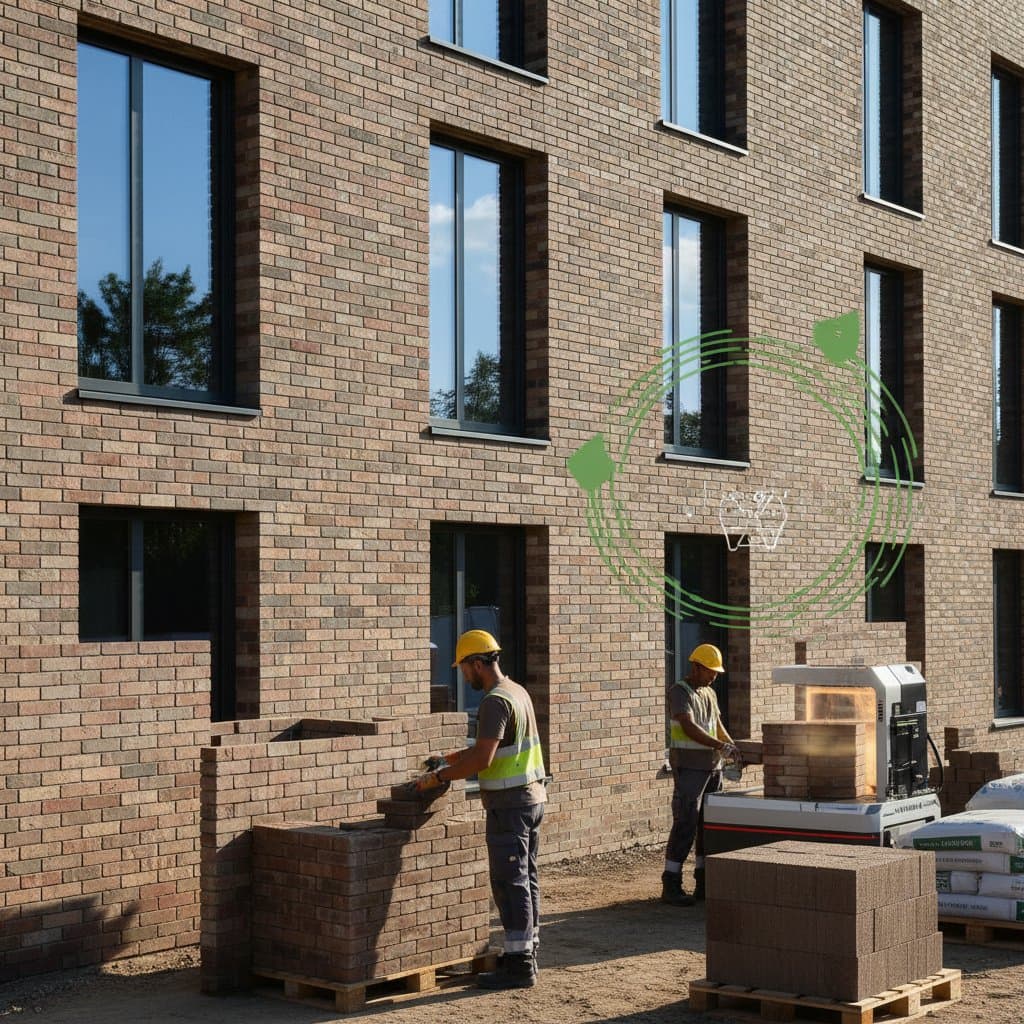
Geopolymer Bricks: The Cement-Free Path to Sustainable Masonry in 2025
The masonry sector advances toward greater sustainability through geopolymer bricks. These innovative, cement-free blocks reshape the construction of homes, commercial structures, and infrastructure. They provide robust strength, substantially lower carbon emissions, and enhanced longevity. This resource details the mechanics of geopolymer bricks, their unique advantages, and practical strategies for integrating them into projects.
Key Takeaways
- Cost range: Geopolymer bricks generally range from $0.80 to $1.20 per unit, with materials accounting for 50 to 60 percent of total expenses, labor 30 to 35 percent, and curing or energy costs 10 to 15 percent.
- Curing time: Options include air drying or oven methods, completing in 24 to 48 hours, which surpasses the timelines for traditional concrete blocks.
- Compressive strength: Values typically fall between 6,000 and 9,000 PSI, outperforming numerous conventional concrete variants.
- Thermal insulation: These materials achieve 30 to 40 percent superior insulation compared to standard cement bricks.
- Environmental benefit: Production processes yield up to 80 percent fewer carbon emissions than those involving Portland cement.
Assessing Planning Needs and Financial Factors
Prior to incorporating geopolymer bricks, assess regional regulations, material suppliers, and available curing setups. Certain areas mandate testing or certification for structural applications. Confirm adherence to standards such as ASTM C67 or comparable guidelines for masonry units.
Budgeting and Expense Breakdown
Although per-unit prices may exceed those of clay bricks marginally, reductions in mortar usage, plaster requirements, and ongoing upkeep frequently balance the upfront investment.
Standard cost distribution includes:
- Materials: 55 percent
- Labor: 30 percent
- Curing and energy: 10 percent
- Transportation and handling: 5 percent
For a typical home wall installation, overall lifecycle expenses decrease by 15 to 20 percent, thanks to lower water uptake and negligible efflorescence.
Detailed Process for Producing and Installing Geopolymer Bricks
1. Prepare the Mixture Accurately
Blend fly ash, slag, and fine aggregates in a dry mixer. Introduce the alkaline activator solution incrementally to form a consistent, dough-like paste. Maintain a water-to-solids ratio of 0.25 to 0.35 for optimal results.
2. Shape and Compact the Mix
Transfer the mixture into steel or plastic molds. Employ vibration or pressing mechanisms to eliminate voids. This step guarantees uniform density and reliable structural integrity.
3. Initiate Curing
Place the molded bricks in a regulated setting for 24 to 48 hours. Producers often utilize ovens set at 140 to 180 degrees Fahrenheit to hasten the polymerization process. Geopolymer bricks avoid the extended moist curing demanded by cement alternatives.
4. Conduct Quality Checks
Evaluate sample units for compressive strength, water absorption rates, and size precision. Limit water absorption to under 10 percent for outdoor use to ensure performance.
5. Execute Laying and Jointing
Apply conventional masonry practices using mortars suited to geopolymers or thin-set adhesives. Keep joints at 3/8 to 1/2 inch thick. Exert steady pressure during placement to achieve level courses.
Resolving Frequent Challenges
Efflorescence: Salt buildup remains uncommon but may result from flawed curing or impure water sources. Clean affected areas with a vinegar solution and soft brushing.
Inadequate Curing: Soft or crumbly textures indicate insufficient heat. Return samples to a monitored oven to finalize the chemical bonding.
Variations in Color: Disparities stem from inconsistencies in fly ash quality. Source all inputs from identical batches to maintain visual uniformity.
Adhesion Problems: Select mortars free from adverse reactions to alkaline elements. Geopolymer-specific formulations promote strongest bonds.
Weighing DIY Approaches Against Expert Services
Homeowners can manage DIY projects like garden barriers, pathways, or exterior features, adhering strictly to mixing protocols and safety measures. Such efforts yield 20 to 30 percent savings on labor, though equipment leases and personal time factor into the equation.
Professionals prove indispensable for:
- Structural load-bearing elements
- Elevated or multi-level walls
- Intricate designs
- Installations needing official approvals
Select contractors with valid credentials, coverage, and demonstrated expertise in geopolymers. Insist on viewing prototype sections to appraise surface quality.
Integrating Geopolymer Bricks for Lasting Sustainable Structures
Geopolymer bricks mark a pivotal advancement in eco-conscious building practices. They merge formidable performance with reduced ecological footprints. As manufacturing scales and regional availability grows, these materials gain broader appeal for experts and individuals alike.
Mastering the underlying chemistry, meticulous planning, and exact execution of curing and assembly enable the creation of resilient edifices. From modest retaining features to comprehensive housing endeavors, geopolymer masonry fuses skilled workmanship with environmental stewardship for enduring benefits.