
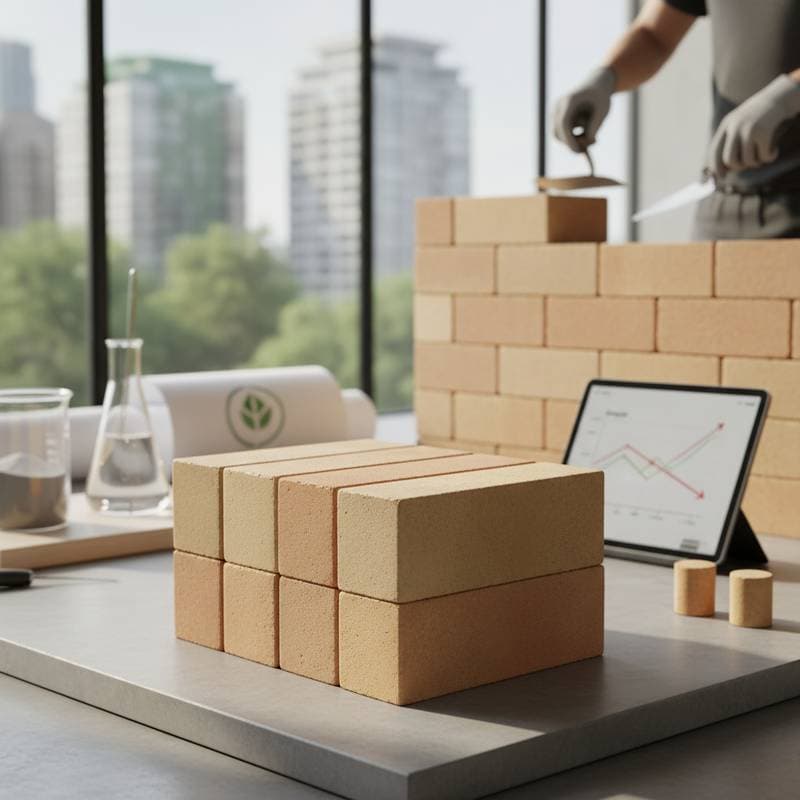
Understanding Cement-Free Bricks in Modern Masonry
Cement-free bricks employ a chemical bonding process involving aluminosilicate materials, bypassing the need for Portland cement entirely. Through geopolymerization, industrial byproducts like fly ash, slag, or calcined clay combine to form robust masonry units. These bricks achieve performance levels comparable to concrete, yet they generate significantly less carbon during production.
Transitioning from experimental stages to practical applications, these bricks appeal to homeowners, builders, and architects prioritizing sustainability. They enable the creation of walls, pavements, and facades that align with environmental goals without compromising structural integrity.
Evaluating Costs for Geopolymer Bricks
The price of materials for cement-free bricks generally falls between $1.20 and $2.50 per unit, or $7 to $12 per square foot when covering walls. Installation expenses typically range from $14 to $22 per square foot, influenced by factors such as local labor rates, site accessibility, and the specific wall configuration.
Key elements driving these costs include the quality and proximity of feedstocks like fly ash or slag. Curing approaches, whether ambient or involving controlled heat, also play a role. Additional considerations encompass mold designs for varied surface finishes, transportation distances from production facilities, and the expertise required for specialized mortar applications.
In regions with established supply networks and skilled masonry professionals, total costs often align closely with those of conventional clay or concrete options, sometimes offering modest savings.
Essential Specifications to Verify
Prospective buyers must review critical technical details prior to selection. Compressive strength should reach at least 4,000 psi to support standard wall applications. Water absorption rates need to stay under 8 percent, particularly for units exposed to outdoor elements.
Freeze-thaw resistance requires compliance with standards like ASTM C1262 to ensure longevity in variable climates. Dimensional accuracy demands tolerances of plus or minus 1/16 inch to facilitate modular construction. The thermal expansion coefficient must harmonize with adjacent building materials to prevent stress points.
Fire resistance qualifies as noncombustible, often providing a two-hour rating at typical wall thicknesses. Confirm adherence to established standards for geopolymer or alkali-activated binders to guarantee quality and performance.
Step-by-Step Installation Guide
Begin by marking the wall alignment with snapped chalk lines to maintain precision. Prepare the mortar using formulations compatible with geopolymer bricks, or opt for traditional lime-based mixes as directed by the manufacturer.
Lay the initial course with meticulous attention to level and plumb, establishing a solid foundation. Proceed with subsequent courses, offsetting joints by half a brick length to enhance structural stability, and ensure head joints fill completely.
Tool the joints thoroughly to compact the mortar and create a smooth, weather-tight seal. Allow proper curing by covering the work with damp burlap or plastic sheeting for a minimum of 24 hours to promote even hardening.
Finally, clean the surface gently with a brush or light rinse prior to applying any sealants or finishes. Individuals using power tools for cutting should equip themselves with eye protection and dust masks, given the potential for alkali dust to cause irritation to skin and respiratory systems.
Deciding Between DIY and Professional Installation
Certain projects suit do-it-yourself efforts, such as constructing garden walls, planters, or fire pits not exceeding three feet in height. These work well for straightforward linear layouts without bearing significant loads, provided access remains unobstructed and the ground stays stable.
Engage a professional for more demanding scenarios, including structural walls or load-bearing columns. Complex designs involving reinforcement or intricate patterns also benefit from expert handling. Sites with inadequate drainage, uneven terrain, or requirements for licensed inspections under local codes necessitate hired expertise.
Experienced masons grasp the nuances of bedding, alignment, and curing that distinguish geopolymer bricks from cement-based counterparts. They possess appropriate cutting equipment and safety measures to manage dust effectively.
Adapting to Regional Climates
In colder areas, select bricks validated for repeated freeze-thaw cycles to withstand seasonal changes. Maintain effective drainage around walls and seal joints meticulously to avert moisture ingress.
For hot, dry environments, shield newly laid bricks from swift evaporation using shade cloths or periodic misting during the curing phase. Coastal settings benefit from the inherent salt resistance of geopolymer binders, though incorporating stainless steel or coated ties adds further protection.
Regions with heavy precipitation demand features like cap flashing or drip edges on upper courses to minimize water accumulation. While local conditions influence initial curing and moisture control, they exert minimal impact on the bricks' enduring durability.
Implementing Geopolymer Bricks Effectively
Adopting cement-free masonry requires thoughtful preparation, yet it yields substantial environmental and functional advantages. Contact local suppliers or contractors to determine availability of geopolymer units and review supporting test data on strength and freeze-thaw performance before finalizing purchases.
If regulatory approvals prove necessary, initiate discussions with building authorities early in the process. During design phases, emphasize exposure protection, drainage strategies, and precise joint treatments to capitalize on the material's resilience against water and thermal stresses. Select lime or geopolymer-compatible mortars, avoiding conventional Portland-based mixtures.
Homeowners tackling modest projects will find these bricks manageable, akin to traditional types, provided they prioritize curing and humidity regulation. For extensive endeavors, collaborate with masons versed in eco-friendly practices to achieve uniform adhesion and refined aesthetics.
This shift from cement-dependent masonry gains momentum, demonstrating that robust, lasting builds can proceed with reduced environmental impact.