
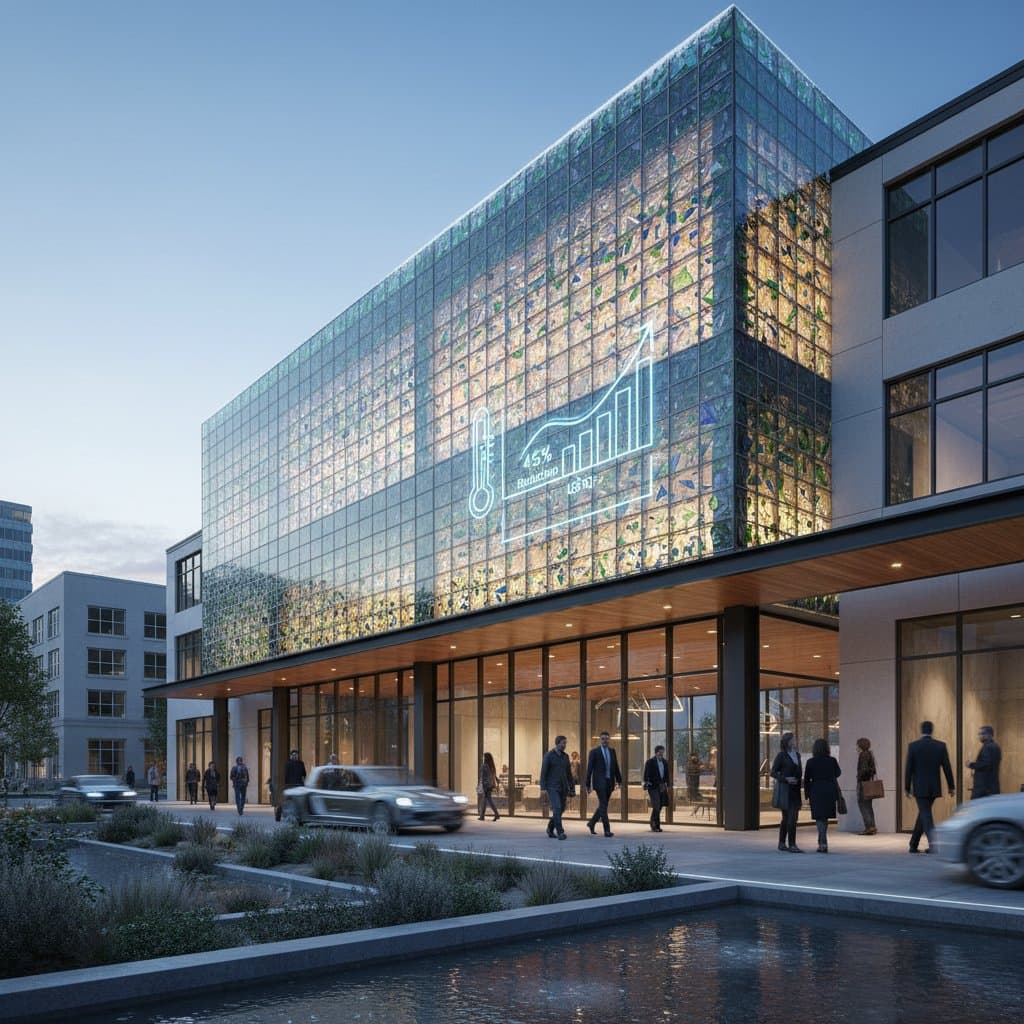
Recycled Glass: The 2025 Eco Masonry Revolution
Recycled glass masonry marks a significant advancement in sustainable construction practices. This method converts post-consumer glass into resilient building blocks, thereby minimizing landfill contributions while providing an innovative, eye-catching, and eco-friendly option compared to conventional materials. The following guide details the mechanics of recycled glass masonry, associated expenses, performance metrics, and ideal applications for upcoming projects.
Key Takeaways
- Cost Range: Anticipate expenses from $14 to $22 per square foot, comprising approximately 45 percent materials, 35 percent labor, and 20 percent equipment plus finishing.
- Strength and Density: Compressive strength typically ranges from 6,000 to 8,000 PSI, aligning with that of superior concrete blocks.
- Installation Time: The process of setting and curing generally spans 5 to 7 days, influenced by joint dimensions and environmental conditions.
- Thermal Efficiency: These bricks diminish heat transfer by 30 to 45 percent relative to traditional masonry.
- Decision Factors: Consider aesthetic objectives, insulation requirements, regional recycling availability, and financial constraints when selecting this material.
Understanding Recycled Glass Masonry
Recycled glass masonry consists of bricks, blocks, or panelscrushed or melted glass as the main aggregate. This substitution largely eliminates the need for sand and gravel in cement-based products. The outcome yields a sturdy, impermeable, and frequently translucent component appropriate for structural and ornamental purposes.
Types of Recycled Glass Masonry
- Cast Glass Bricks: Formed by pouring molten glass into molds, these create solid, translucent units perfect for decorative partitions, natural lighting elements, and focal features.
- **Glass-Aggregate Concrete Blocks:**crushed glass with cement and binding agents, these blocks feature a textured, light-reflecting finish suitable for load-bearing and partition walls.
- Glass Tiles and Veneers: Slim panels applied as cladding or facade enhancements, primarily for non-structural decorative roles.
Each variant provides a unique combination of durability, expense, and appearance. Cast bricks excel in visual impact, whereas aggregate blocks emphasize economy and adaptability.
Planning Your Recycled Glass Masonry Project
Prior to acquiring supplies or commencing work, assess the technical and regulatory elements that affect project viability.
Permits and Code Compliance
- Verify that local regulations allow recycled glass blocks for structural uses.
- Certain areas mandate independent verification for aspects such as compressive strength, fire resistance, or energy efficiency.
- Exterior wall projects might necessitate extra engineering assessments for weight distribution and resistance to wind forces.
Material Sourcing
Access to recycled glass items hinges on local recycling initiatives. Regions with robust glass collection systems typically offer greater variety and reduced pricing. Ensure suppliers document the recycled content level, targeting at least 70 percent.
Cost Considerations
Expenses fluctuate according to surface treatment, thickness, and setup intricacy:
- Glass-Aggregate Blocks: $14 to $18 per square foot for installation.
- Cast Glass Bricks: $18 to $22 per square foot for installation.
- Decorative Veneers: $10 to $15 per square foot.
Labor demands exceed those of standard masonry due to the need for exact placement and custom mortars. Required tools encompass diamond-tipped saws, non-abrasive spreading implements, and alignment devices tailored for glass handling.
Preparing the Site and Materials
Thorough groundwork guarantees stability and a refined outcome.
Surface and Foundation Requirements
- Achieve a level base within 1/8 inch over every 10 feet.
- For load-bearing structures, incorporate reinforced foundations to bear the total load of masonry and bonding agents.
- Place a moisture-barrier layer at ground level to block water entry.
Tools and Materials Checklist
- Recycled Glass Units: Select uniform dimensions and treatments from one manufacturing lot.
- Polymer-Modified Mortar: Improves adhesion and adaptability on glass interfaces.
- Non-Metallic Reinforcement: Employ fiberglass or polymer connectors to avoid visible rust.
- Sealant and Joint Filler: Opt for UV-stable silicone or polyurethane options to maintain transparency and resist discoloration.
- Safety Equipment: Include protective gloves, eyewear, respiratory masks, and ear defenders for tasks involving cutting or abrasion.
Step-by-Step Installation Process
1. Layout and Dry Fit
Outline wall boundaries and angles, then position multiple rows of units without adhesive to confirm fit and gaps. This step reveals potential shade differences and minimizes material waste from adjustments.
2. Mixing and Applying Mortar
Blend polymer-modified mortar to an even texture. Limit water addition to preserve bonding efficacy. Spread a 1/4-inch layer with a notched tool and gently seat each unit.
3. Setting and Leveling
Incorporate spacers for consistent 3/8-inch joints. Regularly measure with a straightedge and bubble level. Glass's light-reflective properties highlight even minor deviations.
4. Cutting and Trimming
Employ a water-cooled saw equipped with a glass-rated diamond blade. Stabilize pieces firmly to avoid fractures. Refine edges using fine abrasive paper prior to placement.
5. Curing and Cleaning
Permit mortar to set for a minimum of 48 hours before adding joint sealants. Wipe surfaces using a neutral pH solution and soft fabric. Steer clear of acidic or coarse agents that risk surface damage.
Ensuring Quality and Performance
Curing and Inspection
Examine for voids in bonds and ensure even joint thickness. Weak attachment often stems from excess moisture or uneven mixing. Well-set joints withstand fractures and water ingress.
Finishing Options
Leave the masonry in its raw state or apply a safeguard coating to boost shine and dirt resistance. Select coatings may further enhance heat management by redirecting infrared rays.
Troubleshooting Common Problems
- Cracking or Separation: Signals insufficient bonding or expansion differences. Incorporate elastic fillers and space expansion joints at 20-foot intervals along extended sections.
- Efflorescence: Salt deposits appear from water movement in joints. Use permeable sealants and optimize site drainage.
- Surface Scratching: Prevent with non-metal implements and careful equipment handling on finished areas.
- Discoloration: Results from irregular setting or mismatched finishes. Test applications on trial sections beforehand.
Maintaining Your Investment
Consistent upkeep sustains the transparency, robustness, and green credentials of glass-based structures.
Routine Care
- Clean with gentle detergent and water at intervals of 3 to 6 months.
- Annually check sealant lines for fissures or contraction.
- Refresh UV-protective sealants every 5 to 7 years based on environmental demands.
Structural Monitoring
Watch for:
- Fissures exceeding 1/16 inch in width.
- Shifting or protrusion surpassing 1/4 inch across 8 feet.
- Dislodged bonding or degraded seams.
Prompt action averts major expenses. Seal minor splits with pliable epoxy; address extensive damage through targeted reconstruction.
DIY or Professional Installation?
Experienced individuals can manage recycled glass masonry, though it requires accuracy, time, and dedicated equipment.
When DIY Is Viable
- Compact ornamental barriers or room dividers below 6 feet in height.
- Non-structural applications with aggregate blocks.
- Projects by those versed in basic masonry methods.
Self-installation may cut costs by up to 40 percent, offset somewhat by tool leasing and extended timelines.
When to Hire Professionals
- Load-bearing or outdoor walls exposed to weather or earth movements.
- Expansive setups needing seamless visual harmony.
- Scenarios demanding regulatory clearance or assurances.
Select specialists certified in masonry or glass work, insured against risks, and offering documented warranties for products and labor.
Long-Term Advantages of Recycled Glass Masonry
- Energy Efficiency: The compact, light-bouncing composition limits thermal escape and heat absorption, cutting utility needs.
- Durability: Impervious to water, fungi, and harsh substances, these materials outlast standard concrete.
- Low Maintenance: Sleek exteriors deter grime accumulation and simplify upkeep.
- Environmental Impact: Utilizing one ton of recycled glass spares about 1.5 tons of virgin sand, lessening habitat disruption.
Applying Recycled Glass in Your Builds
Recycled glass masonry paves a viable route to more sustainable structures. From accent walls to full renovations or new eco-residences, it blends functionality with design excellence. Master its properties, ready the foundation meticulously, and execute installation with care to yield a structure that honors both the planet and architectural vision.