
- Major decision factors: Foundation type, soil condition, climate, and budget determine sensor selection and placement.
How Smart Foundation Monitoring Works
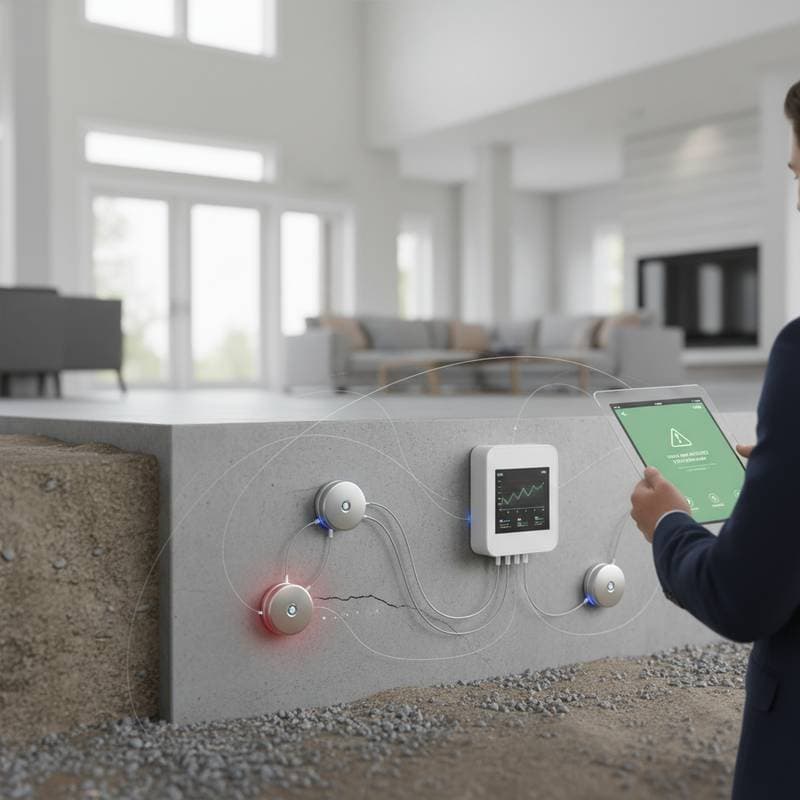
IoT-based structural sensors evaluate foundation performance under everyday conditions. These devices translate physical movements into digital signals accessible via a dashboard or mobile application.
Core Components
- Tilt sensors: Gauge angular variations in foundation surfaces to spot initial uneven settling.
- Displacement sensors: Monitor vertical or horizontal shifts relative to established benchmarks.
- Moisture sensors: Capture soil moisture levels adjacent to footings, linking changes to water influences.
- Temperature sensors: Track ambient conditions that affect soil stability and concrete expansion.
- Gateway hub: Gathers data from sensors and transmits it to secure cloud platforms for processing.
Sensors employ wireless protocols such as Wi-Fi or Zigbee for communication. Power sources include compact batteries or low-voltage wiring, with maintenance limited to occasional checks. Real-time data feeds enable algorithms to identify stress patterns, forecasting potential issues before they intensify.
Preparing Your Site
Thorough site preparation guarantees precise measurements and sustained performance.
- Clean surfaces: Clear away dust, debris, or coatings at attachment points. Adhesives or brackets demand firm, uncontaminated bonds.
- Establish measurement baselines: Use a laser level to document starting foundation positions for ongoing comparisons.
- Label sensor locations: Note positions and coordinates systematically for straightforward access and upkeep.
- Protect wiring and hubs: Route cables above moist areas and distant from flood-prone spots.
For exposed outdoor foundations, select housings rated for weather resistance against rain and sunlight. Place indoor units clear of vibrations from equipment like heating systems or water pumps.
Step-by-Step Installation Process
1. Mount the Sensors
Secure each sensor to designated spots on foundation walls or slabs using supplied hardware or adhesives. Confirm the surface remains even and solid.
- For concrete walls, drill pilot holes and insert masonry anchors.
- For wooden elements in crawl spaces, fasten brackets with screws resistant to corrosion.
- Space sensors evenly, generally 6 to 8 feet apart along boundary walls.
2. Connect the Gateway Hub
Position the hub in a protected, reachable location within sensor range. Connect to electricity and link to your Wi-Fi network per the manufacturer's guidelines.
3. Calibrate the System
Initiate a calibration sequence to set reference values. The application logs starting tilt, displacement, and environmental data. Perform this on a calm day, avoiding heavy precipitation or extreme temperature changes.
4. Verify Data Transmission
Access the dashboard to ensure all sensors deliver readings. Trigger a test notification to confirm delivery to your device or inbox.
5. Schedule Data Review
Configure alerts for deviations exceeding 0.05 inches in movement or 0.3 degrees in tilt. Examine data weekly in the initial month, then shift to monthly reviews as patterns normalize.
Ensuring Long-Term Accuracy
Accuracy relies on regular calibration, stable surroundings, and organized data handling. Inspect batteries yearly and clear debris from enclosures. Analyze trend charts routinely to uncover gradual changes. Persistent variations in specific zones warrant checks of adjacent soil or drainage.
Engage professional verification services to interpret logs and conduct assessments. Such expertise proves valuable for expansive or multifaceted structures involving diverse influences.
Troubleshooting Common Issues
Erratic Readings
Inconsistent data frequently stems from insecure attachments or external disruptions. Secure fittings, realign the unit, and recalibrate. Isolate from vibrations caused by equipment or traffic.
Connectivity Problems
Sensor signal loss requires battery and range evaluation. Adjust hub placement or incorporate extenders as necessary.
False Alerts
Abrupt data peaks may arise from transient factors like construction nearby or intense rain. Cross-reference with weather records or activity notes to distinguish true structural concerns.
Data Overload
Multiple sensors generate substantial information volumes. Apply dashboard filters to highlight key areas or transfer data to spreadsheets for in-depth review.
Maintenance and Long-Term Care
Periodic checks sustain system reliability. Address alerts promptly, apply firmware updates, and recalibrate biannually. Swap or recharge batteries according to specifications. Replace units exhibiting ongoing inaccuracies post-calibration.
Preserve effective drainage to avert soil shifts from blockages or improper slopes. Control indoor humidity to minimize framing expansions impacting readings.
Consistent oversight enables early intervention on minor concerns. Integrate with complementary devices like sump monitors or leak detectors for holistic property insights.
DIY Monitoring vs. Professional Integration
DIY Setup
Skilled homeowners manage consumer systems using standard tools. Primary efforts involve time for precise positioning and initial setup. This method cuts costs by 25 to 40 percent versus expert services, though success hinges on accurate placement and baseline capture.
Professional Installation
Certified installers tackle intricate configurations, particularly in aged structures or large estates. They optimize sensor arrays, comply with codes, and fuse with current infrastructure. Professionals deliver warranties and training, ensuring seamless operation from the start.
Choosing the Right Approach
Evaluate your expertise, site complexity, and financial limits. Opt for DIY in straightforward, modern builds where confidence in technical tasks exists. Select professionals for challenging terrains, historical properties, or when precision outweighs initial savings.
Pro Tips for Success
- Commission an expert evaluation of foundation status prior to sensor deployment.
- Adopt uniform labels for dashboard entries to streamline monitoring.
- Align readings with precipitation logs to pinpoint water-driven trends.
- Maintain a record of notifications and upkeep for documentation purposes.
- Incorporate strain or vibration monitors on key supports for enhanced coverage.
Safeguarding Your Foundation Investment
Smart sensors redefine proactive foundation management for residents and constructors. Converting faint signals into timely warnings, these tools mitigate escalation of problems. Timely action averts substantial repair bills and prolongs foundational durability. Combined with drainage maintenance, site grading, and inspections, IoT oversight delivers ongoing protection for your residence.