
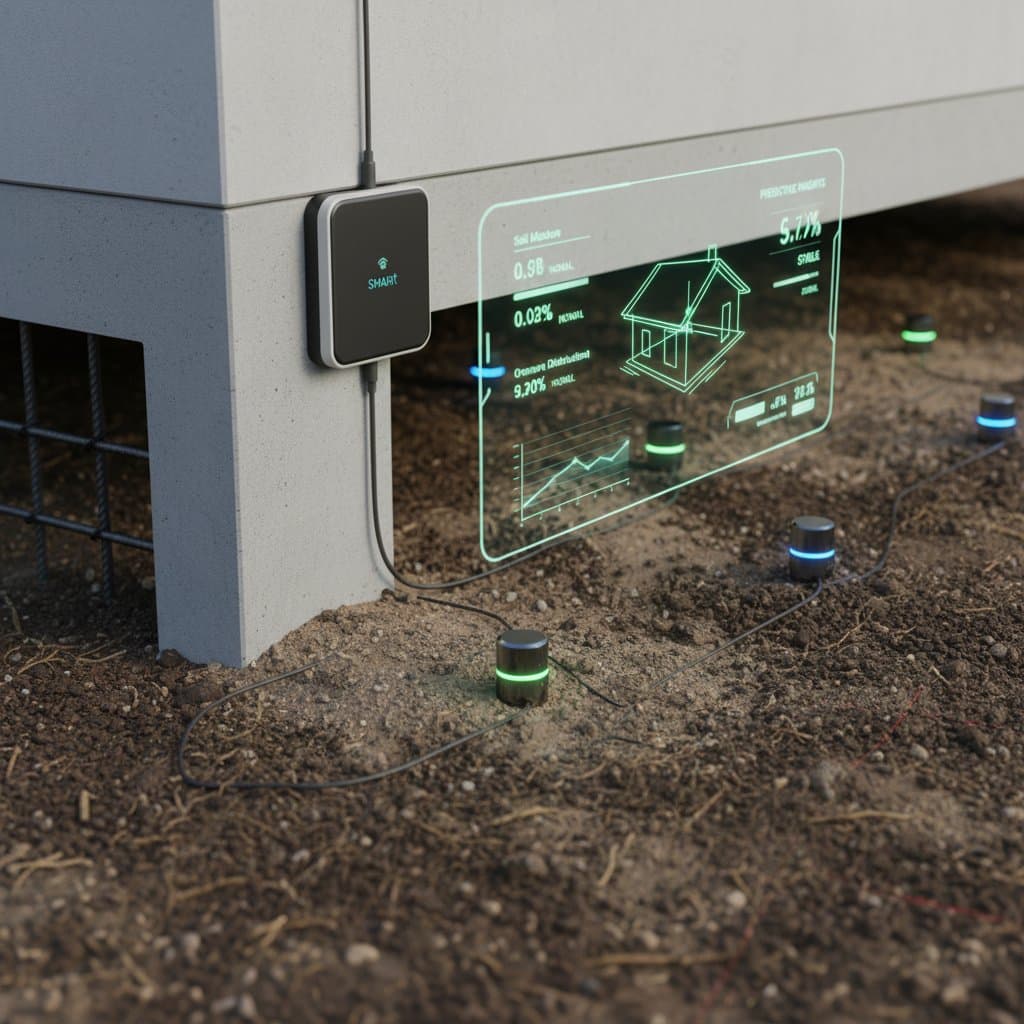
IoT Sensors Prevent Foundation Damage from Soil Shifts
Smart home technology extends below ground level with Internet of Things (IoT) sensors that track soil movement, moisture, and pressure. These devices provide real-time data to identify potential issues early, allowing for timely and cost-effective interventions before damage escalates.
Understanding IoT Foundation Monitoring Systems
An IoT foundation monitoring system consists of compact wireless sensors installed in or near the foundation. These sensors measure key factors such as soil moisture, temperature, and subtle movements. Data from the sensors transmits to a central hub or gateway, which uploads it to a secure cloud platform. Users access trends and alerts via a dedicated app or web dashboard, enabling detection of conditions that could lead to soil expansion, contraction, or erosion.
Advantages and Limitations
Advantages
- Provides early alerts for soil movement to prevent cracks or uneven settlement
- Offers continuous monitoring without the need for excavation or disruptive inspections
- Reduces long-term repair expenses through proactive maintenance
- Allows remote monitoring from smartphones or computers
- Stores historical data to assist engineers in diagnosing underlying problems
Limitations
- Involves initial expenses for sensors, installation, and setup
- Depends on reliable Wi-Fi or cellular connectivity for data transmission
- Requires periodic checks on batteries or power sources
- Potential for inaccurate alerts if sensors lack proper calibration
- Necessitates professional evaluation for significant structural concerns
Investment Considerations
Entry-level monitoring kits for smaller homes begin at several hundred dollars. Comprehensive systems, including additional sensors, expanded data storage, and expert installation, cost considerably more. Factors influencing price include sensor durability, transmission range, and the number of monitoring points required for complete coverage. Integration with broader smart home ecosystems or cellular plans adds to the total. The savings from averted repairs frequently justify the investment.
Durability and Upkeep
Quality soil and foundation sensors endure for multiple years under regular maintenance. Inspect battery levels semiannually and replace them or recharge power packs promptly. Clean sensor enclosures to avoid buildup of soil or corrosion. Examine data readings weekly to identify deviations from established norms. Routine dashboard reviews confirm that soil moisture remains stable.
Key Specifications to Evaluate
Select sensors based on these essential features:
- Moisture measurement range: Capable of detecting conditions from arid to fully saturated soil
- Temperature tolerance: Designed to operate in freezing winters and intense summer heat
- Ingress protection (IP) rating: Higher ratings ensure superior resistance to dust and moisture ingress
- Wireless transmission range: Adequate for the distance between sensors and the central hub
- Power options: Battery-powered, solar-charged, or hardwired configurations influence ongoing maintenance
- Data transmission frequency: Options range from hourly updates to daily summaries, based on monitoring needs
Site Preparation and Planning
Conduct a thorough site assessment prior to installation. Note areas prone to poor drainage, existing cracks, or documented soil instability. Locate and mark underground utilities to avoid interference. Ensure gutters, downspouts, and site grading effectively divert water from the foundation. Position sensors adjacent to footings, at corners, and in previously repaired sections. Install during periods when soil is neither frozen nor waterlogged.
Step-by-Step Installation Guide
- Design the layout: Sketch the foundation perimeter, highlighting corners, load-bearing walls, and vulnerable areas.
- Dig placement holes: Create shallow excavations, typically a few inches deep, with uniform spacing for reliable comparisons.
- Position the sensors: Place them at the depth specified by the manufacturer, close to footings or slab bases.
- Link to the hub: Establish connections and test signal integrity.
- Configure the app: Synchronize the device to begin data collection.
- Define alert thresholds: Program notifications for moisture or movement exceeding baseline values.
- Secure the installation: Backfill around sensors gently and verify data transmission following initial weather events.
Homeowners familiar with smart devices and basic tools can complete this process independently.
Sensor Configuration Options
Tailor the setup to your property's characteristics:
- Perimeter arrangement: Evenly spaced sensors encircling the structure for broad oversight
- Corner emphasis: Additional units at high-stress corners to capture localized shifts
- Zoned deployment: Grouped sensors by elevation or exposure, ideal for sloped sites
- Multi-depth probing: Sensors at varying soil layers to analyze moisture gradients
Soil composition, terrain slope, and drainage patterns guide the choice. Expansive clay soils require deeper placements to monitor swelling patterns.
Self-Installation Versus Professional Services
Capable individuals can manage basic residential installations involving minimal excavation. Engage professionals for scenarios requiring concrete penetration, system integrations, or advanced data interpretation. Structural engineers establish reference baselines and recommend optimal sensor locations. Consult local foundation experts or building officials for guidance on alert parameters.
Troubleshooting Common Issues
Signal interference: Relocate the hub or install signal boosters to improve connectivity.
Inconsistent data: Perform recalibration or system resets to restore accuracy.
Data transmission failure: Verify power sources and clean connection points.
Unfounded moisture warnings: Examine drainage systems for blockages or overflow.
Ongoing structural movement: Arrange for an on-site engineering assessment, as sensors detect but do not mitigate shifts.
Adapting to Regional Conditions
Local soil properties dictate foundation vulnerabilities. In areas with expansive clays, sensors track hydration cycles to inform adjustments in landscaping or irrigation. Sandy or gravelly soils benefit from erosion detection to identify subsurface voids. Regions with freeze-thaw cycles rely on temperature readings to gauge frost penetration. Coastal environments demand sensors with robust, corrosion-proof materials and waterproof seals.
Complementary Monitoring Methods
- Crack monitoring tools: Devices that quantify changes in fissure dimensions over time
- Handheld soil testers: Portable meters for spot-checking moisture levels
- Scheduled expert evaluations: Regular professional reviews of foundation integrity
- Integrated water detection: Basement sensors that alert to rising humidity or leaks
Maximizing System Effectiveness
Regular engagement ensures the monitoring system delivers value. Schedule monthly reviews of trend graphs to spot gradual changes in moisture or pressure. Prioritize corrections to surface water flow, as poor drainage often initiates subsurface stress. Proactive oversight transforms invisible risks into manageable insights, preserving your home's stability for years to come.