
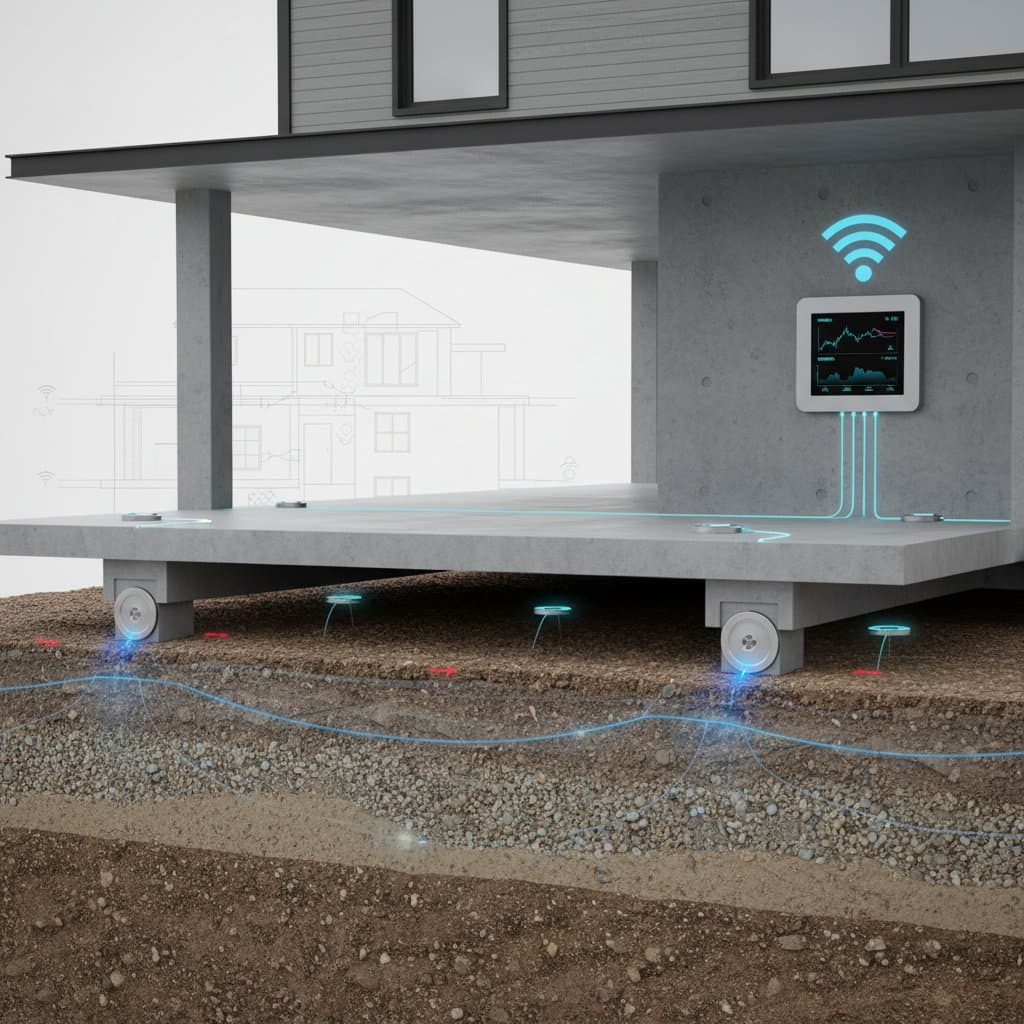
Understanding Smart Foundation Sensors
Smart foundation sensors consist of compact electronic units designed to oversee the stability and motion of a building foundation. These devices gather information on moisture levels, pressure variations, temperature fluctuations, and structural displacements, then relay the data to a central hub or cloud-based platform. Such persistent oversight identifies minor alterations prior to the development of cracks, leaks, or subsidence into severe structural concerns.
Conventional evaluations depend on visual observations or scheduled examinations. Although these approaches offer benefits, they overlook incremental shifts that arise in intervals between checks. Smart sensors address this limitation by delivering uninterrupted updates. They notify property owners, facility supervisors, or engineers when measurements exceed established safety limits, enabling prompt measures to avert expensive harm.
The Importance of Early Detection
Foundation issues frequently commence without notice. Factors such as soil expansion, surplus moisture, or concealed leaks initiate minor displacements that evolve into fissures or distortions. As damage progresses, remediation expenses can climb to tens of thousands of dollars. Smart sensors establish an alert mechanism that identifies these concerns during initial phases, thereby minimizing financial outlay and operational interruptions.
Functionality of Sensor Systems
A standard setup comprises three primary elements:
- Sensors positioned at strategic points around the foundation to gauge moisture, inclination, vibration, and strain.
- A communications hub that assembles and forwards data to a protected platform.
- An analytics dashboard available via web or mobile applications, which displays measurements graphically and generates notifications.
Upon detection of irregular trends, the system dispatches alerts to facilitate response. This could entail inspecting drainage systems, modifying watering schedules, or engaging specialists for thorough assessments.
Deciding Between DIY and Professional Installation for Smart Monitoring
The placement of smart sensors qualifies as a moderately complex DIY endeavor when the foundation remains accessible and the setup employs wireless transmission. Individuals possessing fundamental tool proficiency can typically affix sensors and link them via an instructional application. Nevertheless, calibration and data analysis necessitate expert input particularly when indications point to displacement or moisture penetration. Expertise in structural engineering proves vital for evaluating substantial movements or alterations in soil pressure.
Opt for DIY installation under these conditions:
- The building serves residential purposes and the location exhibits stability.
- The system provides explicit setup guidelines.
- Wireless signals extend to all zones without interruption.
Engage professionals in these scenarios:
- The site features previous foundation complications.
- The ground consists of expansive clay or inadequate drainage.
- The structure bears multiple levels or substantial weight.
Developing a Plan for Your Foundation Monitoring System
Prior to acquiring or deploying sensors, formulate a structured strategy. This methodical process guarantees precise readings and dependable notifications.
Site Evaluation
Circumambulate the property and document these attributes:
- Soil composition: Soils abundant in clay expand and contract with humidity variations, resulting in greater motion.
- Drainage configurations: Accumulated water adjacent to the foundation indicates suboptimal grading or malfunctioning gutters.
- Gradient and landscape: Inclined terrains exert uneven stress on walls or bases.
- Prevalent fissures or irregular flooring: Catalog these for guiding sensor positioning.
Essential Measurements
Quantify the foundation perimeter to determine the requisite number of sensors. Systems generally advise one unit per 10 to 15 feet along critical walls. Note separations between angles, borders, and identified vulnerable spots. These figures promote uniform distribution and valuable intelligence.
Key Environmental Considerations
Account for these influences:
- Annual precipitation and soil saturation cycles.
- Sprinkler distribution and operation intervals.
- Vulnerability to sunlight or overshadowing.
- Proximity to trees possessing extensive roots.
Anticipated Challenges
Signal disruptions from metallic structures or substantial concrete barriers may impede wireless performance. Professionals might then deploy signal boosters or implement wired linkages.
Selecting Sensors and Associated Materials
Various sensor varieties address distinct parameters. Assemble a combination suited to your foundation characteristics and regional conditions.
Moisture Sensors
Overview: These units quantify humidity in soil or concrete.
Advantages: They pinpoint leaks, drainage deficiencies, and watering discrepancies at onset.
Disadvantages: Calibration and power source upkeep remain necessary.
Pricing: Typically economical.
Required Expertise: Entry-level to moderate.
Ideal Applications: Residences on clay terrains or with elevated water tables.
Tilt or Inclinometer Sensors
Overview: These gauge angular deviations or gradient modifications along the foundation.
Advantages: They disclose subsidence or uplift prior to observable fractures.
Disadvantages: Heightened responsiveness to oscillations demands precise orientation.
Pricing: Moderate range.
Required Expertise: Moderate.
Ideal Applications: Properties on gradients or aged structures with irregular settling patterns.
Strain or Pressure Sensors
Overview: These identify variations in load or tension within the foundation.
Advantages: They supply exact metrics for engineering analysis.
Disadvantages: Installation complexity and elevated expense prevail.
Pricing: High-end.
Required Expertise: Advanced or specialist deployment.
Ideal Applications: Commercial facilities or expansive homes.
Practical Advice
Acquire approximately ten percent additional sensors beyond your design needs. This provision accommodates spares or subsequent additions.
Assembling Tools and Materials
Manual Implements
- Tape measure: Essential for precise intervals and positioning.
- Spirit level: Guarantees planar sensor placement for trustworthy outputs.
- Screwdriver assortment: Facilitates bracket or connector fixation.
Powered Devices
- Drill equipped with masonry bits: Required for concrete or masonry work.
- Battery-operated driver: Accelerates attachment while avoiding excess torque.
Equipment for Hire
- Heavy-duty concrete drill: Obtain for robust or fortified bases.
- Signal verification tool: Useful for confirming connectivity over broad expanses.
Inventory of Supplies
- Sensors and central hub.
- Fasteners featuring rust-resistant screws.
- Waterproofing sealant or adhesive.
- Protective clips or tubing for cables.
- Replacement power cells.
- Adhesive labels for designation.
Incorporate a ten percent surplus for expendable items.
Detailed Installation Procedure
- Designate sensor positions. Indicate sites uniformly around the foundation boundary. Position units distant from direct liquid streams to maintain reading integrity.
- Surface preparation. Remove particulates and residues. A pristine base fosters stable adhesion.
- Bore attachment apertures. Employ appropriate bit dimensions for fixings. Confirm horizontality through leveling.
- Secure the sensors. Fasten with moderate pressure. Excessive force risks measurement inaccuracies.
- Link to the central unit. Adhere to producer directives for synchronization. Validate each sensor's dashboard registration.
- Annotate and log placements. Maintain a diagram of positions for ongoing utility.
- System validation. Monitor data inflows and confirm notification parameters.
- Weatherproof connections. Shield wiring or access points against moisture.
Verification Steps
- Confirm sensors align flatly and evenly.
- Ensure hub reception without signal failures.
- Observe data renewal per anticipated timelines.
- Test alert activation sequences.
Practical Advice
Should measurements vary erratically, inspect for insecure fixtures or climatic influences on calibration.
Post-Installation Management
Completion Details
Examine routing paths for orderliness. Fasten linkages with holders and shield cables via enclosures. An organized arrangement eases upkeep and bolsters longevity.
Upkeep Procedures
- Review sensor outputs each month.
- Swap power sources yearly or per guidelines.
- Adjust moisture units following intense precipitation.
- Dislodge accumulations from enclosures.
Upgrade Suggestions
- Merge with automated watering controls responsive to soil humidity.
- Incorporate thermal units to observe thawing and freezing patterns.
- Connect notifications to residence automation for immediate mobile advisories.
Pitfalls to Sidestep
- Neglecting initial adjustments: Provokes erroneous signals or oversights.
- Disregarding drainage flaws: Sensors detect yet do not remedy terrain issues.
- Dismissing preliminary indicators: Minor anomalies frequently signal avoidable concerns.
Practical Advice
Smart foundation sensors translate imperceptible structural threats into quantifiable data. Through diligent preparation, precise deployment, and regular oversight, these systems shield residences from progressive deterioration.