
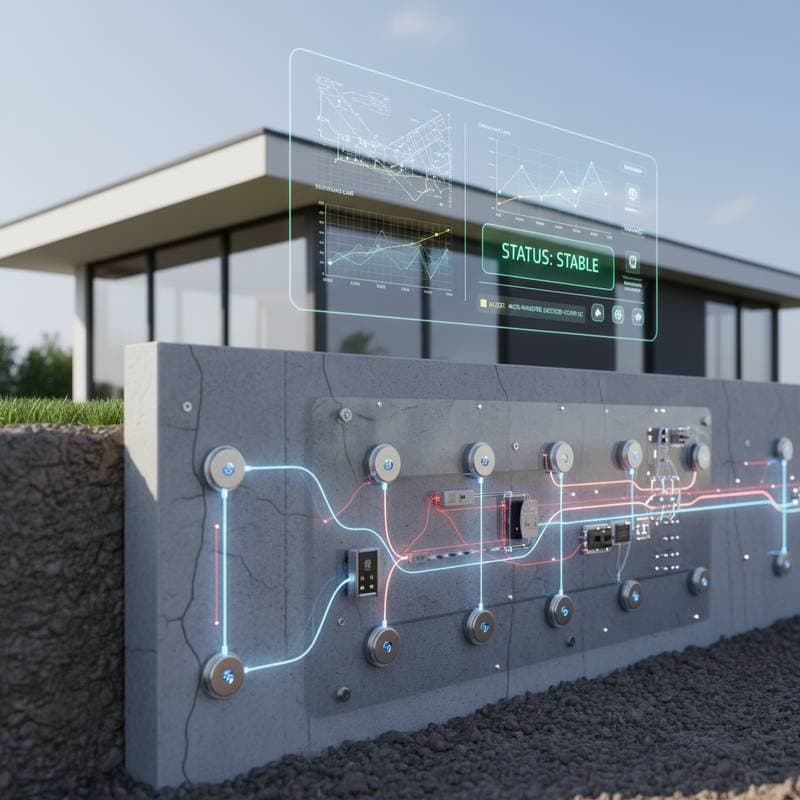
Smart Sensors Predict Foundation Failures Early
A building foundation serves as the essential base for structural integrity. Unnoticed cracks, shifts, or moisture buildup can lead to extensive damage and high repair costs. Smart sensor technology addresses these risks by monitoring movement, moisture, and stress in real time, enabling early intervention to safeguard properties.
These systems provide continuous data that informs homeowners, engineers, and property managers. Alerts arrive promptly when thresholds exceed normal levels, allowing preventive measures before issues worsen. This approach not only enhances safety but also reduces long-term expenses associated with foundation repairs.
Key Takeaways
- System Cost Breakdown: Residential installations range from $2,500 to $6,000, with 55 percent allocated to materials and sensors, 25 percent to labor, and 20 percent to data setup and calibration.
- Data Collection Frequency: Sensors capture readings every 15 to 60 seconds, generating alerts within minutes for detected anomalies in movement or moisture.
- Detection Thresholds: Inspect when movement surpasses 0.1 inch, tilt exceeds 0.05 degrees, or moisture levels rise above 18 percent relative humidity.
- Installation Duration: Complete most setups in 1 to 2 days, based on foundation accessibility and the number of sensors required.
- Configuration Considerations: Select sensors according to climate, soil composition, foundation materials, building age, and available budget.
Planning a Foundation Monitoring System
Effective planning lays the groundwork for a reliable smart sensor setup. Begin with a thorough evaluation of the foundation type, surrounding soil properties, and any past instances of shifting or water intrusion. This assessment identifies the most suitable sensors and placement strategies.
Evaluating Site Conditions
Soil characteristics influence sensor selection significantly. Expansive clay soils, which expand and contract with moisture changes, demand robust movement sensors to track subtle shifts. Sandy soils, susceptible to erosion, benefit from dedicated moisture monitors to detect water loss or gain.
Regional climate plays a pivotal role as well. Humid environments often require sensors for moisture and temperature to manage condensation and groundwater effects. Arid zones prioritize strain and tilt sensors to identify gradual settlement over time.
Foundation designs vary, so tailor monitoring accordingly. Slab-on-grade foundations need tilt sensors along the perimeter and at central points for comprehensive coverage. Pier-and-beam structures call for strain and vibration sensors beneath the framework to capture load distribution changes.
Permit and Compliance Considerations
Sensor installation typically avoids the need for building permits, as it involves minimal structural alteration. However, subsequent repairs triggered by alerts often require them. Local regulations might define maximum allowable foundation movement or mandate expert reviews upon alert activation.
Consult municipal guidelines early to document compliance. This step ensures all monitoring data supports safe, legal responses to potential issues.
Budgeting and Cost Analysis
Expect residential systems to cost between $2,500 and $6,000, scaling up for commercial properties to over $15,000 due to increased sensor numbers and integration complexity. The expense distribution includes 55 percent for sensors and hardware, 25 percent for installation labor, and 20 percent for data configuration and cloud services.
Initial investments pay off by averting repairs that commonly range from $10,000 to $30,000. Early detection prevents escalation, turning monitoring into a cost-effective safeguard for structural health.
Execution: Installing and Calibrating Smart Sensors
Precise installation guarantees dependable performance from smart sensors. Adhere to manufacturer guidelines for depth, orientation, and spacing to capture accurate environmental data.
Step 1: Position Sensors Strategically
Identify high-risk areas for sensor placement, including corners, mid-span beams, and zones adjacent to load-bearing walls for tilt and strain types. Position moisture sensors near drainage points like downspouts or sump areas. Space units 5 to 15 feet apart, adjusting for the foundation's overall dimensions.
Step 2: Secure and Seal Devices
Anchor sensors firmly with epoxy or corrosion-resistant screws to withstand ground forces. Seal all entry points with waterproof materials to block moisture. For below-ground units, encase cables in protective conduit and backfill surrounding soil evenly to maintain positioning.
Step 3: Connect to the Data Gateway
Establish connections through wireless networks or low-voltage cables to a central hub. Verify initial readings align with expected baselines. Set software thresholds to match site-specific tolerances for movement and humidity.
Step 4: Test and Calibrate
Power on the system and monitor data over 24 to 48 hours for stability. Test alert functions to ensure they activate as programmed. Schedule annual recalibrations or perform them after significant weather events to sustain precision.
Troubleshooting Common Challenges
Despite their reliability, smart sensors may encounter issues from environmental factors or setup errors. Prompt resolution keeps the system operational and data trustworthy.
Common Issues and Solutions
- Signal Interference: Relocate the gateway or install signal repeaters to restore sensor communication.
- Battery Depletion: Schedule replacements or recharges every 12 to 18 months to avoid power failures.
- Moisture Intrusion: Check and reinforce seals or conduit if humidity readings fluctuate unexpectedly.
- Data Anomalies: Cross-reference outputs from nearby sensors to distinguish isolated errors from broader trends.
- Calibration Drift: Reset baselines following extreme temperature changes or soil shifts.
For ongoing problems, engage the manufacturer or a structural engineer. Professional verification prevents misinterpretation of data as actual structural threats.
When to Involve Professionals
Basic systems suit hands-on homeowners, but complex scenarios demand expert input for accuracy and safety. Professionals bring specialized knowledge to interpret readings and implement solutions.
DIY Suitability
Individuals with technical aptitude can manage wireless moisture or temperature sensors, linking them to a mobile interface. These setups cost under $3,000 and deliver reliable alerts for single-family residences. Users achieve approximately 30 percent savings over professional services, provided calibration remains precise.
Professional Advantages
Experts customize networks to fit soil dynamics, load patterns, and architectural details. They furnish certified documentation useful for insurance claims or financing needs. In cases of existing cracks or multi-unit properties, their involvement minimizes risks and validates findings.
Pro Tips for Success
- Deploy sensors in dry weather to capture true moisture baselines.
- Document sensor positions on a detailed site diagram for easy access later.
- Add backup sensors at vulnerable spots like corners or support columns.
- Update firmware and software regularly to optimize functionality.
- Link alerts to phone apps or home automation for swift notifications.
Sustaining Long-Term Monitoring Effectiveness
Regular upkeep extends the lifespan and reliability of smart sensor systems. Conduct visual inspections quarterly to check for physical damage or loose connections. Clean sensors gently to remove debris that could skew readings.
Review data trends monthly through the dashboard to spot gradual changes. Integrate findings with routine home maintenance, such as gutter cleaning or drainage checks, to address root causes proactively. This ongoing vigilance ensures the foundation remains stable, protecting the entire structure for years ahead.